- Category
- Herbs and spices
- State
- Dry
- Usual unit
- teaspoon
What it is
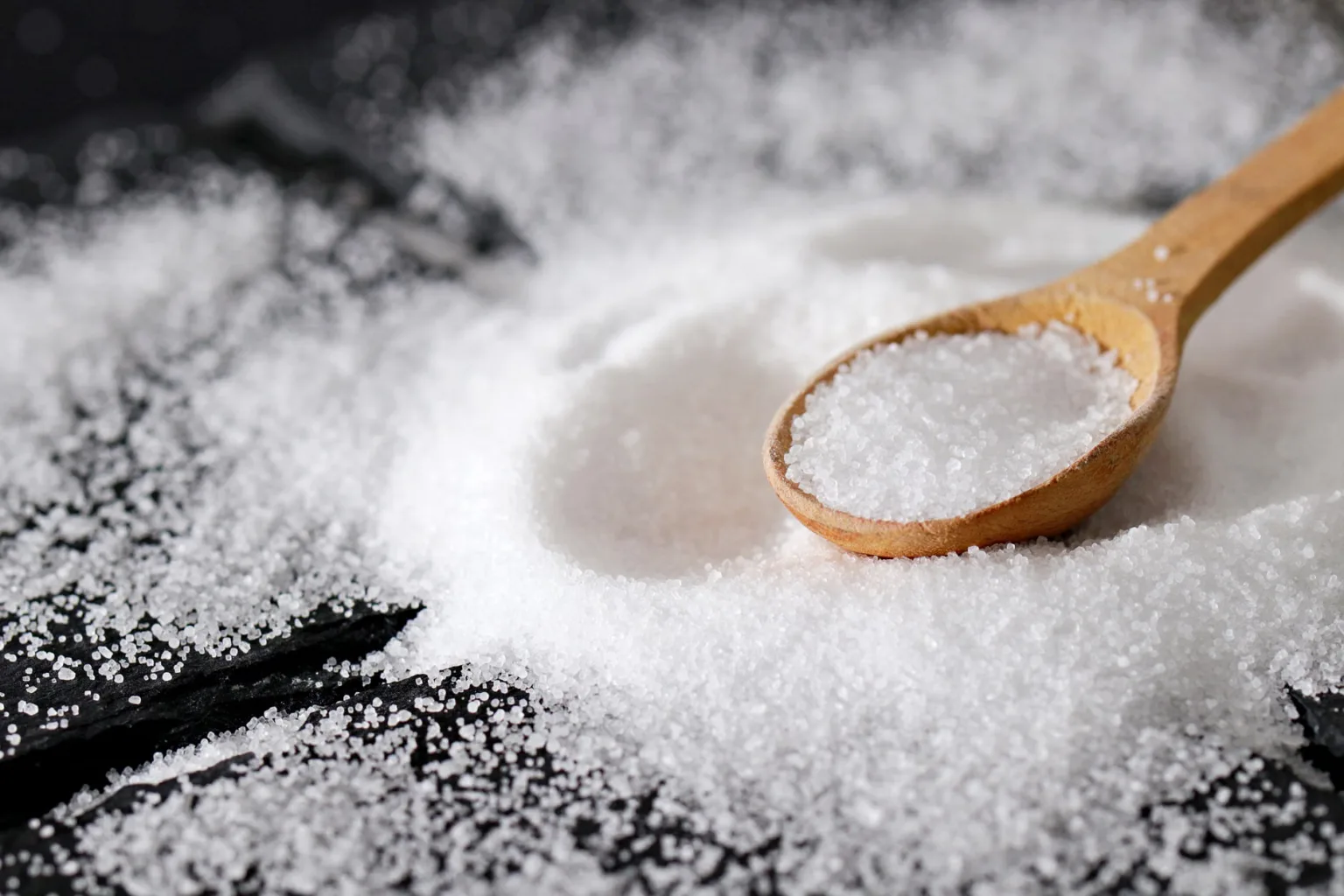
Salt is a crystalline mineral seasoning made predominantly of sodium chloride. The phrase “salt for the topping” describes its role in a recipe, not a specific variety with a guaranteed composition or grain size. It can season a filling or another part of a dish, but the result depends on the format chosen. Fine salt blends and distributes readily; coarse salt or flakes may provide a perceptible texture when left on the surface. Identify the salt you have rather than assuming that a teaspoon of one format is equivalent to the same volume of another.
When to use it
Use salt when you want to season a filling or adjust the balance of a savory preparation. Salt added during cooking has more opportunity to dissolve and spread through the mixture; adding it near the end lets you correct the taste before serving. Fine salt is practical when an even distribution is needed, while coarse crystals or flakes are better suited to a finishing touch when you want to notice the grain. Since crystal size affects how salt is distributed and measured, taste before adding more, especially if the filling already contains salty ingredients.
How to use it
First identify whether the salt is fine, coarse or flaky, since crystal size affects how quickly it dissolves and how evenly it spreads. To season a filling, add a modest amount, mix thoroughly and taste; add more gradually if needed. For an even flavor, mix fine salt into the ingredients or dissolve coarse salt before adding it. For a finishing touch, sprinkle a little over the surface just before serving if you want textural contrast. Do not blindly swap one volume measurement for another: larger crystals can have a different density per spoonful.
Flavour and texture
Salt brings a salty taste and can enhance or balance other flavors. On its own, it does not provide the aromatic character of an herb or spice. Texture depends on the format: fine crystals blend quickly and are usually unobtrusive, while coarse grains or flakes can add crunch and a more distinct surface sensation. Practical differences between salts are especially related to crystal size, refinement and texture; formats do not all behave the same when measured by volume.
How to choose it
Choose salt labeled for human consumption, then select a format for the job: fine salt is easy to distribute through a mixture, while coarse crystals and flakes are more noticeable as a finish. Check the label for the product type and any additions, such as iodine or anti-caking agents. The phrase “salt for the topping” does not by itself guarantee a particular crystal size. Avoid untreated rock salt that is not intended for human consumption.
Storage
Keep salt in a clean, dry, tightly closed container, and use a dry utensil when measuring it. This helps prevent moisture from getting into the product and keeps the crystals easy to handle. Protect the container from spills and from ingredients that could contaminate it. The available evidence does not establish a specific storage period for this salt; follow package directions if provided and check that it remains dry and visibly uncontaminated.
Substitutions
You can use fine, coarse or flaky food-grade salt instead, but adjust the amount to the crystal size and the result you want. Fine salt spreads readily; flakes can finish a dish and add texture. If a recipe depends on a precise concentration, as with some pickles or fermented foods, do not change the amount or salt type as an improvised swap: follow a reliable recipe and its exact directions.
Common mistakes
A common mistake is measuring coarse salt or flakes by volume as though they were identical to fine salt: crystal size and density can differ. It is also easy to add too much before tasting, or to use flakes in a mixture where they will not dissolve evenly. When seasoning a filling, add salt gradually, mix, and taste before adjusting.
Safety and allergens
Use only salt intended for human consumption. Do not cook with untreated rock salt. If salt is part of a pickling, fermentation or canning recipe, follow the specified quantity and type: changing the proportion can affect the result and the safety of the process.
Culinary uses
- Condimentar
- Realzar y equilibrar sabores
- Dar un acabado crujiente cuando se usa en escamas
Recommended techniques
- Añadir durante la cocción para integrar el sabor
- Ajustar al final de la preparación
- Espolvorear sobre la superficie como acabado
Pairs well with
- Tomates y ensaladas
- Carnes y pescados
- Sopas, guisos y salsas
Frequently asked questions
Is salt for the topping a special variety?
The name describes its role in a recipe; by itself, it does not specify the source, composition or crystal size. Check the product label for its format.
Can I replace fine salt with flakes?
Yes, if you want a textured finish, but do not assume the same volume measure will give the same result. Adjust gradually and taste.
When should I add the salt?
Add it during preparation so it can blend in, or near the end to adjust the taste. Taste the filling before adding more.
Sources and review
Automatically researched, cross-checked and validated content. Sources consulted:
- Client Challenge doi.org
- The Essential Glossary of Cooking Terms for the Culinary Arts - Escoffier escoffier.edu
- 15 tipos de sal para dar variedad a nuestros platos: cómo elegirlas y usarlas en la cocina directoalpaladar.com
- Sabor a sal: 10 variedades que debes conocer y usar cooking.elmundo.es
- Sal: tipos, usos y cómo salar bien - CocinoPedia.com cocinopedia.com
- educational content to support healthful lifestyle practices sjsu.edu
- ALIMENTARIA aesan.gob.es
- Vamos a Conservar Alimentos: Ingredientes Utilizados en las Conservas Preparadas en Casa extension.psu.edu
- Glimpses of an 18th century Colonial Kitchen in Manila archium.ateneo.edu
- Los tipos de sal y sus usos en la cocina | Recetas Nestlé recetasnestle.com.mx
- ICE Chefs' Father's Day Food Traditions | Institute of Culinary Education ice.edu
- Tortilla con Hongos 1952 (Mushroom Omelet) - lacocina.utsa.edu
- Culinary Arts Department CHEF 2331 Advanced Food Preparation southplainscollege.edu
- Usos de la sal en la cocina - ChupChupChup chupchupchup.com