- Category
- Vegetables
- State
- Fresh
- Usual unit
- unit
What it is
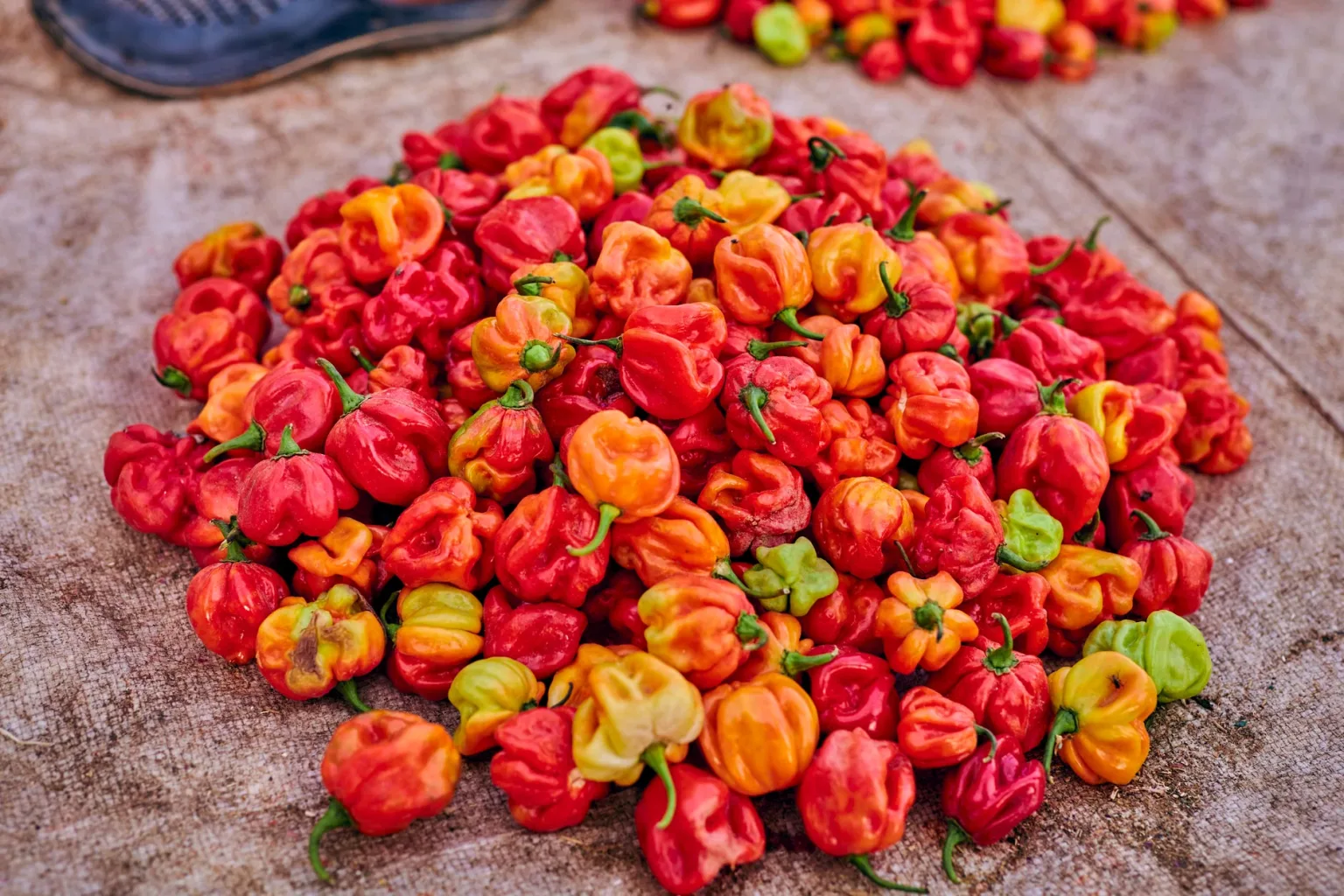
Scotch bonnet is the fruit of Capsicum chinense, a species that includes several very hot chile cultivars. Its name refers to a shape said to resemble a Scottish bonnet, although fruits sold under this name can differ in shape and color. Fresh fruits may be green, yellow, orange or red, depending on the fruit and its maturity. The chile is valued for combining intense heat with a fruity, somewhat sweet character. Heat is not identical across all fruits or cultivars, so treat it as a potent ingredient and build its contribution gradually when cooking.
When to use it
Use Scotch bonnet when you want pronounced heat with a fruity character in a sauce, marinade or Caribbean-inspired dish, especially a jerk-style preparation. It can also lend aroma without leaving chile pieces in the finished dish: infuse it whole and remove it before serving. If you do not know the particular fruit, begin with a small amount and taste before adding more, since heat varies from fruit to fruit. It is not the best choice when you want a mild result or need the heat level to be completely predictable.
How to use it
Wash the fruit with potable water before eating it. To add aroma with more control over the chile pieces, put it into the dish whole during cooking and remove it before serving; taste before adding more. To distribute its flavor more evenly, chop or blend it into a sauce or marinade. Start with a small amount, mix, and taste before continuing: Scotch bonnet can be very hot, and the intensity differs between fruits. Its fruity character works particularly well in sauces and condiments, as well as jerk-style preparations. Do not assume that another chile will provide the same flavor or heat.
Flavour and texture
Its defining feature is intense heat, accompanied by fruity and slightly sweet notes. The shape can be squat and bonnet-like, but individual fruits do not all look exactly alike. Color also varies: fruits may be green or shades of yellow, orange and red. Flavor and heat can differ by fruit and cultivar, so color alone cannot reliably predict how hot a particular chile will be.
How to choose it
Look for fruit sold as Scotch bonnet and check that it matches the fresh product you want. It can appear in several colors, including green, yellow, orange and red; that variation alone does not mean the fruits are different kinds of chile. Its characteristic outline may resemble a bonnet, although not every fruit has the same shape. Because heat varies between fruits and cultivars, appearance is not a precise guide to intensity. Use a small amount when trying an unfamiliar fruit.
Storage
The available evidence does not specify a storage time or exact storage conditions for fresh Scotch bonnet. Follow the seller’s or package’s guidance, and do not assume it needs exactly the same conditions as another vegetable: storage requirements differ among produce. Handle the fruit gently to avoid bruising and damage. If you wash it, use potable water; soaking is not a storage method.
Substitutions
Habanero is a close alternative among related chiles, but it does not guarantee the same flavor or heat; adjust the amount gradually. If you want a substantially milder result, jalapeño may work in some preparations, though it will change the dish’s character. Neither option exactly reproduces Scotch bonnet’s fruity profile, so taste and adjust the recipe.
Common mistakes
A common mistake is adding a large amount before tasting the particular fruit; its heat can vary and overwhelm a dish. Do not assume that different colors indicate a predictable heat level or that habanero is an identical substitute. Start small, mix thoroughly and adjust gradually. If you want aroma without leaving pieces in the dish, try infusing the chile whole and removing it before serving.
Safety and allergens
Wash the chile with potable water before eating it. The available evidence provides no specific official safety warning for this ingredient; use a cautious amount if you do not know its heat.
Culinary uses
- Fresh chile for adding intense heat and fruity character
- Aromatic ingredient in Caribbean-style jerk seasonings, marinades and hot sauces
Recommended techniques
- Use whole to infuse a dish, then remove it for a more restrained heat
- Chop or blend into sauces and marinades, adding a little at a time
Pairs well with
- Jerk-style meat dishes and marinades
- Fruit-based hot sauces and condiments
Frequently asked questions
What does Scotch bonnet taste like?
It combines intense heat with fruity, slightly sweet notes. The balance can vary from fruit to fruit.
Are all Scotch bonnets equally hot?
No. Heat varies by cultivar and individual fruit, so begin with a small amount and taste before adding more.
How can I use it without leaving chile pieces in the dish?
Add it whole to infuse the preparation and remove it before serving. How much heat it transfers still depends on the fruit and the dish.
Sources and review
Automatically researched, cross-checked and validated content. Sources consulted:
- Client Challenge doi.org
- Grow your own peppers | OSU Extension Service extension.oregonstate.edu
- Storing Fresh Fruits and Vegetables (G1264) extensionpubs.unl.edu
- Some Like it Hot! (or Not) ucanr.edu
- PROCEEDINGS OF THE 35™ ANNUAL MEETING ageconsearch.umn.edu
- Peppers files-do-not-link.udc.edu
- Peppers by Scoville Units – Gardening Solutions gardeningsolutions.ifas.ufl.edu
- ¿Qué son los chiles Scotch Bonnet? - Blog de La Parada de las Especias comprarespecias.net
- Scotch bonnet - Wikipedia, la enciclopedia libre es.wikipedia.org
- Chile Scotch Bonnet en Sri Lanka | Lakpura lakpura.com
- Chile Habanero Scotch Bonnet | Chili-Plants.com chili-plants.com