- Category
- Grains, flour and pasta
- State
- Dry
- Usual unit
- g
What it is
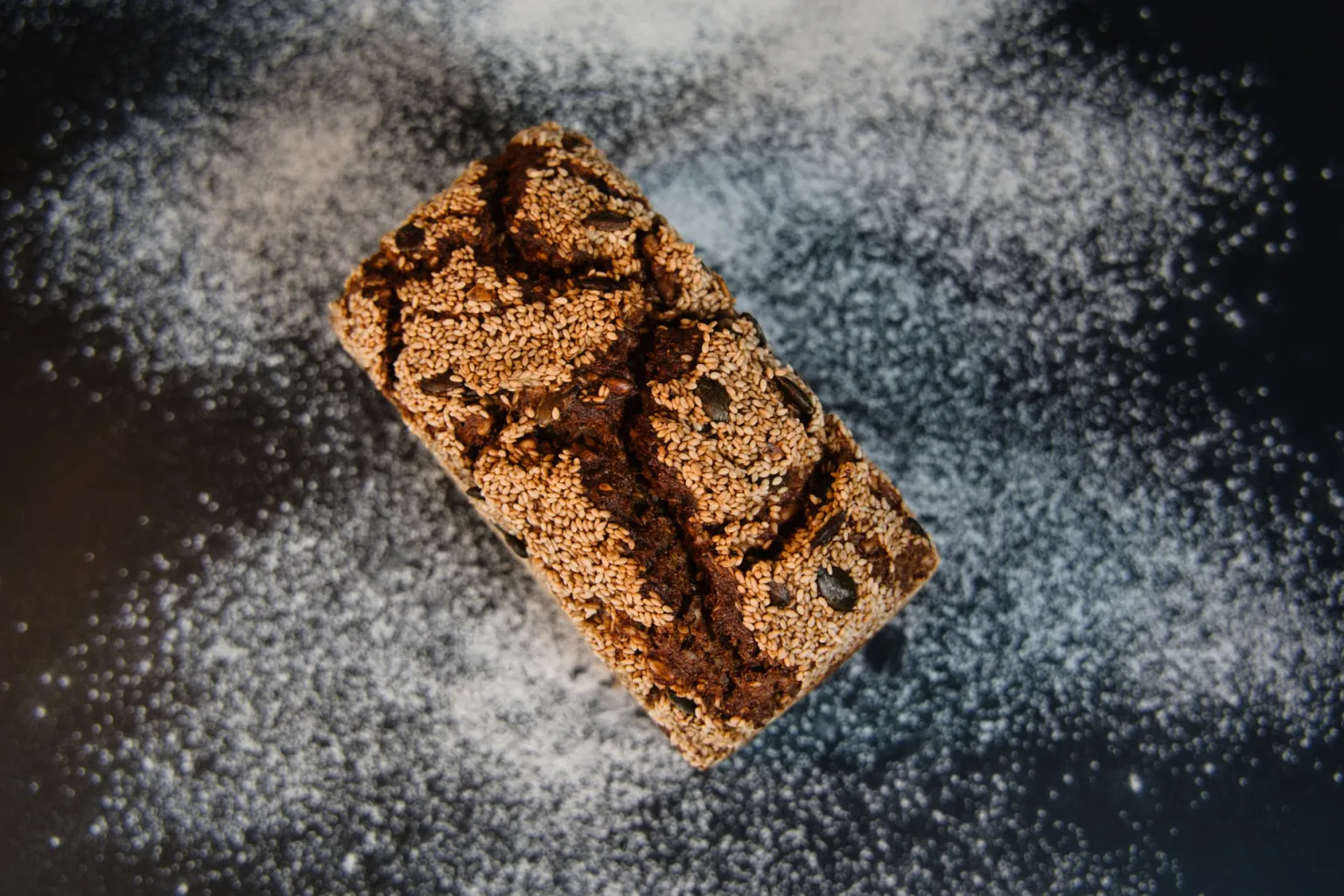
Whole rye flour is made by milling rye grains, a cereal. Compared with paler rye flours, whole or dark varieties retain more parts of the grain; the available descriptions distinguish dark flour containing endosperm and germ, with some bran, and pumpernickel flour containing all three parts. Color and texture therefore vary with the milling grade and product. Rye flour is also associated with dough that is less elastic than wheat dough and bread that is less airy. (14366, 14367)
When to use it
Choose it when you want rye’s pronounced flavor to stand out, especially in rustic loaves and sourdough bread. It can also be used in rolls, cookies, buns, pizza dough or pancakes, and added to soups or sauces as a thickener. For a new recipe, consider combining it with wheat or spelt flour if you want a different dough; the sources describe flour blends in bread recipes but do not establish a universal ratio. (14366, 14367)
How to use it
Weigh the flour according to your recipe and mix it with the dry ingredients before adding liquids, or follow the order specified for your dough. In bread making, use it on its own in recipes formulated for rye, or combine it with wheat or spelt flour; do not expect the same elasticity or volume as a wheat dough. It is also used in sourdough breads, cookies and buns. For soups and sauces, add it gradually and stir it in. Adjust the recipe to the particular product, and do not assume that all rye flours have the same color or milling grade. (14366, 14367)
Flavour and texture
Rye has a pronounced cereal flavor, also described as somewhat sour, with an aroma that can recall nuts in baked goods. Whole flour may be darker than paler varieties; color depends on milling grade. Rye dough tends to be less elastic, and rye breads can be less airy than wheat breads. (14366, 14367)
How to choose it
Read the package name and description: the color and grain parts present vary among pale, medium, dark and whole rye flours. If you need whole flour, check that the product is identified as whole rather than relying on color alone. Also review the allergen information and any use or storage directions provided by the manufacturer. (119, 14367)
Storage
Store the product according to the package directions. The available information does not establish a universal temperature, storage period or method for this flour, so do not transfer advice from another product or manufacturer. Keep the label available so you can check product-specific directions, and follow any particular conditions stated on the package. (119)
Substitutions
White or medium rye flour may be used in rye recipes, but it is not equivalent to whole rye flour: the proportions of grain parts differ, and the color and result may change. Wheat or spelt flour can be blended with rye in some bread recipes, but this changes the dough and is not an identical substitute. (14367)
Common mistakes
Do not assume that a darker flour always has exactly the same milling grade or composition as another whole flour. Nor should rye dough be expected to behave like wheat dough: the sources describe it as less elastic, with bread that is less airy. When replacing whole flour with a paler flour, account for the change in result. (14367)
Safety and allergens
Rye contains gluten, so this flour is not suitable for people with celiac disease. Check the product’s allergen information and specific directions; mandatory food information can vary with presentation and method of sale. (119, 14367)
Culinary uses
- Base para panes y masas
- Ingrediente para galletas y productos horneados
- Espesante para sopas y salsas
Recommended techniques
- Panificación
- Fermentación con masa madre
- Mezclado con otras harinas
- Incorporación a masas de galletas
Pairs well with
- Harina de espelta
- Harina de trigo
- Cerveza negra
- Masa madre
Frequently asked questions
Does whole rye flour contain gluten?
Yes. Rye flour contains gluten and is not suitable for people with celiac disease. Also check the allergen information for the specific product. (119, 14367)
Can I use it to make bread?
Yes. It is used in rustic and sourdough breads, among other preparations. Rye dough can be less elastic and the bread less airy than wheat bread. (14367)
Is whole rye flour always very dark?
Color varies with milling grade and flour type. The available information distinguishes pale, medium and dark varieties; do not rely on color alone to confirm that a product is whole. (14367)
Estimated nutrition
- Fat
- 2.22 g
- Saturates
- 0.27 g
- Carbohydrate
- 68.6 g
- Sugars
- 2.31 g
- Fibre
- 23.8 g
- Protein
- 15.9 g
- Salt
- 0 g
Sources and review
Automatically researched, cross-checked and validated content. Sources consulted:
- En el etiquetado alimentario hay algunas menciones que son obligatorias eletiquetadocuentamucho.aesan.gob.es
- Evaluación de harina de amaranto como ingrediente antioxidante para la preparación de matrices alimentarias funcionales doi.org
- Los alimentos como medicina: la dieta antiinflamatoria | Children's Hospital of Philadelphia chop.edu
- A Nutrition Education Curriculum for Grade 3 | Wsu s3.wp.wsu.edu
- Desarrollo de un pan de masa madre rico en GABA y ... diposit.ub.edu
- Aplicaciones de la Biotecnología en Seguridad Alimentaria aesan.gob.es
- Food & Fun Afterschool hsph.harvard.edu
- Plan de Negocios. Alimentos Saludables Libres de Gluten repositorio.utdt.edu
- Harina de Centeno - Todo lo que tienes que saber en Harinera El Molino harineraelmolino.com
- Harina de centeno: qué es y en que nueve recetas aprovechar al máximo sus propiedades directoalpaladar.com
- Harina integral de centeno: 7 beneficios para tu salud y energía - Alimentos Ecológicos Biogredos biogredos.es
- ¿Centeno o trigo? – Botanical-online botanical-online.com