- Category
- Vegetables
- State
- Fresh
- Usual unit
- stalk
What it is
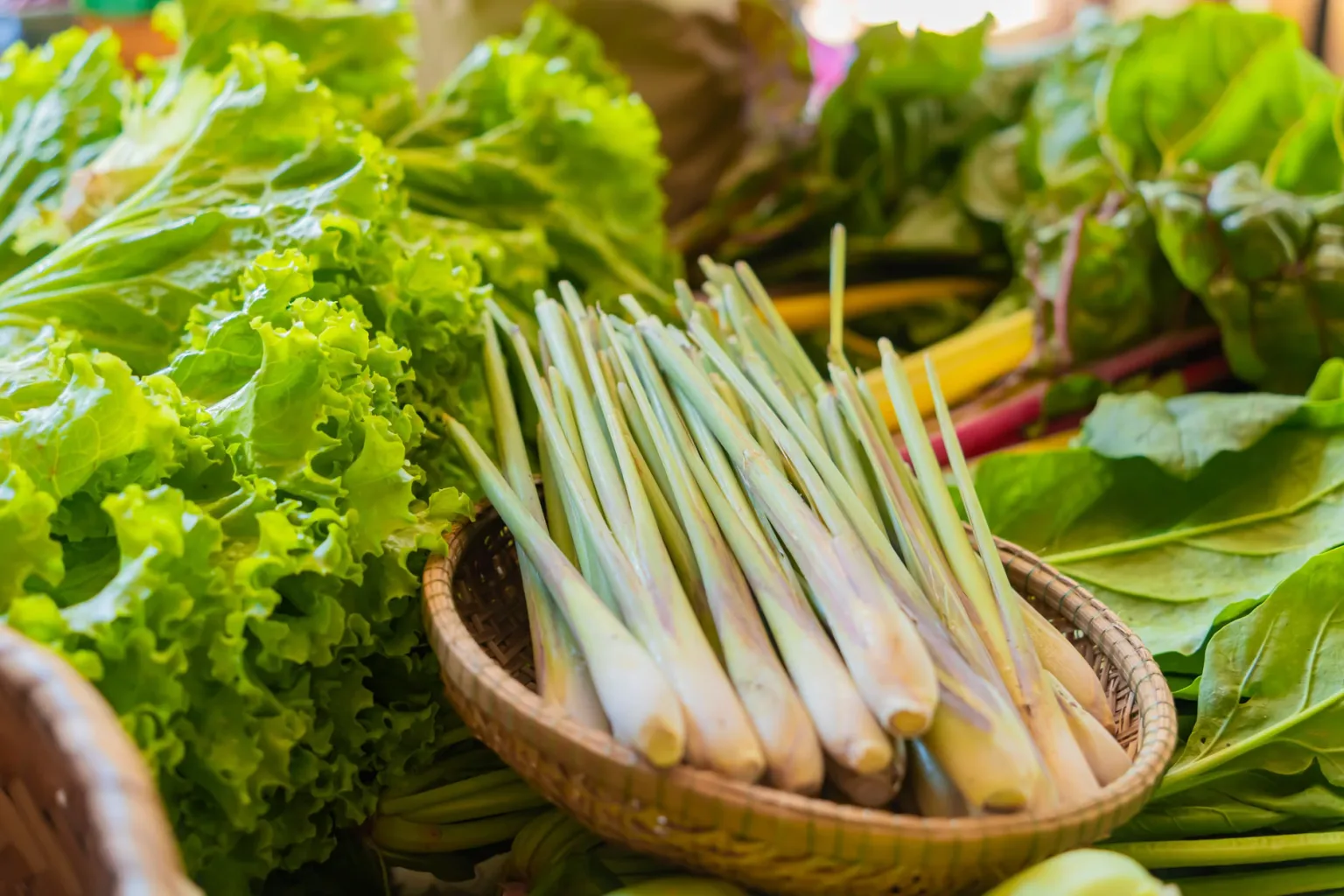
Culinary lemongrass, also called lemon grass, is the aromatic stalk of Cymbopogon citratus. Its base is thicker, and its outer layers are tough and fibrous; peeling them reveals a paler, more tender center. It is used as a seasoning and should not be confused with insect repellents or citronella oil sold for other purposes. In cooking, it is valued for a fresh, citrus-like, herbal aroma with a lightly spicy edge. Depending on the dish, the tender part can be finely chopped and eaten, or the stalk can be bruised or left whole to flavor a liquid and removed before serving.
When to use it
Use lemongrass when you want a citrus-herbal aroma without relying only on lemon juice. It works in soups, stews, curries, sauces, dressings and marinades, and can also flavor infusions and drinks. If the stalk will be eaten, use the tender inner part and chop it very finely to make its fibrous texture less noticeable. For broth or another liquid that will be strained, bruise a stalk and remove it at the end. Its flavor pairs especially well with ginger and can complement fish dishes.
How to use it
Wash the stalk and trim the base. Peel away the tough outer layers until you reach the paler, tender center. To flavor soups, stews or liquids, gently bruise the stalk with the flat side of a knife and let it infuse; remove it before serving if it remains fibrous. If adding lemongrass to a sauce, salad, dressing or marinade that will be eaten, chop the tender part very finely. You can also slice it thinly for curries and stir-fries. Leaves and outer parts can contribute aroma to broth or an infusion, but remove them before serving if they are tough. Adjust the amount to taste, since its aroma can become prominent.
Flavour and texture
Lemongrass has a fresh, citrus-like, herbal aroma with a lightly spicy note. The center of the stalk is paler and more tender; the outer layers and leaves are tougher and more fibrous. Finely chopped tender lemongrass blends more easily into dishes that are eaten. Bruised or whole, it releases aroma into liquids, but is usually removed before serving to avoid a tough texture.
How to choose it
Choose firm stalks with a pale green to light-colored base and center. Avoid stalks that look dry or have brown areas. Check that the stalk is not wilted and that its outer layers are not excessively dried out. If you only need the tender center, remember that some of the stalk will be peeled away during preparation. Look for lemongrass intended for culinary use, rather than citronella repellents or products sold for other purposes.
Storage
Wrap fresh stalks and keep them refrigerated; the culinary source consulted gives a storage period of two to three weeks. Lemongrass can also be frozen, for up to six months according to that source. Keep it wrapped and check its condition before use. These directions apply to fresh stalks and should not be assumed to apply to oils, extracts or other citronella products.
Substitutions
No substitute reproduces lemongrass’s exact citrus-herbal aroma. Lemon zest can supply a citrus note, while ginger can echo its warm, lightly spicy quality, but neither gives the same combination of aromas. Use them as approximations that suit the dish and adjust the amount to taste.
Common mistakes
Do not chop the whole stalk without first removing its fibrous outer layers; they can be tough to eat. If the lemongrass will be eaten, slice the tender center very finely. For soup or an infusion that will be strained, bruising the stalk and removing it helps avoid hard pieces. Do not confuse the culinary stalk with essential oil or a repellent product.
Safety and allergens
Use stalks sold for food and wash them before preparation. Do not replace fresh culinary lemongrass with a repellent or an oil intended for non-culinary use; those products are not equivalent to an edible stalk.
Culinary uses
- Aromatic seasoning for soups, curries, sauces and stews
- Citrus-like flavoring for dressings, marinades, infusions and drinks
Recommended techniques
- Trim the base and remove tough outer layers to expose the tender inner stalk
- Bruise the stalk before infusing, or slice it very finely for dishes where it will be eaten
Pairs well with
- Ginger
- Fish and seafood
Frequently asked questions
Which part of lemongrass should I use?
Trim the base and peel away the tough outer layers to reach the tender center. Chop it to eat, or bruise it to flavor liquids and remove it afterward.
Can lemongrass be eaten raw?
The tender part can be chopped very finely and added to raw dishes. Tough, fibrous parts are better removed or used for flavoring and then strained out.
How should I store fresh lemongrass?
Wrapped and refrigerated, the culinary source consulted indicates two to three weeks. It can also be frozen for up to six months.
Sources and review
Automatically researched, cross-checked and validated content. Sources consulted:
- Client Challenge doi.org
- Lemongrass o citronella: qué es, propiedades, beneficios y usus en cocina asiática directoalpaladar.com
- Oil of Citronella Fact Sheet npic.orst.edu
- RESEARCH: Lessons From a Traditional Food Market, Where Culture and Cuisine Converge | Center for Latin American & Caribbean Studies clacs.berkeley.edu
- Food Gardening – Maryland Grows marylandgrows.umd.edu
- Citronella Ants extension.psu.edu
- How to Safely Make Infused Oils: Best Practices for Food Safety | CAES Field Report fieldreport.caes.uga.edu
- Comparison of citronella oil extraction methods from Cymbopogon nardus grass by ohmic-heated hydro-distillation, hydro-distillation, and steam distillation :: BioResources bioresources.cnr.ncsu.edu
- Antimicrobial Activity Of Essential Oil Emulsions And Possible ... digitalcommons.wayne.edu
- The Selection of Food-Plants by Insects, with Special ... journals.uchicago.edu
- Lemon Grass o Citronela, un toque exótico a tus recetas eladerezo.com
- - YouTube youtube.com
- Lemon grass: qué es, para qué sirve y propiedades de la citronela o hierba limón bonviveur.com