- Category
- Herbs and spices
- State
- Dry
- Usual unit
- teaspoon
What it is
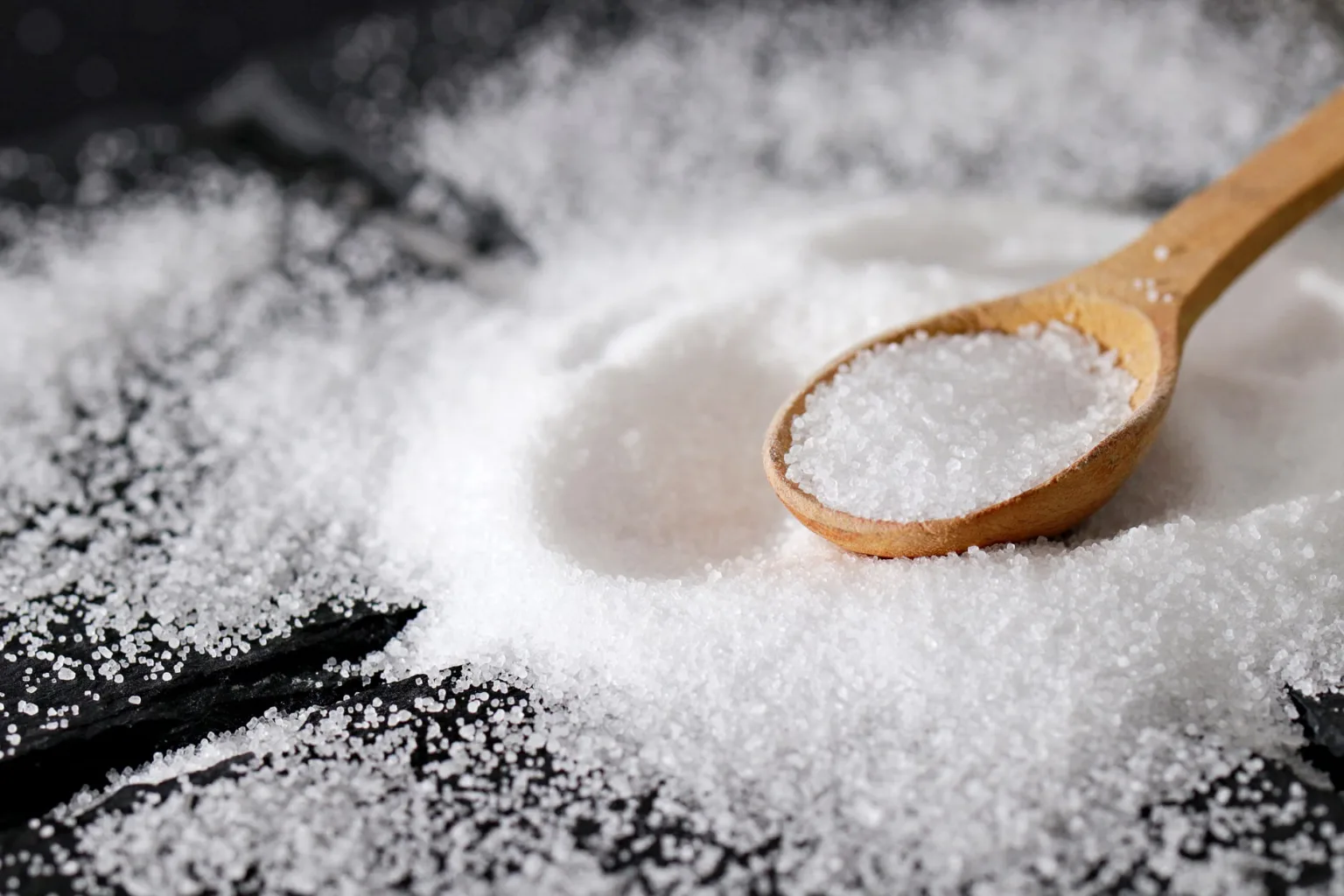
Salt for dough does not have to be a special variety: it is usually ordinary edible salt added while a dough is being prepared. It may have fine or larger crystals, and products can differ in source and processing. In dough, salt seasons the mixture and can influence how the preparation behaves, including the balance of fermentation. Fine salt is generally easy to distribute and dissolve; large crystals may take longer and will not spread in the same way if added directly. This means a recipe’s instruction to add “salt” does not always translate to an identical volume measure for every grain size. Salt contributes a salty taste; its culinary role should not be confused with a specific variety or a nutritional promise.
When to use it
Use salt when a bread, pastry, savory dough, or corn-dough recipe calls for it, and aim to distribute it evenly so the flavor is not concentrated in one area. Fine salt is convenient when it needs to mix or dissolve quickly. If you only have coarse salt, consider dissolving it in some of the recipe liquid first, or measuring by weight; a teaspoon of differently sized crystals does not necessarily contain the same amount. In fermented doughs, follow the recipe’s proportions instead of improvising: salt affects flavor and can influence fermentation.
How to use it
Check whether the recipe specifies a salt type and when to add it. If it does not name a variety, fine edible salt is usually easy to incorporate. For even distribution, mix it with the dry ingredients or dissolve it in some of the recipe liquid before combining, if the method allows. When replacing fine salt with large crystals, do not assume the same spoon measure will work: grain size changes how much fits in a volume and how quickly it dissolves. Weighing the salt can make the proportion more consistent. Mix and knead according to the recipe’s specific directions; there is no universal amount that suits every dough. Taste the result only when appropriate for the preparation, and avoid adding more without considering how much is already in the mixture.
Flavour and texture
Salt contributes a salty taste and can enhance or balance other flavors. In finished dough, uneven distribution may leave some areas saltier than others. Crystal texture matters mainly during mixing: fine salt dissolves and spreads more quickly, while coarse salt may take longer and remain noticeable if it does not dissolve. Source alone does not determine how salt will perform in a recipe; crystal size and amount are practical considerations.
How to choose it
Choose salt labeled for food use and check the grain size before buying it for dough. Fine salt is convenient for even mixing; coarse salt may need to be dissolved first or measured differently. Read the label if you want salt without additions or with specific characteristics, since products can differ in processing and added ingredients. For a more consistent result, use the format named in the recipe or weigh the salt.
Storage
Keep salt dry in a clean, tightly closed container, protected from moisture so it remains easy to measure and does not clump. Store it in a dry place and do not put a wet spoon into the container. Follow any specific storage directions on the package; the available sources do not establish a shelf life or special preservation method for this salt.
Substitutions
Fine salt can be replaced with fine sea salt or another edible salt, but do not assume that a teaspoon of each format weighs the same. Coarse crystals dissolve more slowly and distribute differently; dissolving them in some of the liquid can help spread them through the dough. When possible, compare by weight and keep the recipe’s stated proportion. No single substitution works identically in every dough.
Common mistakes
A common mistake is replacing fine salt with coarse salt and using the same spoon measure without accounting for crystal size. Salt can also remain unevenly distributed if added in one spot, or take longer to dissolve when coarse crystals are added directly. Do not assume salts with different product names behave identically, or increase the amount without checking what the recipe already contains. Salt alone does not make preserved food safe.
Safety and allergens
Use salt intended for food and follow a reliable recipe. Do not rely on salt alone to preserve food; preserved preparations require precise, safe instructions.
Culinary uses
- Sazonar masas dulces y saladas
- Realzar y equilibrar el sabor de la masa
Recommended techniques
- Incorporar y mezclar uniformemente con los ingredientes secos
- Disolver en el líquido de la receta antes de añadirla, si se busca una distribución homogénea
Pairs well with
- Harina y agua
- Masa de maíz y otros ingredientes de masa
Frequently asked questions
What kind of salt is best for dough?
Fine edible salt is usually convenient because it mixes and dissolves readily. Follow the recipe if it specifies another format.
Can I replace fine salt with coarse salt?
Yes, but do not automatically use the same volume measure. Coarse crystals dissolve more slowly and a spoonful may contain a different amount; weighing or dissolving them first can help.
Does salt affect fermented dough?
Salt can influence the balance of fermentation as well as season the dough. Follow the quantities and method in the recipe.
Sources and review
Automatically researched, cross-checked and validated content. Sources consulted:
- The Essential Glossary of Cooking Terms for the Culinary Arts - Escoffier escoffier.edu
- 15 tipos de sal para dar variedad a nuestros platos: cómo elegirlas y usarlas en la cocina directoalpaladar.com
- Sal: tipos, usos y cómo salar bien - CocinoPedia.com cocinopedia.com
- Sal Marina: Qué es, cuál es su historia y cuáles son sus beneficios - Monti pmonti.com
- Agencia Española de Seguridad Alimentaria y Nutrición aesan.gob.es
- Qué es eso llamado epistemología, para qué sirve, por qué es inexcusable para la universidad y para la paz | Reencuentro. Análisis de problemas universitarios doi.org
- Appendix B: Recipes for Disease Prevention – Culinary Medicine opentextbooks.library.arizona.edu
- Los tipos de sal y sus usos en la cocina | Recetas Nestlé recetasnestle.com.mx
- A Recipe for Memory: Hispanic Heritage as Told Through Cultural Dishes news.sunyempire.edu
- Tipos de sal y su uso en la cocina profesional - EN LA COCINA Magazine enlacocina.telemesa.es
- Preserving Garifuna Traditions During the Pandemic Holiday latinxproject.nyu.edu
- Better Tacos Start with Better Ingredients (Like the Ingredients in This Flavor-Packed Recipe) | Institute of Culinary Education ice.edu
- Roots and Recipe: Learning from Indigenous Cuisine and Language - Inside Montclair inside.montclair.edu
- Dine: Queso Fresco and Jalapeño Tamales | Bowdoin College bowdoin.edu
- Recipe cards.indd memphis.edu
- Mole Amarillo 1975 (Yellow Mole) - lacocina.utsa.edu