- Category
- Vegetables
- State
- Fresh
- Usual unit
- unit
What it is
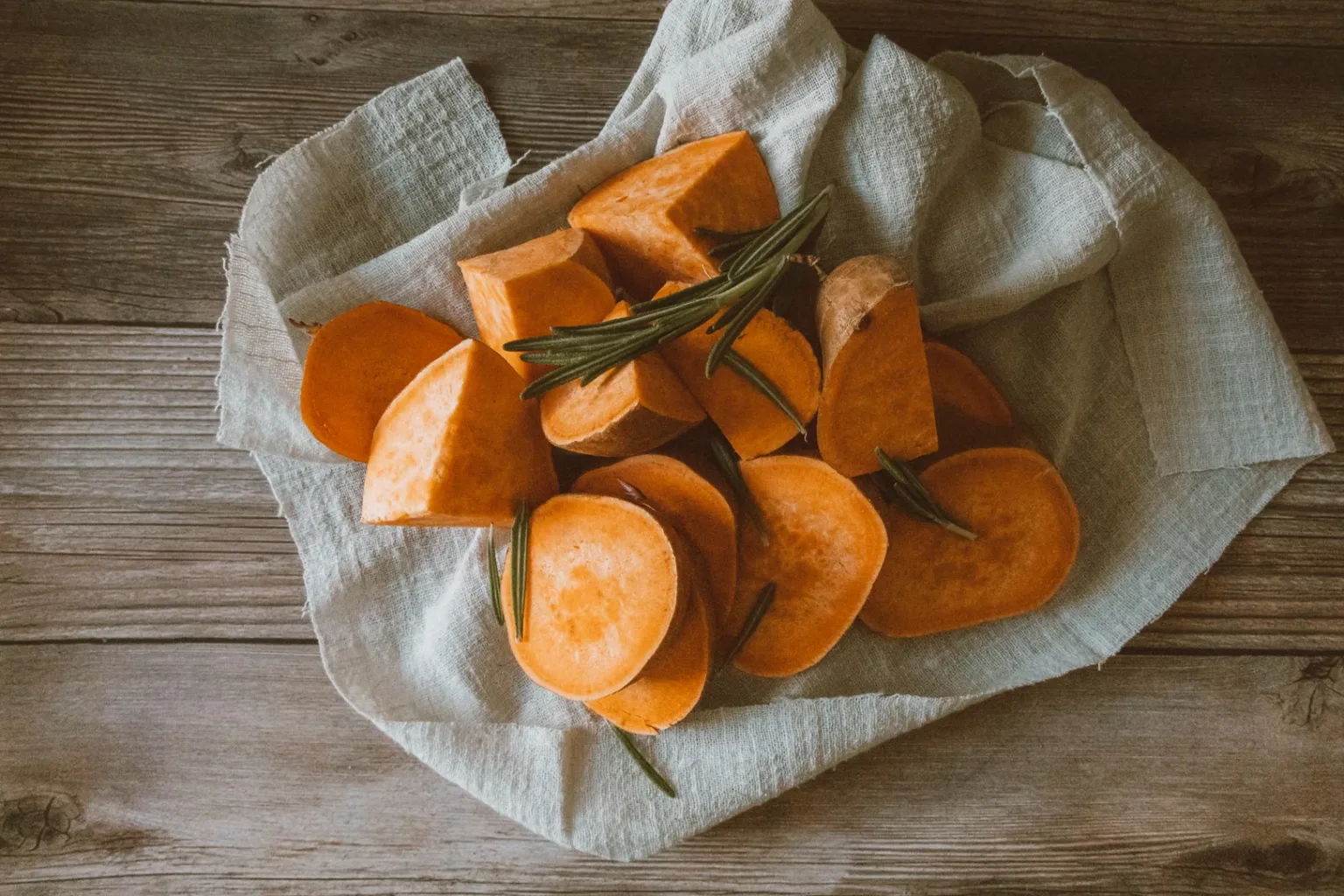
Sweet potato is the edible root of Ipomoea batatas, a member of the morning glory family. Despite the name, it is not the same plant as the white potato or a true yam, though market labels can sometimes cause confusion. Depending on the variety, its skin and flesh may be white, cream, yellow, orange, pink, reddish, or purple. Color alone does not determine quality, flavor, or texture, so expect some variation from one type to another. Sweet potatoes are sold fresh as whole roots and are also available frozen or canned. Their naturally sweet flavor works in both savory cooking and desserts.
When to use it
Use sweet potato when you want a tender side dish with natural sweetness, or a substantial ingredient for mash, soup, and stew. Bake whole roots, or cut them into cubes or wedges for roasting or stovetop cooking. Boiled or steamed pieces can be added to salads and other dishes. Sweet potato suits both savory seasonings and sweet recipes, so it need not be reserved for holiday meals. If a recipe depends on a particularly creamy mash or pieces that hold their shape, remember that variety and cooking method affect the result.
How to use it
Rinse the root under running water and scrub off dirt before preparing it. The skin is edible, so you can leave it on; peel after washing if you prefer. To bake a whole sweet potato, prick the skin with a fork so steam can escape. For roasting, cut it into cubes or wedges, coat lightly with oil and seasonings, and spread the pieces in a single layer. To boil, peel if desired, cut into chunks, cook until tender, then drain and serve or mash. Stir cooked pieces into soups and salads, or pair them with beans. Season mashed sweet potato with herbs, spices, salt, or pepper as desired.
Flavour and texture
Sweet potato has a naturally sweet flavor that roasting can bring out further. Depending on variety, color, and cooking method, the flesh may be relatively dry, firm, creamy, or soft. Once cooked, it can be mashed easily; cut pieces can retain their shape when cooked with care. The skin is edible as well. Orange, white, and purple varieties do not all have identical flavor or texture, so choose and cook with the desired result in mind rather than relying on color alone.
How to choose it
Choose small to medium roots that feel firm and have smooth, evenly colored skin. Avoid pieces with cracks, bruises, soft spots, or sprouts. If buying a bag, check each root rather than assuming they are all in equally good condition. Sweet potato varieties differ in skin and flesh color, so there is no single color that every good root must have. For a particular recipe, consider whether a whole fresh root or a frozen or canned product is the more useful form.
Storage
Keep fresh sweet potatoes in a cool, dry, dark, well-ventilated place. Do not refrigerate uncooked roots: cold storage can change their flavor and make the centers hard. Check them periodically and use roots with minor damage first; discard those with substantial decay. Published storage-life advice varies, so do not assume that every root will keep for the same length of time in every home. For cooked sweet potatoes, follow reliable guidance for refrigerating or freezing prepared food.
Substitutions
In savory dishes where sweetness is not essential, white potato can be used instead, but the flavor and texture will change. If fresh sweet potato is unavailable and you want to keep its characteristic flavor, frozen or canned sweet potato may be a practical alternative; adapt the preparation to the product's cut and condition. Do not treat true yams as another name for sweet potato: they are different ingredients and may not behave the same way in a recipe.
Common mistakes
Do not confuse sweet potato with white potato or true yam; they are different ingredients. Avoid roots with soft spots, cracks, or sprouts, and do not refrigerate raw sweet potatoes. Wash and scrub the skin before cutting or cooking. If substituting white potato, remember that the dish will be less sweet and its texture will differ.
Safety and allergens
Wash and scrub sweet potatoes under running water before cutting or cooking. Discard roots with severe mold, rot, or an unpleasant odor. Keep hands and utensils clean while preparing food.
Culinary uses
- Guarnición asada, hervida o hecha puré
- Ingrediente para sopas, guisos, ensaladas y platos rellenos
Recommended techniques
- Asar u hornear
- Hervir o cocinar al vapor
- Saltear, cocinar a la parrilla o en microondas
Pairs well with
- Frijoles negros y salsa
- Brócoli con feta o yogur
- Aceite y hierbas o especias
Frequently asked questions
Are sweet potatoes and yams the same?
No. They are different vegetables. Some shops use the word yam for certain sweet potato varieties, but that label does not make them the same ingredient.
Can you eat sweet potato skin?
Yes. The skin is edible; wash and scrub it well before cooking or cutting the root.
How should I store raw sweet potatoes?
Keep them in a cool, dry, dark, well-ventilated place. Avoid refrigerating them raw, since cold can change the flavor and harden the center.
Estimated nutrition
- Fat
- 1.28 g
- Saturates
- 0.32 g
- Carbohydrate
- 16.4 g
- Sugars
- 4.17 g
- Fibre
- 1.9 g
- Protein
- 5.45 g
- Salt
- 0.43 g
Sources and review
Automatically researched, cross-checked and validated content. Sources consulted:
- Client Challenge doi.org
- CULTIVO DEL LILIUM mapa.gob.es
- HappyHealthy Fact Sheet: Sweet Potatoes | Mississippi State University Extension Service extension.msstate.edu
- Sweet Potatoes • The Nutrition Source nutritionsource.hsph.harvard.edu
- Sweetpotato Curing and Storage extension.psu.edu
- Potatoes, Sweet – Pieces or Whole - National Center for Home Food Preservation nchfp.uga.edu
- Harvest of the Month: Sweet Potatoes – Health & Well-Being health.extension.wisc.edu
- HNC Food Skills Cookbook - Hawai'i Nutrition Center nutritioncenter.ctahr.hawaii.edu
- The Quality of Sweet Potato Chips as Influenced by Variety, ... repository.lsu.edu
- Postharvest Handling of Sweetpotatoes | NC State Extension Publications content.ces.ncsu.edu
- Sweet Potatoes | UNL Food | Nebraska food.unl.edu
- EL CAMOTE repositorio.utn.edu.ec
- Camote, la papa dulce de América | Recetas Nestlé recetasnestle.com.ec
- - YouTube youtube.com
- Camote: 9 beneficios, propiedades y cómo consumir - Tua Saúde tuasaude.com
- Camote, una especial papa dulce | Secretaría de Agricultura y Desarrollo Rural | Gobierno | gob.mx gob.mx