- Category
- Nuts and seeds
- State
- Paste
- Usual unit
- tablespoon
What it is
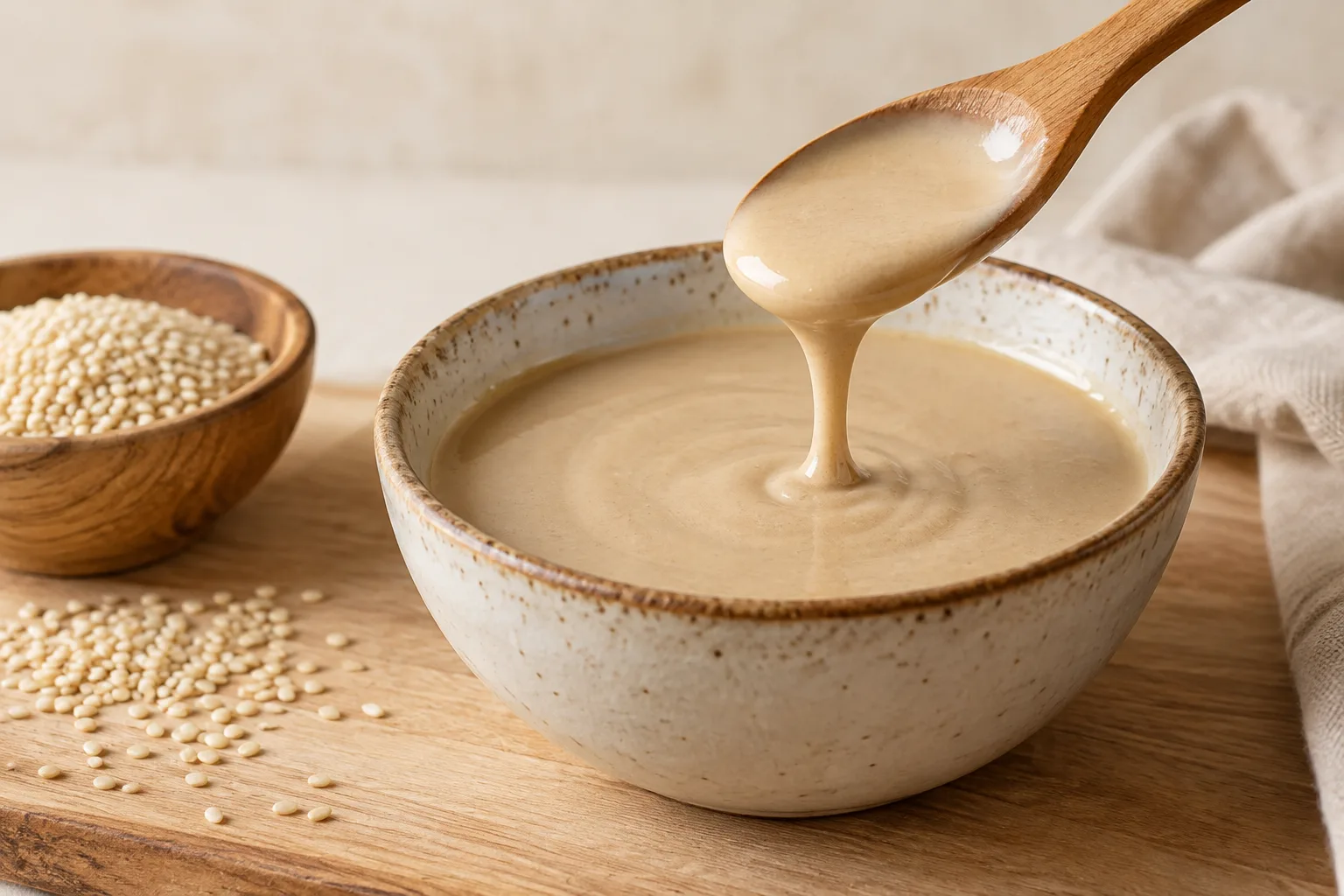
Tahini, also called tahina or tahin, is a paste made from ground sesame seeds. Depending on the seeds and how they are processed, it may be pale and mild or darker and more aromatic; not every version contains salt or other additions, so check the label. It is used on its own and as a base for sauces and spreads. Oil may separate and collect on top: this is a normal variation in the paste and is not, by itself, proof that the product has gone bad. Tahini is not the same as a prepared tahini sauce, which may include liquids and other seasonings.
When to use it
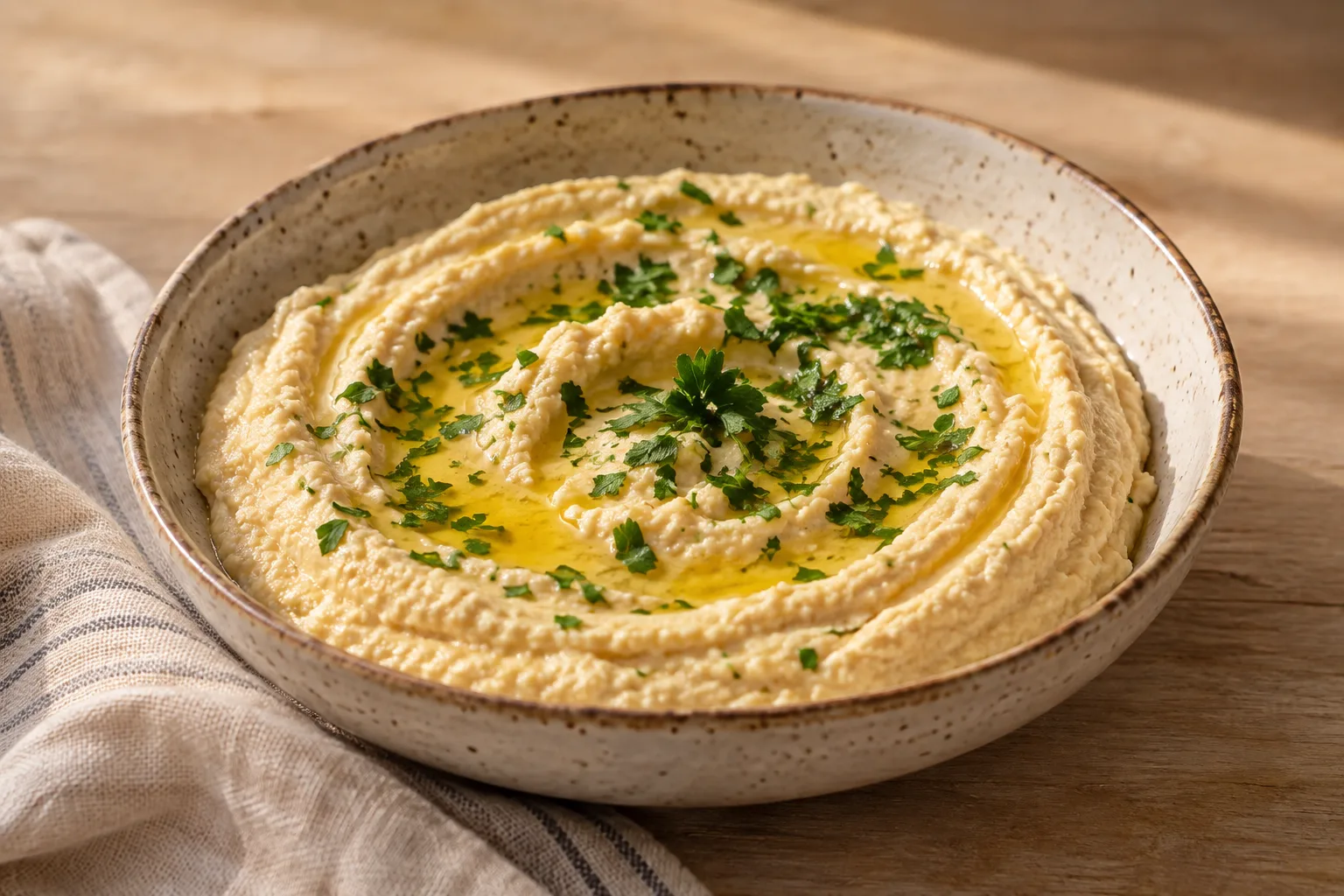
Use tahini when you want a rich texture and a pronounced sesame flavor. It is commonly mixed into mashed chickpeas for hummus and into eggplant preparations such as baba ganoush. It also works in salad dressings and sauces for vegetables, falafel, or meat, and can be spread on bread. In sweet recipes, it can be paired with chocolate or dates. If you are new to a particular tahini, start with a small amount and adjust the flavor of the dish.
How to use it
Before serving or measuring, stir from the bottom of the container to reincorporate any oil that has separated. Use tahini as a spread, mix it with mashed chickpeas or eggplant for a dip, or whisk it into a dressing. To make a looser sauce, gradually combine it with water or lemon juice; garlic and other seasonings are options, not required ingredients in plain tahini. You can also add it to sweet preparations with chocolate or dates. When mixing it into another preparation, stir until even and taste before adding more, since intensity varies between tahinis.
Flavour and texture
Tahini tastes of sesame and can be mild or more concentrated and toasty, depending on the seeds and their processing. The paste is usually creamy and rich; some versions are looser while others are denser. Oil may rise to the surface as the thicker paste settles. Stirring thoroughly makes the mixture more uniform again. Differences in color and texture between products are normal, so do not expect every tahini to look or taste the same.
How to choose it
Read the ingredient list to check whether you are buying plain tahini or an already seasoned sauce, and see whether salt has been added. Versions made with untoasted seeds tend to have a milder profile, while those made with toasted seeds tend to be more aromatic and intense. Color and thickness also vary depending on whether whole or hulled seeds are used. Choose according to the recipe and flavor you want, and always check the package for sesame.
Storage
Follow the storage directions on the label, since the available evidence does not establish one rule for every product. Close the container after each use and use a clean utensil. If oil separates and collects on top, stir the paste thoroughly before serving; this separation is common. Do not substitute a general shelf-life claim for the manufacturer’s date and product-specific directions.
Substitutions
In some recipes, peanut butter can stand in for tahini, but it brings a different flavor and will not produce an identical result. Another option is to make tahini by grinding sesame seeds into a paste. If a recipe relies on tahini’s distinctive sesame flavor, a replacement will change the dish; adjust the amount and consistency to suit the preparation.
Common mistakes
Do not treat oil separation as a defect on its own: stir from the bottom before deciding how to use the paste. Another common mistake is assuming that every variety has the same flavor, color, or thickness, or that plain tahini already contains lemon, garlic, or salt. Check the label and taste the dish before adding more tahini or seasonings.
Safety and allergens
Tahini is made from sesame. If you need to avoid sesame, do not eat it and check the product label. Follow the package directions for storage.
Culinary uses
- Salsa y aderezo
- Base cremosa para dips y untables
- Ingrediente para preparaciones dulces
Recommended techniques
- Remover bien antes de medir y usar
- Mezclar con líquido para preparar una salsa más fluida
- Incorporar a purés, aliños y masas
Pairs well with
- Garbanzos y berenjena
- Limón y ajo
- Chocolate y dátiles
- Pan y verduras asadas
Frequently asked questions
Why does oil separate from tahini?
Oil may separate from the thicker part of the paste. Stir well from the bottom to bring it back together before using.
Does tahini always contain lemon, garlic, or salt?
No. Plain tahini is sesame-seed paste; those ingredients can be added when making a sauce, and some packaged products contain additional ingredients.
What can I use instead of tahini?
Peanut butter can work in some recipes, though it changes the flavor. You can also make a sesame paste by grinding sesame seeds.
Estimated nutrition
- Fat
- 64.3 g
- Saturates
- 8.93 g
- Carbohydrate
- 10.7 g
- Sugars
- 0 g
- Fibre
- 3.6 g
- Protein
- 25 g
- Salt
- 0 g
Sources and review
Automatically researched, cross-checked and validated content. Sources consulted:
- Client Challenge doi.org
- (PDF) Factors Affecting Tahini Quality - Academia.edu academia.edu
- Food Preservation | Colorado State University Extension extension.colostate.edu
- Culinary Medicine - extension.arizona.edu extension.arizona.edu
- Preserve The Harvest Research | USU extension.usu.edu
- Temperatures for Food Preservation - National Center for Home Food Preservation nchfp.uga.edu
- Tahini - Wikipedia, la enciclopedia libre es.wikipedia.org
- Cómo Hacer Tahini Casero - Danza de Fogones danzadefogones.com
- El tahini: ¿qué es y dónde comprarlo? | El arte de comer bien | mentta mentta.com
- ▷ Qué es y cómo se usa el tahini | Egipto Exclusivo egiptoexclusivo.com
- Tahini, la pasta de sésamo | The Gourmet Journal thegourmetjournal.com
- - YouTube youtube.com
- Descubre el encanto del tahini en la cocina | Recetas Nestlé recetasnestle.com.ec
- Qué es, Beneficios y Curiosidades del Oro Líquido del Sésamo harineraelmolino.com
- Descubre el encanto del tahini en la cocina | Recetas Nestlé recetasnestle.cl
- Qué es el tahini y para qué lo quiero | CocinaSinReceta.com cocinasinreceta.com