- Category
- Vegetables
- State
- Fresh
- Usual unit
- unidades
What it is
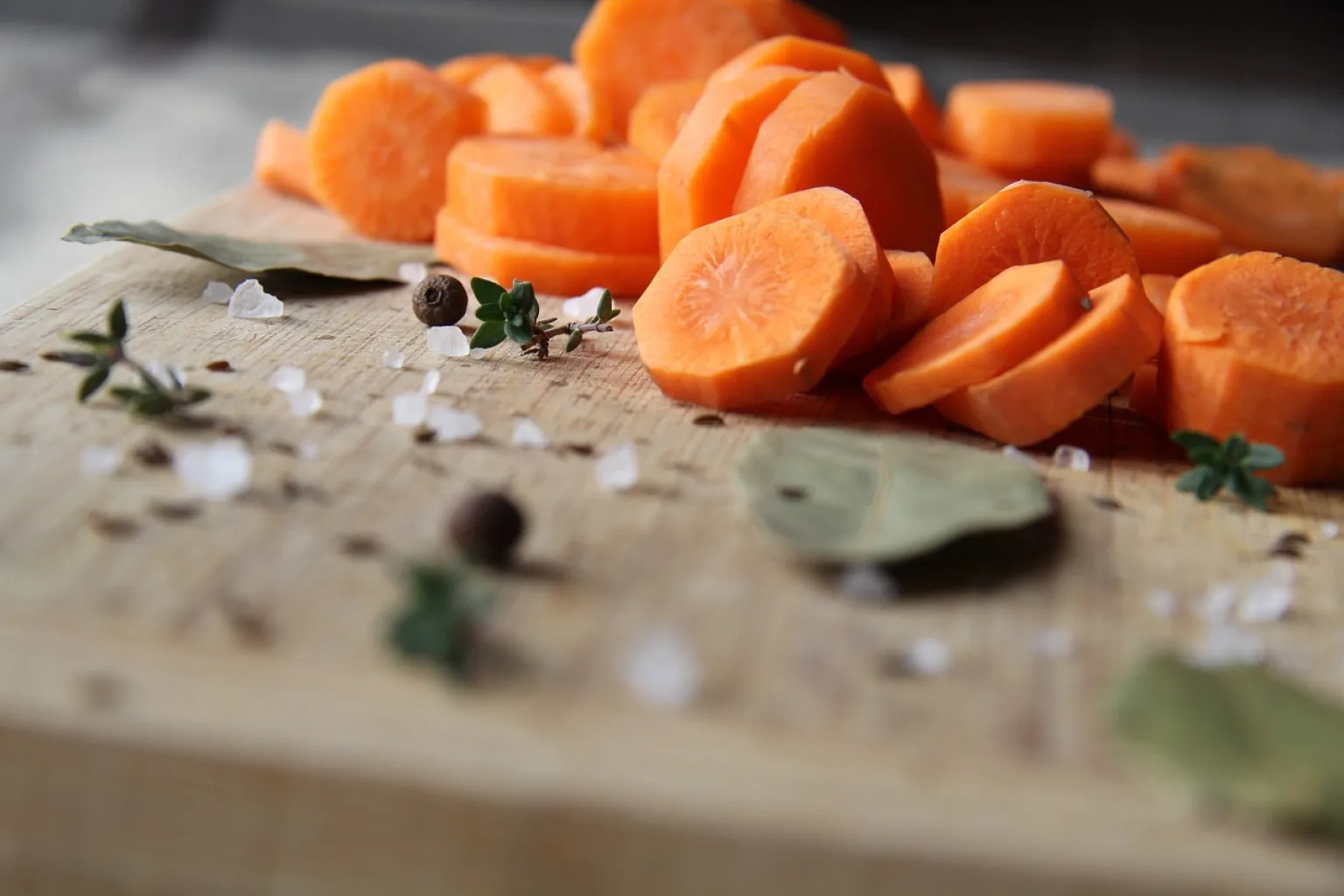
A carrot is the edible root of a vegetable in the Apiaceae family. The most familiar market form is long and orange, but carrots also come in white, yellow, red, and purple varieties. The flesh is firm and juicy: raw carrot has a crisp bite, while cooking softens it and makes its sweetness more noticeable. The root is the part most often eaten, with or without its skin depending on the preparation. Fresh carrots are sold whole in a range of sizes. Shape, color, and texture vary among varieties, so choose according to the cut and result you want rather than color alone. Carrots can be used as a central ingredient or as a supporting vegetable in both savory cooking and sweet baking.
When to use it
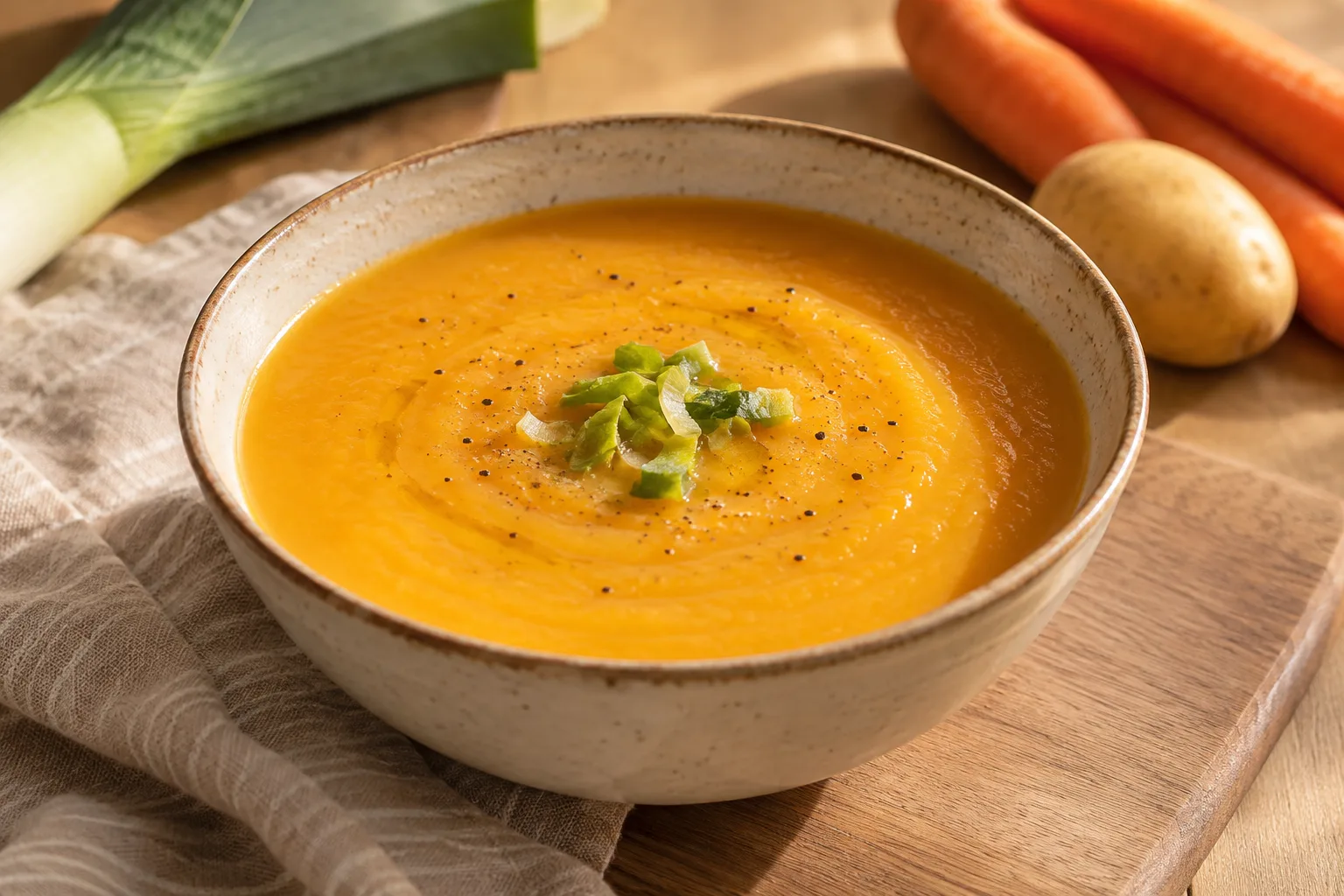
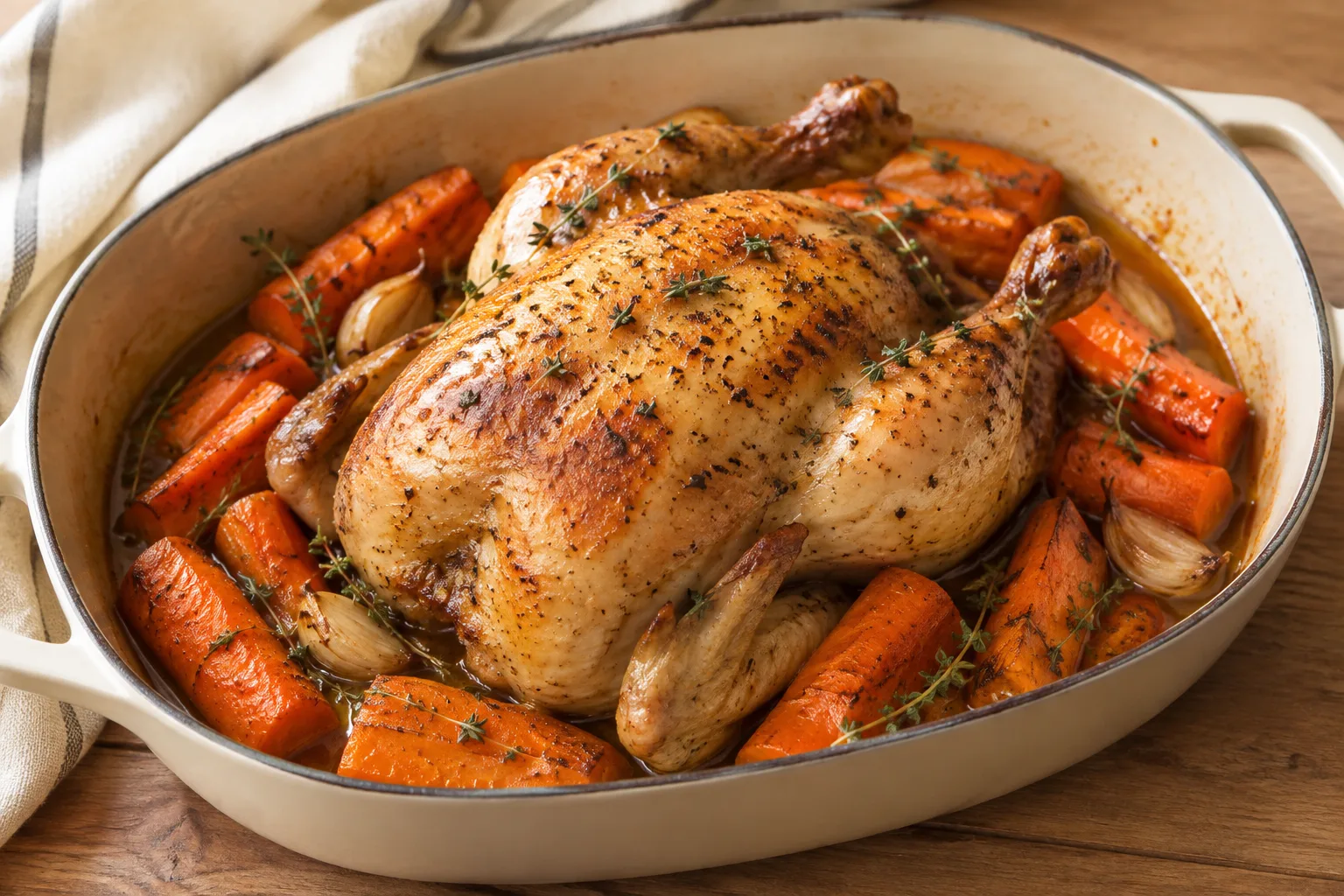
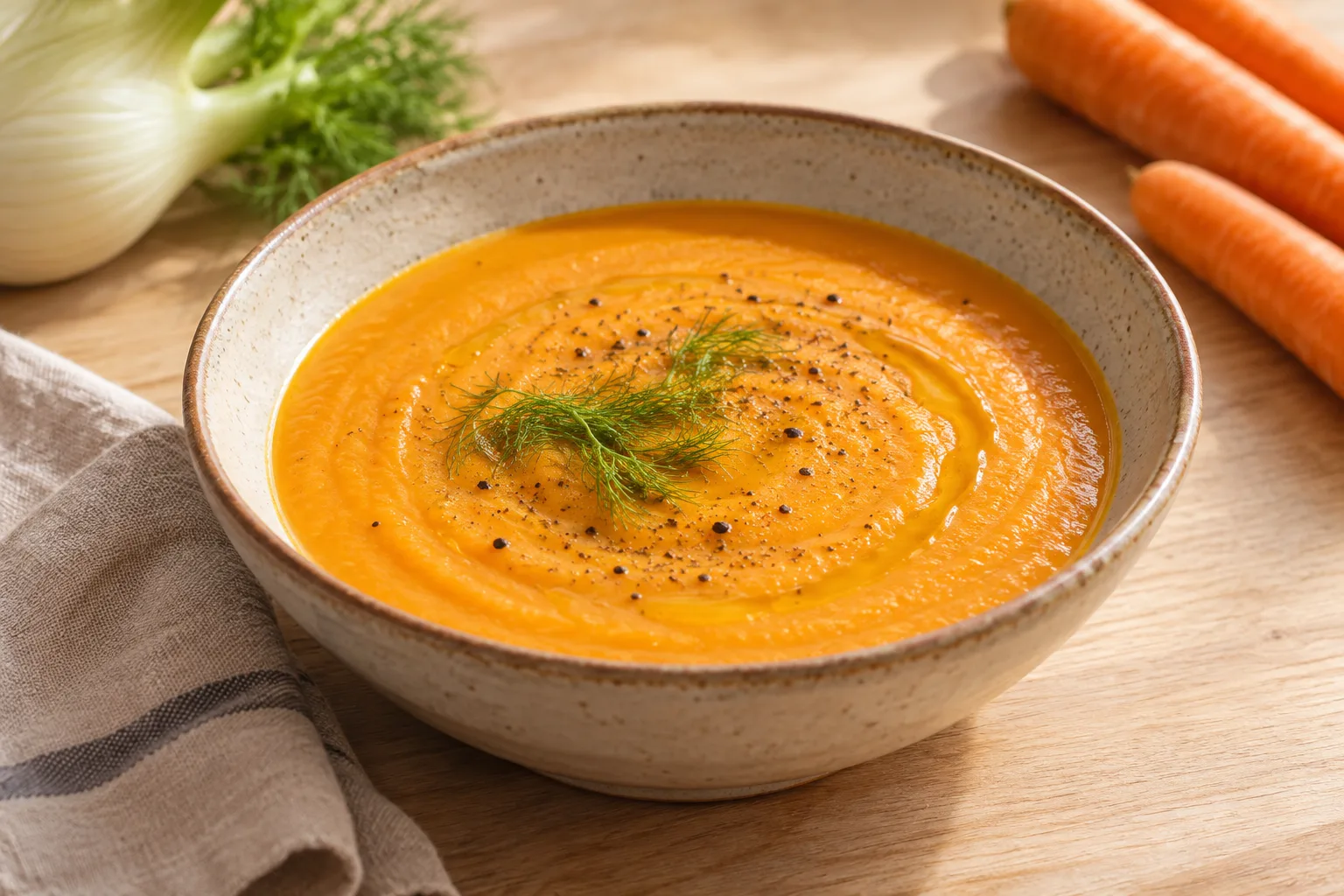
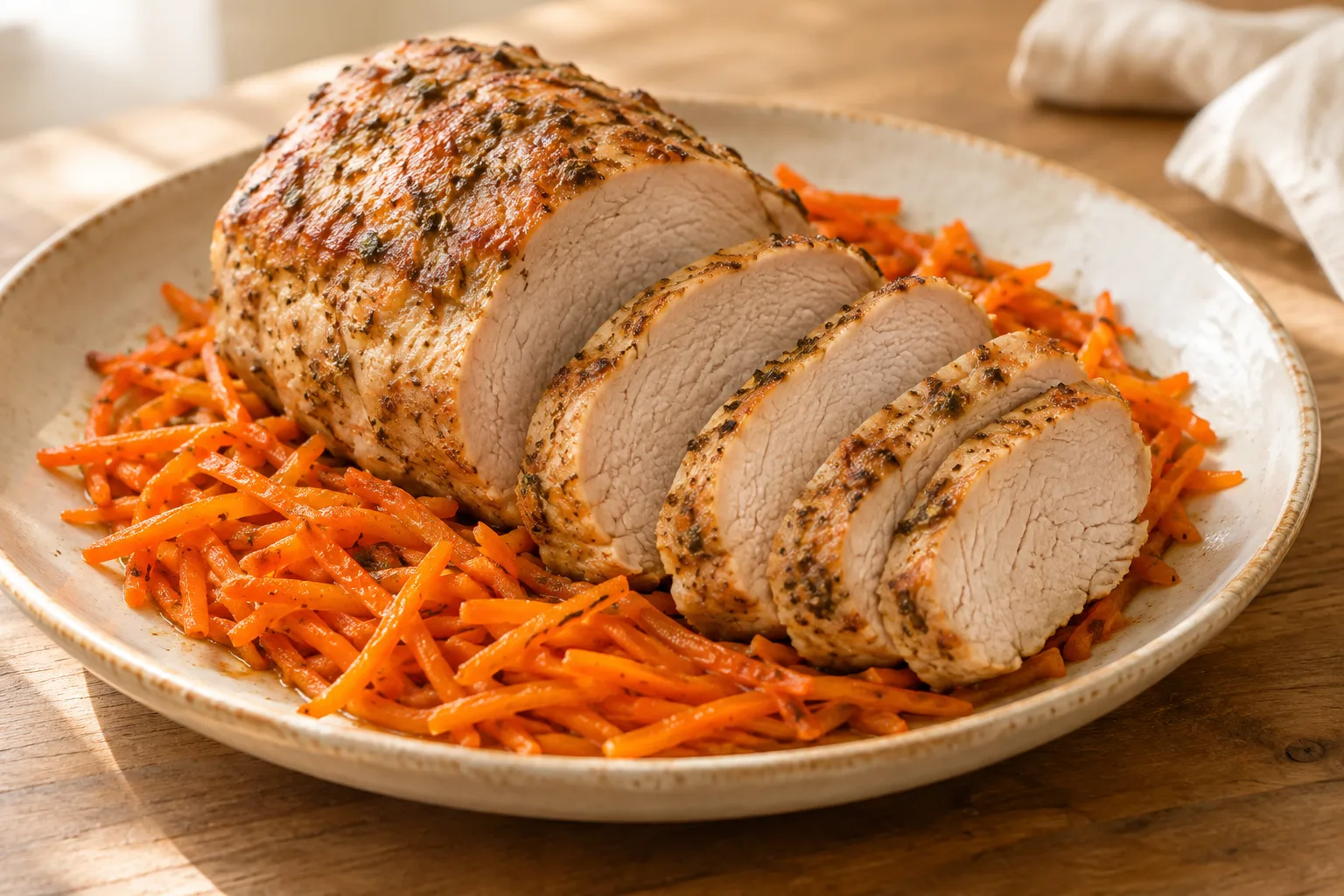
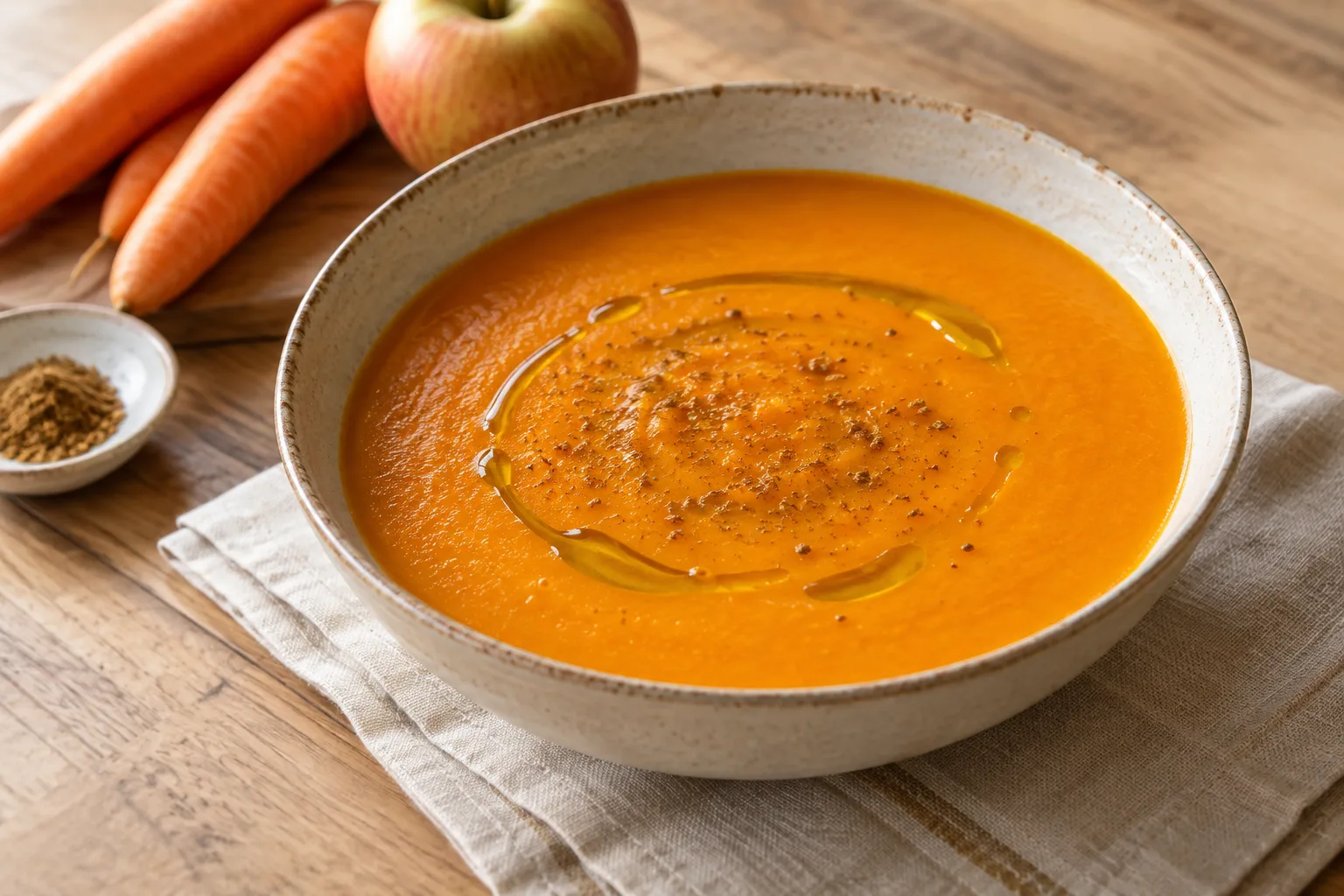
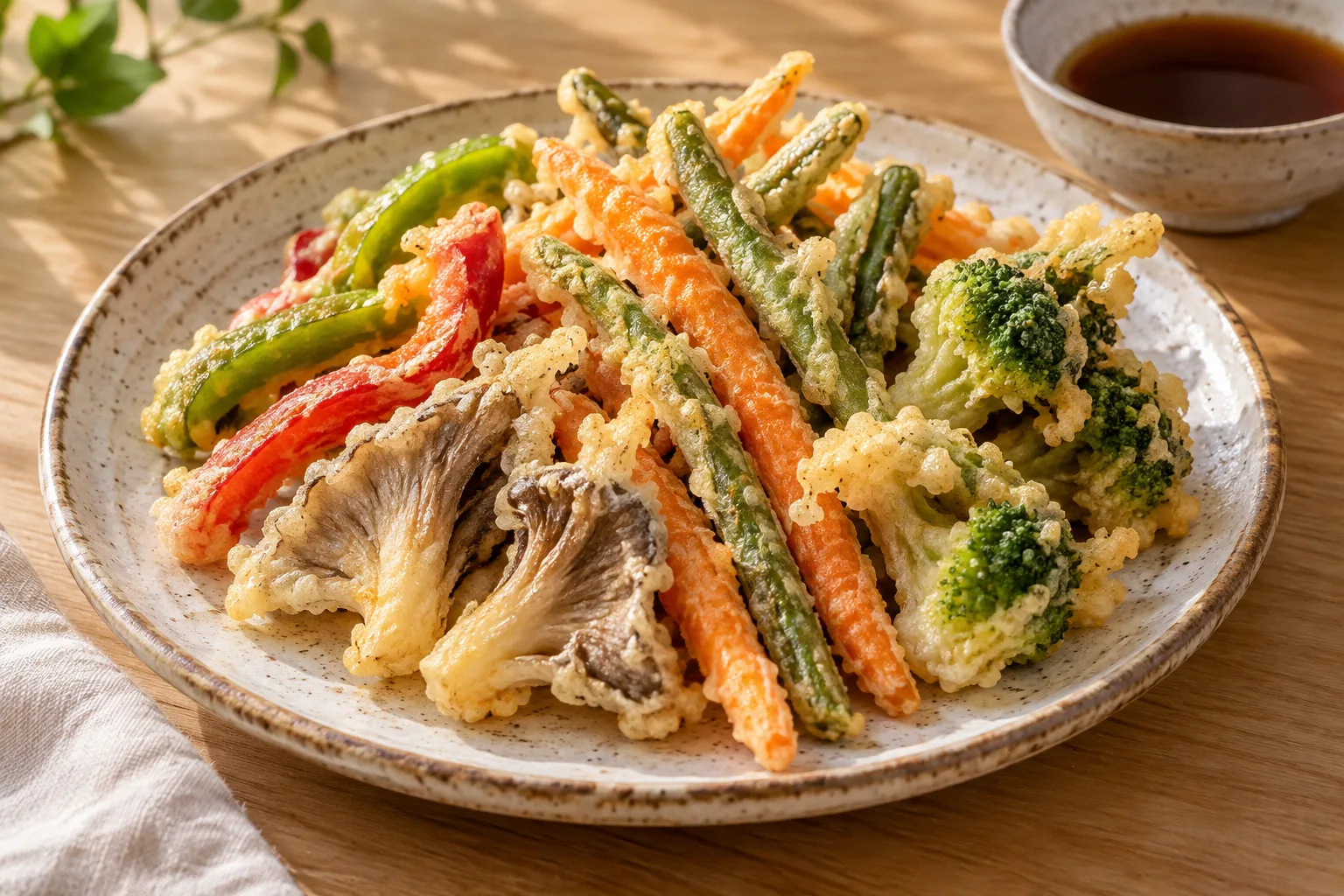
Use carrots raw when you want crisp texture and gentle sweetness in a salad, vegetable platter, or snack. Grate or slice them thinly to distribute them through a dish; cut them into sticks or rounds when you want the pieces to remain distinct. Cooked carrots add color and sweetness to soups, purées, sauces, stews, and braises, and can also be served as a side dish. They work in sweet baking, including cakes and loaves. Smaller or medium roots are a practical choice for raw eating if you prefer a tender bite. Choose the cut and cooking approach to suit the dish, since the size and shape of the pieces affect the finished texture.
How to use it
Remove any leafy tops and clean the root before preparing it. Peel it if the recipe calls for peeling; some preparations, including certain roasted carrots, are made with the skin on. Cut pieces to a consistent size so they cook more evenly. For a salad, grate or finely slice the carrot and combine it with cabbage, apple, lemon, or a dressing. For soups and stews, cut it into rounds or chunks and cook it with the other ingredients; it can also be boiled or steamed and blended into a purée or soup. For sautéing, cut it into sticks or rounds. In baking, grate it and fold it into cake or loaf batter. Match the cut to the result: fine pieces blend in, while larger pieces keep more presence in the dish.
Flavour and texture
Carrots taste mild, gently sweet, and sometimes slightly earthy, with differences among varieties. Raw, they are firm, juicy, and crisp; grated or thinly sliced pieces blend easily into salads, while sticks retain a more pronounced bite. Cooking softens the root and can make its sweetness more noticeable in soups, stews, or glazed preparations. Orange is a common color, but carrots also come in other colors that give a dish a different appearance.
How to choose it
Choose roots that feel firm and have relatively smooth skin, without obvious spots or soft areas. Small or medium carrots are a practical choice for raw eating; for other recipes, select a size that makes the intended cut easy. If the tops are attached, look for leaves that appear fresh and green. Carrots may be orange, yellow, white, red, or purple; color alone does not determine how a carrot should be cooked. Avoid roots that are limp or spotted, and choose a shape and size suited to the way you plan to prepare them.
Storage
The available sources recommend keeping fresh carrots in the refrigerator; one commercial source says they may keep there for up to two or three weeks, though actual storage life depends on their condition when bought and the storage conditions. Another source recommends a cool, airy place and wiping the surface with a damp cloth before storing. Removing leafy tops may make storage easier. For packaged or cut products, follow any storage and use instructions on the label.
Substitutions
Carrots in different colors can stand in for one another in many preparations, although the appearance and possibly the perceived flavor of the dish will change. When switching varieties, consider their size and the cut required by the recipe. The available evidence does not establish exact quantity or cooking-time equivalents among varieties, so adjust the preparation by checking texture rather than assuming every type behaves identically.
Common mistakes
Choosing soft or spotted roots can make for a less appealing result, so look for firm carrots. Cutting pieces in very different sizes makes even cooking harder. Do not assume that all carrots are orange or that every variety has the same shape and size. Choose a cut that suits the dish and check the texture as you cook instead of relying on one fixed cooking time for every piece.
Safety and allergens
The supplied evidence identifies no carrot-specific safety warning for fresh carrots. Handle and prepare the produce carefully, and follow storage and use instructions on the label for packaged or cut products. People allergic to species in the Apiaceae family may experience itching or swelling of the mouth or throat; stop eating the carrot and seek medical advice if a reaction occurs.
Culinary uses
- Ingrediente principal en ensaladas, cremas y preparaciones dulces
- Base aromática o complemento para guisos, salsas y guarniciones
Recommended techniques
- Consumir cruda, entera, rallada o cortada
- Cocer, cocinar al vapor, saltear o asar
- Hacer puré o crema
Pairs well with
- Col o repollo en ensaladas
- Cebolla y ajo en cremas y guisos
- Manzana, cítricos o hierbas en ensaladas y preparaciones dulces
- Garbanzos y tahini en hummus
Frequently asked questions
Do carrots need to be peeled?
Not necessarily. Some preparations leave the skin on and others peel the root; choose according to the recipe and the texture you want. Clean the carrot before preparing it.
Can carrots be eaten raw?
Yes. Whole, cut into sticks, grated, or thinly sliced, they add a crisp texture and gentle sweetness to salads and other dishes.
What colors do carrots come in?
Besides orange, carrots are available in white, yellow, red, and purple varieties. Their colors can give a dish a different appearance.
How should fresh carrots be stored?
Keep them in the refrigerator and follow label directions for packaged or cut carrots. Storage life varies with the condition of the carrots and the storage conditions.
Estimated nutrition
- Fat
- 0 g
- Saturates
- 0 g
- Carbohydrate
- 8.97 g
- Sugars
- 6.41 g
- Fibre
- 2.6 g
- Protein
- 1.28 g
- Salt
- 0.19 g
Sources and review
Automatically researched, cross-checked and validated content. Sources consulted:
- En el etiquetado alimentario hay algunas menciones que son obligatorias eletiquetadocuentamucho.aesan.gob.es
- Client Challenge doi.org
- Aesan - Agencia Española de Seguridad Alimentaria y Nutrición aesan.gob.es
- Zanahoria: Variedades, Propiedades, Beneficios y Cultivo frutamerca.com
- NOTICIA: Zanahoria, la hortaliza revitalizante de la cocina del mundo. dulceslaly.es
- Zanahoria | HerbaZest herbazest.com
- Zanahoria - Trevijano trevijano.com
- Zanahoria: propiedades, beneficios, tipos, cultivo y todo lo que debes saber jardineriaon.com
- Beneficios, propiedades y recetas de zanahoria dehesaelmilagro.com
- Recetas con zanahoria - Paulina Cocina paulinacocina.net
- Gastronomía del Perú - Wikipedia, la enciclopedia libre es.wikipedia.org
- Cómo cocer zanahorias para obtener una textura deliciosa y tierna 20minutos.es
- 12 recetas con zanahoria: propuestas dulces y saladas para disfrutar de su gran sabor bonviveur.com
- Cómo cocer zanahorias para obtener una textura deliciosa y tierna agroinforma.ibercaja.es
- Conoce todo el poder de la zanahoria | Recetas Nestlé recetasnestle.com.co
- Zanahorias: variedades, beneficios y usos – Pimienta y Purpurina pimientaypurpurina.com
- Zanahoria: propiedades nutricionales, beneficios para la salud y usos en cocina de esta hortaliza súper versátil directoalpaladar.com