- Category
- Grains, flour and pasta
- State
- Powdered
- Usual unit
- Variable
What it is
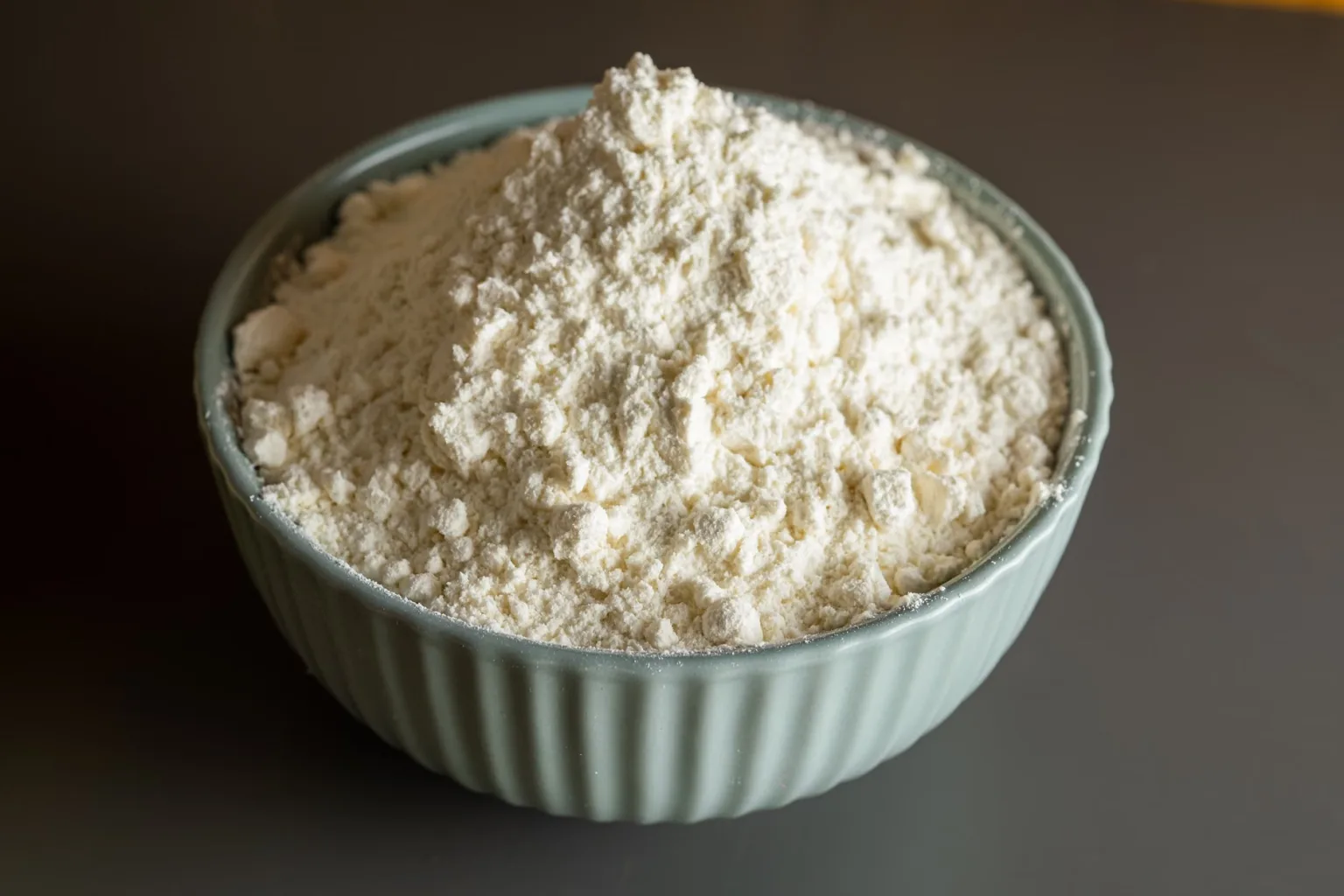
Flour is a powdered ingredient made by milling cereals and other raw materials, including legumes, seeds and nuts. In everyday use, the word often means wheat flour, but corn, rice, oat, rye, chickpea and other flours are also available. Their source, fineness and processing affect the result. In wheat flour, the amount and properties of the proteins influence dough elasticity and structure; whole-grain flour retains parts of the grain removed from some refined flours. “Flour” therefore does not describe one single product or a universal substitute. Check which kind a recipe calls for before using it.
When to use it
Use flour when a recipe needs dough, structure in a baked product, thickening for a sauce or soup, or a coating for frying. Wheat flour is common in breads and sweet or savory doughs, but the specific type matters: some flours suit elastic, fermented doughs, while others are better for preparations that do not rely on that structure. Corn, rice and chickpea flours have their own characteristics and suit particular preparations. Choose according to the recipe and the product label rather than assuming that one all-purpose flour will work the same way in every dish.
How to use it
First identify the flour type and the result the recipe is designed to produce. For dough, combine the flour with the listed ingredients and knead when the preparation calls for structure; stronger wheat flours are commonly used for bread-making doughs. For thickening, add the flour as directed in the recipe and cook the preparation until it reaches the desired consistency. Flour can also coat food before frying. Changing the grain, refinement level or blend can alter liquid absorption, elasticity, flavor and texture, so do not swap flours automatically. If you need to avoid gluten, choose a suitable flour or blend and check its labeling carefully.
Flavour and texture
Flavor and texture vary with the raw material and processing. Refined wheat flour is often fairly neutral, while whole-grain flours can be more aromatic and make denser baked goods. Corn has different characteristics from wheat; rye flour can taste more pronounced and produce compact breads. Wheat flour can form elastic dough when hydrated and worked, but gluten-free flours do not necessarily reproduce that structure. Fineness and the presence of bran or germ also affect the finished texture.
How to choose it
Read the product name and check its source: “flour” can mean quite different ingredients. Choose a type suited to the preparation, such as flour specified for bread, baking or another particular use, and note whether it is whole-grain, refined or a blend. Do not assume a product is gluten-free from its appearance or from the grain you think it contains; check the label and allergen information. If a recipe names a particular flour, consider how changing it may affect structure and texture.
Storage
Keep flour tightly closed in a cool, dry place and away from strong odors. Flour types differ: whole-grain and nut flours can turn rancid sooner than some refined flours, so check their condition and the package information. Follow any specific storage instructions from the manufacturer. Keeping the package closed helps protect the product from moisture and surrounding odors.
Substitutions
There is no universal flour substitute because the result depends on the flour’s source and its job in the recipe. Rice, corn or gluten-free blended flours may work in adapted preparations, but liquid, binders or technique may need adjustment. Cornstarch can replace flour in some thickening recipes, although the required amount and finish change. Check the flour’s purpose before substituting.
Common mistakes
A frequent mistake is treating all flours as alike. Switching wheat for corn, rice or a gluten-free blend can change elasticity, absorption, flavor and texture; a recipe may also behave differently if refined flour is replaced with whole-grain flour. Another mistake is assuming that gluten-free flour directly replaces wheat flour in every dough. Use the specified type or adapt the recipe deliberately.
Safety and allergens
Check the label to identify the raw material and allergens: the generic word “flour” alone does not tell you whether the product contains wheat or other gluten-containing cereals. If an allergy or intolerance requires avoiding an ingredient, confirm the product information and ask the seller when needed. Follow the package’s storage and use directions.
Culinary uses
- Dar estructura a panes, masas y productos horneados
- Espesar salsas, sopas y guisos
- Servir de cobertura para rebozados y frituras
Recommended techniques
- Amasar y formar masas
- Hornear panes y repostería
- Dispersar en líquidos para espesar
- Enharinar alimentos antes de freírlos
Pairs well with
- Agua o líquidos para hidratar y formar masas
- Levadura en masas fermentadas
- Grasas y azúcares en masas enriquecidas
- Otras harinas para ajustar sabor y textura
Frequently asked questions
Is all flour made from wheat?
No. Flours are made from different cereals and also from legumes, seeds and other ingredients. Check the full product name.
Can I replace wheat flour with rice flour?
Sometimes, but it is not an automatic swap. Structure, absorption and texture can change, so the recipe may need adaptation.
Does flour always contain gluten?
No. It depends on the raw material. Wheat flour contains gluten, while flours from other ingredients are also available; check the label and allergen information.
Estimated nutrition
- Fat
- 0 g
- Saturates
- 0 g
- Carbohydrate
- 76.7 g
- Sugars
- 0 g
- Fibre
- 3.3 g
- Protein
- 10 g
- Salt
- 0 g
Sources and review
Automatically researched, cross-checked and validated content. Sources consulted:
- En el etiquetado alimentario hay algunas menciones que son obligatorias eletiquetadocuentamucho.aesan.gob.es
- Cómo sustituir maicena por harina con cantidades| Cocinatis cocinatis.com
- Client Challenge doi.org
- Harina - Wikipedia, la enciclopedia libre es.wikipedia.org
- Guía: tipos de harina, usos y características | Aprende Institute aprende.com
- Más allá del trigo: 15 harinas perfectas para cocinar abc.es
- Tipos de harina de trigo, un alimento básico en la cocina: guía para usarlas directoalpaladar.com
- Qué es la harina y qué definiciones y usos sorprendentes tiene aprendix.org
- Tipos de harina y sus principales usos. Las 8 harinas más utilizadas | A examen | Consum consum.es
- Qué tipos de harina hay y cuáles usar - Pastas Gallo : Pastas Gallo pastasgallo.es
- Tipos de harinas: cuáles existen, beneficios y usos culinarios nutridieta.com
- Tipos de harina y su uso en la cocina profesional - EN LA COCINA Magazine enlacocina.telemesa.es
- Guía completa de sustitutos de harinas sin gluten para hornear - Sweetit Academy sweetit.es
- Cómo la elección de la harina afecta la textura y sabor del pan | Harinas De la Parra harinasdelaparra.es
- Harina: tipos, usos en cocina y elegir - CocinoPedia.com cocinopedia.com