- Category
- Oils and fats
- State
- Fresh
- Usual unit
- tablespoon
What it is
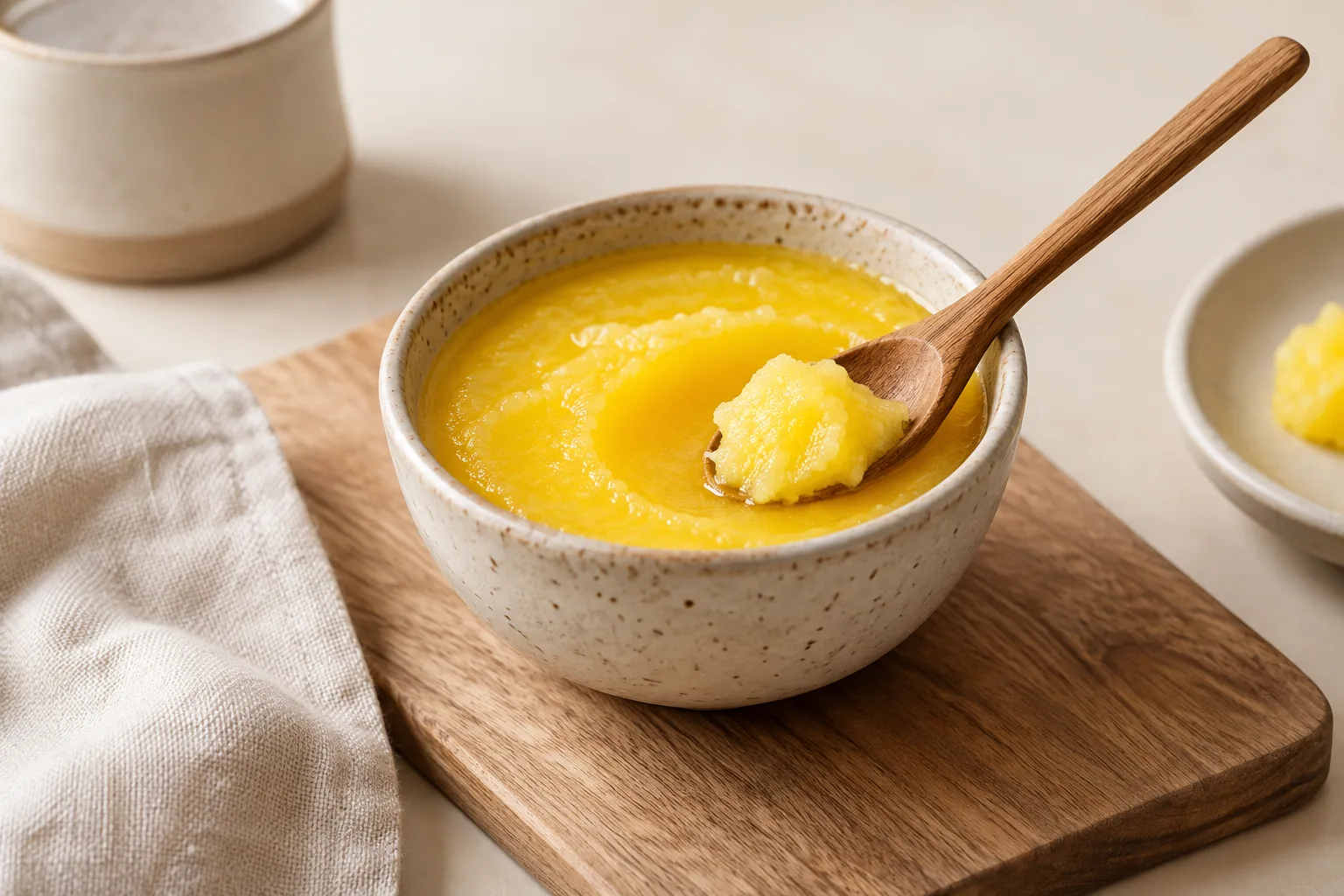
Ghee is a dairy fat made by heating butter and separating the fat from much of its water and milk solids. Some ghee-making processes heat the butter longer than processes used for clarified butter, which can develop toasted flavors. Ghee is a concentrated fat, not a spread with the same composition or cooking behavior as ordinary butter. Products can differ according to ingredients and processing, so check the label, particularly if you need information about ingredients or allergens.
When to use it
Use ghee when you want a cooking fat with a distinct, toasted flavor for sautéing vegetables, cooking rice, or browning ingredients in a pan. It can also be used in some baked goods or added as a finishing touch to cooked food. Clarified fat generally tolerates more heat than ordinary butter, but the smoke point depends on the product and its purity. Do not let it smoke, and follow the package directions. If a recipe relies on the water or milk solids in butter, substituting ghee may change the result.
How to use it
Scoop out a small amount with a clean, dry utensil, melt it in a pan, and add the food once the fat is hot but not smoking. Use it to sauté vegetables, brown ingredients, or flavor rice; it can also replace another fat in a baking recipe when the recipe allows. For a finishing touch, drizzle a little melted ghee over cooked vegetables or grains. Ghee has its own flavor and does not contain the same proportion of water and solids as butter, so adjust the amount and method to suit the recipe, and check the package for product-specific directions.
Flavour and texture
Ghee typically tastes more concentrated and toasted than ordinary butter, sometimes with nut-like notes. It is smooth when melted and may become solid as it cools; its exact consistency varies with the product and storage conditions. Its aroma can stand out in simple dishes, so start with a small amount.
How to choose it
Choose a sealed, undamaged package and check its ingredient list, date, and manufacturer’s directions. If the source of the fat or the presence of milk matters to you, consult the label rather than assuming all ghee products are alike. Products can differ in aroma, texture, and processing; choose one whose flavor suits the dish you plan to make.
Storage
Keep ghee tightly closed and away from heat and light. Always use a clean, dry utensil to avoid introducing moisture or food residues. Follow the manufacturer’s storage directions, since products and packaging can differ. Refrigeration may help preserve flavor during longer storage; discard the product if it develops an unusual smell or appearance.
Substitutions
Clarified butter is the closest alternative in terms of the type of fat, though it may have a less toasted flavor. Ordinary butter can work in some dishes, but it contains water and milk solids and behaves differently when heated. A neutral oil is an option when you want less butter flavor; adjust the amount to suit the recipe.
Common mistakes
Do not treat ghee as identical to ordinary butter: they differ in moisture, milk solids, and flavor. Avoid letting it smoke, since overheating can produce bitter or unpleasant flavors. Do not handle it with a wet spoon or ignore the storage directions on the package.
Safety and allergens
Ghee is a dairy product; do not automatically assume it is milk-free or suitable for someone with a milk allergy. Check the label and follow your healthcare professional’s advice if you have an allergy. Keep the container closed and follow the manufacturer’s storage directions; refrigeration is a prudent option for longer storage.
Culinary uses
- Grasa para cocinar
- Grasa para terminar y dar sabor
Recommended techniques
- Saltear
- Freír en sartén
- Incorporar a arroz y repostería
- Fundir y rociar sobre alimentos
Pairs well with
- Arroz y otros cereales
- Verduras
- Especias y curris
- Carnes
Frequently asked questions
How is ghee different from butter?
Ghee is made by heating butter and separating the fat from much of its water and milk solids. It tastes more toasted and behaves differently during cooking.
Can I cook with ghee over high heat?
Clarified fat generally tolerates more heat than ordinary butter, but performance depends on the product. Do not let it smoke, and check the package directions.
Is ghee suitable for someone with a milk allergy?
Do not assume that it is. Ghee is a dairy product and products can vary; check the label and consult a healthcare professional if you have an allergy.
Estimated nutrition
- Fat
- 100 g
- Saturates
- 60 g
- Carbohydrate
- 0 g
- Sugars
- 0 g
- Protein
- 0 g
- Salt
- 0 g
Sources and review
Automatically researched, cross-checked and validated content. Sources consulted:
- Client Challenge doi.org
- Cooking with Fats and Oils: Can they withstand the heat? - Kendall Reagan Nutrition Center chhs.colostate.edu
- How to Make Fluffy Rice | Institute of Culinary Education ice.edu
- USDA FoodData Central libguides.marist.edu
- Los secretos del ghee, más que una mantequilla clarificada - Blog Conasi conasi.eu
- Todo sobre el ghée, el nuevo alimento de moda del 2025 elle.com
- Mantequilla ghee | Propiedades, beneficios y tipos codinafoods.com
- Ghee - Wikipedia, la enciclopedia libre es.wikipedia.org
- Cooking With Ghee - Escoffier escoffier.edu
- Culinary Nutrition: 9 Health Benefits of Ghee | ECPI University ecpi.edu
- Indian grocery store | Culinary Tourism Fall 2018 openlab.citytech.cuny.edu
- Planning to Eat Out | Home & Garden Information Center hgic.clemson.edu
- Is It Actually Safe to Leave Butter on the Counter? An Expert Weighs In - Cooperative Extension: Food & Health - University of Maine Cooperative Extension extension.umaine.edu
- ¿Qué es el ghee? Todo sobre el alimento de moda | El arte de comer bien | mentta mentta.com
- Qué es y cómo hacer Ghee | alimento y conciencia alimentoyconciencia.com