- Category
- Vegetables
- State
- Fresh
- Usual unit
- unidad
What it is
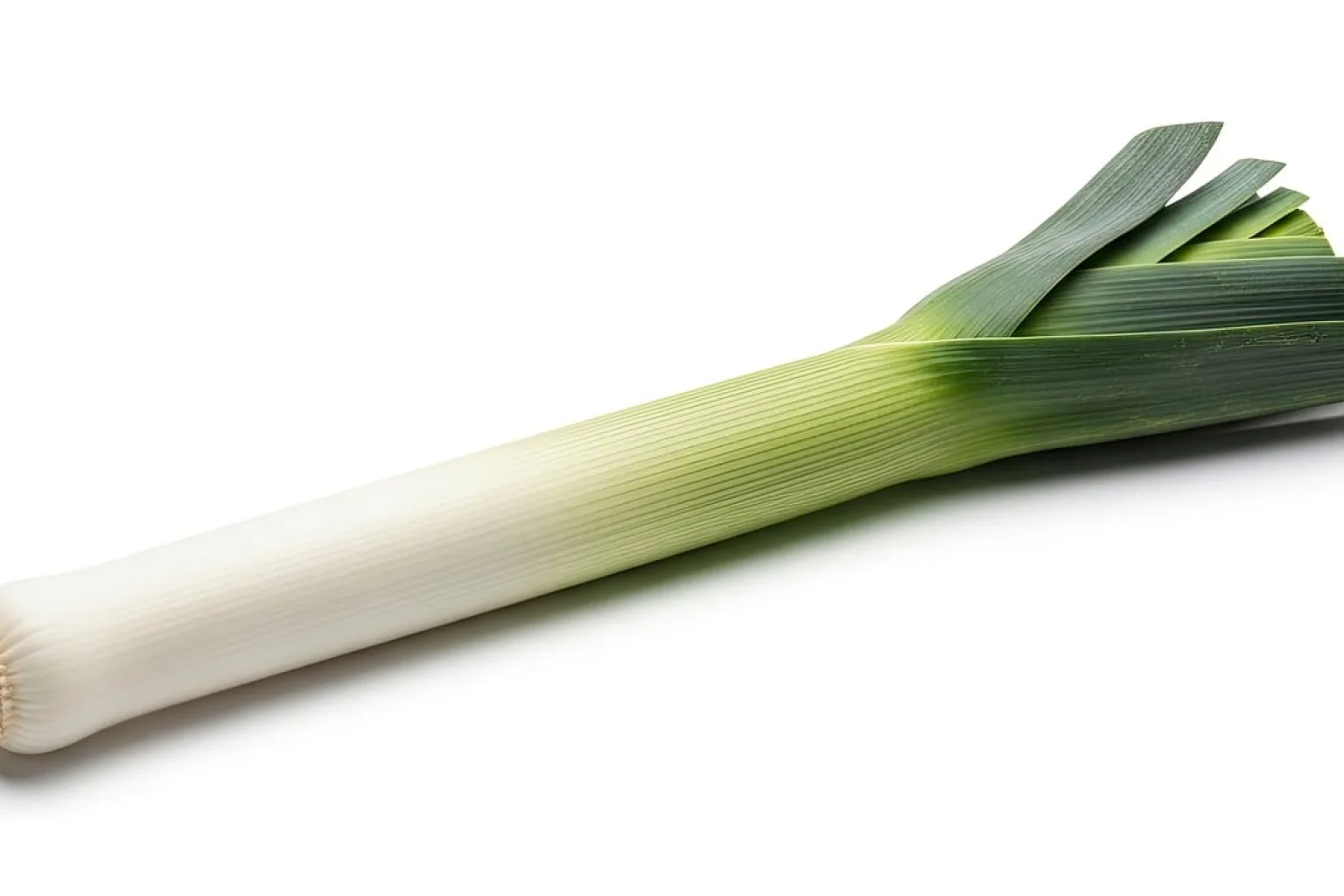
A leek is a fresh vegetable in the Allium group, alongside onions and garlic. It has an elongated white base and leaves that range from pale to dark green. The white and light-green portions are especially common in cooking; darker leaves can also add flavor to stock. Its taste is onion-like but generally more delicate and slightly sweet. Leeks can serve as a supporting ingredient in a dish or take center stage as a vegetable in their own right.
When to use it
Use leeks when you want a gentler aromatic base than onion, or when you want the vegetable itself to stand out. They work well in soups, purées, stocks, stews and sautés, as well as savory tarts and dishes with eggs or cheese. Thinly sliced raw leek can add a fresh note to salads. Availability and growing seasons vary by location; leeks are sold year-round in some markets.
How to use it
Trim off the root end and, if desired, the very dark green tips. Split the leek lengthwise, then rinse under running water while separating the layers to remove any trapped soil; drain before cooking. Slice it for sautéing or adding to soups, stews and purées. A gentle sauté softens leek and makes it a useful base for other dishes; you can also roast it and serve it as a side. For salads, slice it very thinly. Green leaves can be used to flavor stock.
Flavour and texture
Leeks taste like a milder onion, with a gentle sweetness and sometimes an earthy note. Raw, they are firm and crisp; cooking makes them tender and silky. The white and light-green portions are generally more delicate, while outer dark-green leaves can be more fibrous. Depending on the cut and cooking method, leeks can retain some bite or become very soft.
How to choose it
Choose firm leeks with a white base and green leaves, avoiding visible yellowing or cracks. If you are cooking several together, choosing similar-sized leeks can help them cook evenly. The size and proportion of white to green vary, so select according to the dish: tender portions for serving as a main vegetable and leaves for adding flavor to preparations such as stock.
Storage
Store fresh leeks unwashed and untrimmed in a plastic bag in the refrigerator’s vegetable drawer. Wash and cut them when you are ready to cook, rather than before storage. How long they keep depends on their initial freshness and time since purchase; check their condition before use and follow any storage instructions on the packaging.
Substitutions
If leeks are unavailable, scallions or spring onions can work, though their onion flavor may be more pronounced. Onion, shallot or chives can also suit some dishes. No substitute exactly reproduces the leek’s delicate flavor and texture, so adjust the amount to taste and expect a different level of intensity or a different texture.
Common mistakes
Do not skip cleaning between the layers: soil can be trapped inside. Do not assume dark-green leaves are as tender as the white portion; they can be more fibrous. If you use them, they are better suited to flavoring stock than to serving in large pieces. For salads, slice leek very thinly and remember that raw leek has a different flavor and texture from cooked leek.
Safety and allergens
Separate the layers and rinse them carefully under running water to remove soil before cutting or cooking. For packaged or pre-prepared leeks, follow the storage and use instructions on the label.
Culinary uses
- Base aromática suave para sopas, guisos y caldos
- Hortaliza protagonista en cremas, tartas y guarniciones
Recommended techniques
- Cortar y saltear suavemente para ablandar
- Asar hasta que quede tierno
- Cocinar en sopas, guisos y caldos
- Cortar muy fino para ensaladas crudas
Pairs well with
- Patata y otras verduras
- Huevos y queso
- Pescado
- Perejil, salvia, tomillo o albahaca
Frequently asked questions
Which parts of a leek can I eat?
The white and light-green portions are commonly used. Green leaves can also be used to flavor stock.
Should I wash leeks before cooking?
Yes. Split them lengthwise and rinse between the layers to remove any soil trapped inside.
Can leeks be eaten raw?
Yes. Slice them very thinly for salads; raw leek is firmer and crisper than cooked leek.
Estimated nutrition
- Fat
- 0.2 g
- Saturates
- 0.03 g
- Carbohydrate
- 7.62 g
- Sugars
- 2.11 g
- Fibre
- 1 g
- Protein
- 0.81 g
- Salt
- 0.02 g
Sources and review
Automatically researched, cross-checked and validated content. Sources consulted:
- En el etiquetado alimentario hay algunas menciones que son obligatorias eletiquetadocuentamucho.aesan.gob.es
- Client Challenge doi.org
- Explorando el puerro friolisa.es
- Artes culinarias/Ingredientes/Puerro - Wikilibros es.wikibooks.org
- Puerro - Frutas Eloy frutaseloy.com
- Puerros ¿Qué son? Propiedades y beneficios. Recetas para sorprender abc.es
- Los secretos del puerro: un superalimento con grandes beneficios - concadelatordera.com concadelatordera.com
- Puerro: sus propiedades y usos en la cocina - Cocina y Come cocinaycome.com
- ¿Cuáles son los usos culinarios de los puerros? - Quora es.quora.com
- Revista del comité científico de la aecosan número 24 aesan.gob.es
- Puerro Propiedades Usos y Cultivo para Salud y Cocina flores.ninja
- Allium ampeloprasum var. porrum - Wikipedia, la enciclopedia libre es.wikipedia.org
- Puerros | Recetas, propiedades y beneficios recetasdecocina.elmundo.es
- Puerros Caramelizados con Aliño de Aceitunas y Pistachos | Paula's Apron paulasapron.com
- Los Mejores Sustitutos de los Puerros | Nómadas Gourmet nomadasgourmet.com
- Los 10 mejores sustitutos del puerro - NewFoodHub nwfoodhub.com
- Maridaje Perfecto: Cómo los Puerros en Conserva Potencian el Sabor de los Mejores Quesos y Embutidos donquesotori.es