- Category
- Sauces and condiments
- State
- Paste
- Usual unit
- tablespoon
What it is
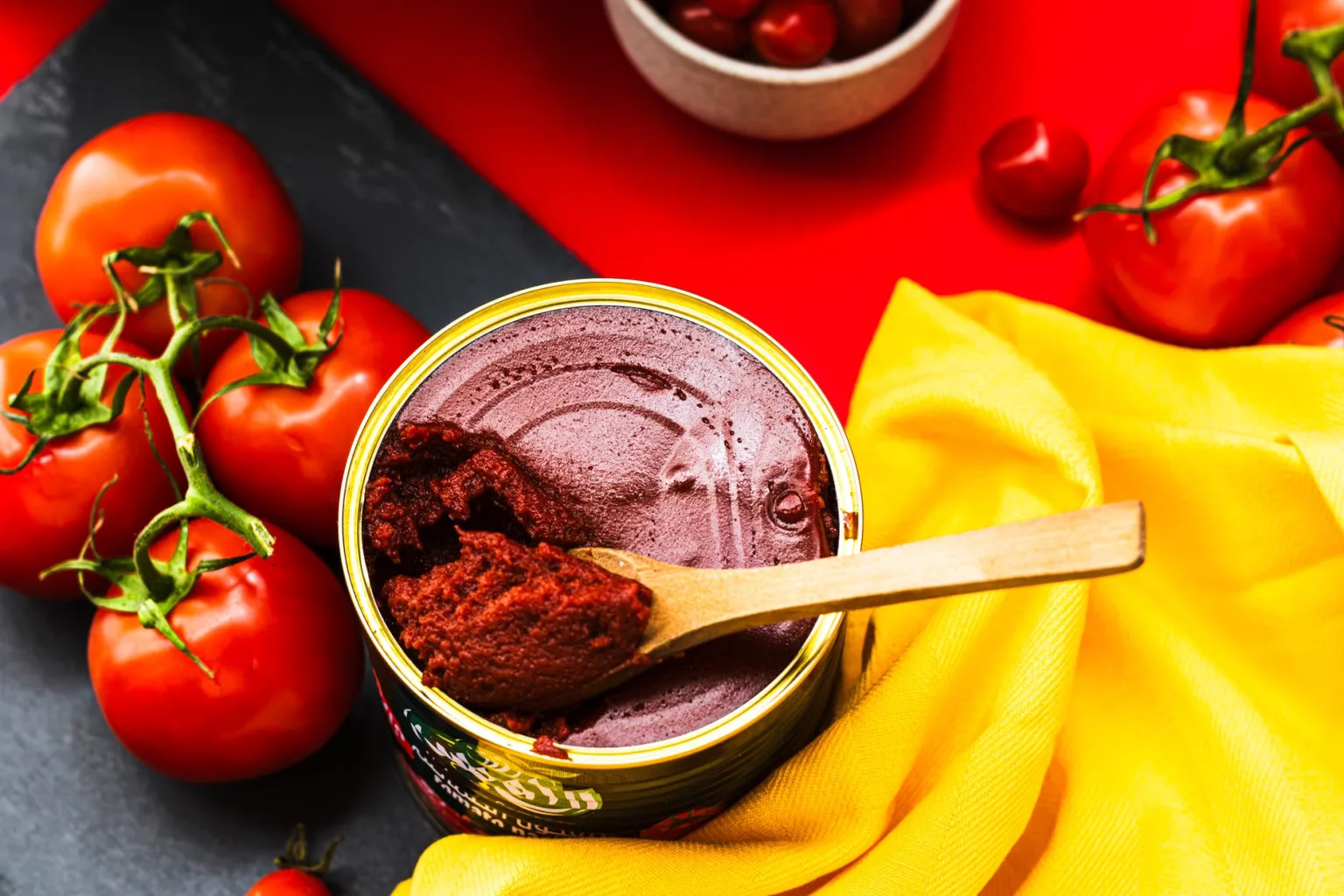
Tomato paste is made by reducing tomatoes into a thick paste with less moisture and a more concentrated flavor than fresh tomatoes or a pourable tomato sauce. It is sold in different formats and degrees of concentration, so products can vary in texture and strength. It is used to boost tomato flavor or add body to a dish, rather than as an exact substitute for an already seasoned sauce. Check the product label for its description and specific use and storage directions. (16182, 10018)
When to use it
Use tomato paste when you want a fuller tomato flavor without adding as much liquid as fresh, crushed, or canned tomatoes would contribute. It works in pasta or pizza sauces, stews, soups, and creamy soups, and can suit preparations where moisture needs to be controlled, such as some savory fillings. Because its flavor is concentrated, start with a modest amount and taste before adding more. The right amount depends on the product and the recipe. (10019, 16181, 16182, 16183)
How to use it
Add the paste in small amounts and mix thoroughly so its flavor is distributed through the dish. You can stir it into a cooked onion-and-garlic base, combine it with crushed tomatoes to strengthen a sauce, or add it to soups and stews. It can also be used in a pizza base or savory fillings where controlling moisture matters. If replacing it with fresh, crushed, or canned tomatoes, remember that those options add more moisture and have a less concentrated flavor; adjust the recipe’s consistency as needed. Taste before increasing the amount. (10019, 16181, 16182, 16183)
Flavour and texture
Tomato paste has a pronounced, concentrated tomato flavor and a thick, spreadable consistency that blends into moist dishes. Compared with fresh or crushed tomatoes, it contributes less liquid for a similar amount and can deepen the character of a sauce or stew. Exact intensity and texture vary by product and degree of concentration, so check the label and begin with a small amount. (10018, 16182, 16183)
How to choose it
Check the product name and ingredient list to distinguish tomato paste from a seasoned tomato sauce. It may come in different formats, such as a jar or tube, and products may state different degrees of concentration. Choose a format that suits how you cook, inspect that the package is intact, and look for clear storage directions on the label. (16182, 16183, 10018)
Storage
Before opening, follow the package directions. After opening, check the label: instructions can vary by product, and some specify refrigeration and a particular period for use. Do not assume that every tomato paste has the same opened shelf life. Freeze leftovers only if the package or reliable product-specific guidance allows it. (10018)
Substitutions
Crushed or canned tomatoes, or cooked fresh tomatoes, can replace tomato paste in some recipes, but they add more moisture and less concentrated flavor. Adjust the quantity, reduce other liquid if appropriate, and check the texture as the dish cooks. Tomato purée may also work, though it is usually more fluid. There is no universal conversion; the best adjustment depends on the product and preparation. (10019, 16182, 16183)
Common mistakes
Adding too much at once can overpower a dish because the flavor is concentrated. Start modestly and adjust after tasting. Another mistake is replacing it with fresh or crushed tomatoes without accounting for their extra liquid, or treating paste as if it were an already seasoned sauce. Check the label too, since opened-storage instructions can differ between products. (10019, 16182, 16183, 10018)
Safety and allergens
Use clean utensils and follow the package’s storage directions; refrigerate after opening if the label instructs you to. Do not apply home-canning instructions for fresh tomatoes to this product. (10018, 16176, 16177)
Culinary uses
- Aporta sabor concentrado de tomate a salsas, guisos y sopas.
- Ayuda a dar cuerpo y sabor a bases de pizza, pasta y rellenos.
Recommended techniques
- Incorporar una pequeña cantidad a una base de cebolla y ajo y remover para repartirla.
- Mezclar con líquidos o salsa de tomate para ajustar la intensidad y la consistencia.
- Añadir a sopas, guisos y salsas mientras se cocinan.
- Extender como parte de una base para pizza.
Pairs well with
- Cebolla y ajo
- Albahaca u orégano
- Salsas, guisos y sopas
- Pastas y bases para pizza
Frequently asked questions
How is tomato paste different from crushed tomatoes?
Tomato paste is thicker and more intensely flavored; crushed tomatoes contribute more liquid. (16182)
When should I add tomato paste?
Add it to sauces, stews, soups, or pizza and pasta bases when you want a stronger tomato flavor. (10019, 16181)
Can I substitute fresh tomatoes?
Sometimes, but fresh tomatoes add more moisture and less concentrated flavor. Adjust the dish’s consistency and taste as you cook. (10019, 16182)
How should I store an opened package?
Follow the product label. Some labels specify refrigeration and a particular use-by period; that guidance should not be generalized to every package. (10018)
Estimated nutrition
- Fat
- 0 g
- Saturates
- 0 g
- Carbohydrate
- 21.2 g
- Sugars
- 12.1 g
- Fibre
- 6.1 g
- Protein
- 3.03 g
- Salt
- 1.21 g
Sources and review
Automatically researched, cross-checked and validated content. Sources consulted:
- Canning Tomatoes and Tomato Products food.unl.edu
- ¿Por qué la muerte es origen de miedos y tabúes? doi.org
- The Essential Glossary of Cooking Terms for the Culinary Arts - Escoffier escoffier.edu
- Vamos a Conservar Alimentos: Tomates extension.psu.edu
- Comité Científico aesan.gob.es
- El tomate concentrado es un básico en mi cocina, pero siempre se me estropeaba. Hasta que empecé a hacer esto directoalpaladar.com
- ¿Qué es el concentrado de tomate y cómo se usa en la cocina? - Agrupalmería agrupalmeria.com
- IBD-AID ALLOWABLE FOODS LIST, BY PHASE umassmed.edu
- Canning Tomatoes and Tomato Products | University of Idaho uidaho.edu
- Canning Tomatoes, Introduction - National Center for Home Food Preservation nchfp.uga.edu
- Elaboración de conservas de tomates y productos de tomates | Servicio de Extensión de OSU extension.oregonstate.edu
- Tomato & Garbanzo Bean Salsa/Salsa de Tomate y Garbanzo (LCH) | CSU Northridge w2.csun.edu
- tomato – Food Smart Colorado foodsmartcolorado.colostate.edu
- Los Tomates | KSRE Bookstore bookstore.ksre.ksu.edu
- Recetas con tomate concentrado | Cocina con Hida hida.es
- Qué Es Tomate Concentrado: Usos Y Beneficios | ArrozSOS arrozsos.es
- Tomate concentrado. Qué es y para qué se utiliza crockpotting.es