- Category
- Dairy and eggs
- State
- Fresh
- Usual unit
- g
What it is
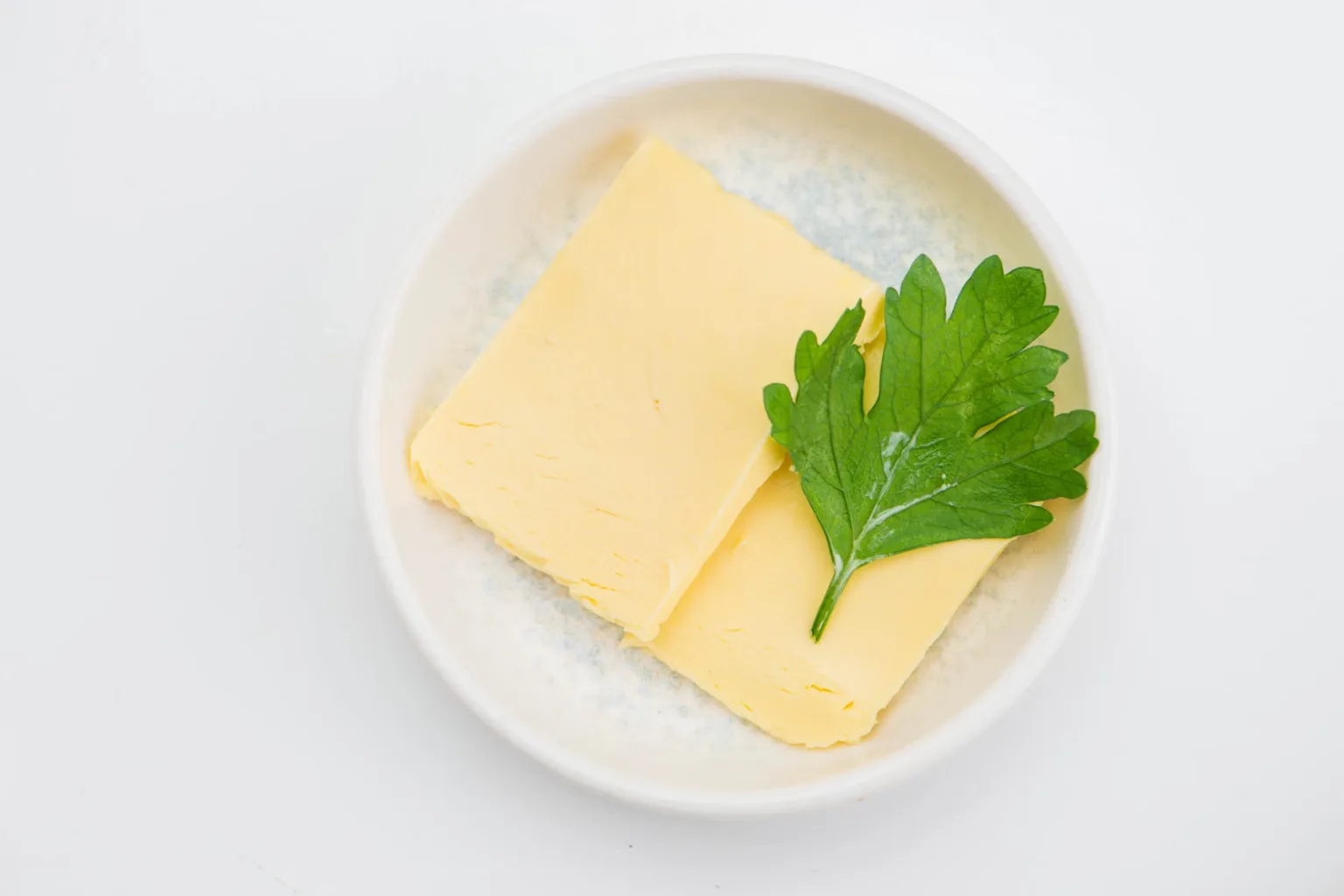
Unsalted butter is butter made without salt being added during processing. Butter is produced by churning cream, separating the fat from other components; differences in production can lead to variations in flavor and consistency. Its lack of added salt is useful when a recipe needs its seasoning adjusted separately. It remains a dairy product, so check the product name and the ingredient and allergen information on the packaging, particularly when cooking for someone with an allergy or intolerance.
When to use it
Choose unsalted butter when you want to control separately how much salt goes into a dish, whether savory or sweet. It can be spread on bread, used for pan cooking, and included in cakes, biscuits, muffins, tarts, and puff pastry. It is also a useful choice when a recipe does not specify a type of butter, but read the full recipe and adjust seasoning as needed. Do not assume that every commercial butter has exactly the same consistency or behaves identically in a recipe.
How to use it
Spread it on bread or use it as an ingredient, following the recipe’s quantities and order of addition. In a pan, it can be used to sauté, fry, or brown food; choose a technique that suits the dish, and do not assume butter will behave just like oil. It is also used in cakes, biscuits, muffins, tarts, and puff pastry. Since no salt is added during its processing, add recipe salt separately: taste when appropriate and season thoughtfully. For packaged butter, follow the storage and use directions on the label.
Flavour and texture
Butter contributes the characteristic aroma and texture of dairy fat and can affect the final mouthfeel of dishes and doughs. Unsalted butter has no salt added during processing, so that seasoning is not part of its flavor. Consistency is not identical across all varieties and may differ with production. For a particular dough or pastry, follow the recipe rather than assuming that every butter will have exactly the same texture.
How to choose it
Check that the product is identified as unsalted butter, and read the label for ingredient and allergen information. If a recipe calls for butter, do not assume that a different product is interchangeable just because it looks similar or is sold in a similar form. Food information requirements can vary with how a product is sold; when buying it unpackaged, ask for allergen information where needed. Choose an amount that suits your recipe and intended use.
Storage
Store the product according to the storage and use directions on its package; conditions may depend on the product and how it is presented. If buying butter unpackaged, ask the seller how it should be stored. Do not assume a particular storage period or condition if the label does not provide it. Check the product’s date information and follow the instructions shown on the packaging.
Substitutions
Olive oil can replace butter in some pan-cooking applications, such as sautéing or frying, but the result may differ in flavor and texture. If substituting salted butter, account for the fact that salt levels vary by product and reduce or omit additional recipe salt as appropriate. These alternatives do not guarantee the same result, especially in doughs and baking; use a recipe-specific substitution if you need to preserve how the mixture behaves.
Common mistakes
A common mistake is to use salted butter as though it were unsalted, then add all the recipe’s salt as well: the amount of salt in butter can vary by product. Do not assume olive oil will give the same flavor or texture as butter, or that every butter has the same consistency. Read the recipe, check the label, and adjust seasoning separately.
Safety and allergens
Butter is a dairy product and may be unsuitable for people with a milk allergy or intolerance. Check the package’s allergen information, and ask the seller for this information when buying it unpackaged. Follow the storage and use directions on the label.
Culinary uses
- Cooking fat for sautéing, frying, and browning
- Ingredient in baked goods and pastry
- Spread for bread
Recommended techniques
- Sautéing or frying
- Browning or searing
- Incorporating into cakes, biscuits, and pastry
Pairs well with
- Bread
- Strawberries or orange
- Oregano or truffle
Frequently asked questions
What does unsalted butter mean?
It means that salt is not added during the butter’s processing. Check the product label to confirm its name and information.
What is unsalted butter used for?
It can be spread on bread, used for pan cooking, and included in cakes, biscuits, muffins, tarts, and puff pastry.
Can I substitute salted butter?
In some recipes, yes, but the amount of salt varies by product. Adjust or omit additional recipe salt, and bear in mind that the result may change.
Does unsalted butter contain milk?
It is a dairy product. If you have an allergy or intolerance, check the package’s allergen information or ask the seller when it is sold unpackaged.
Estimated nutrition
- Fat
- 78.6 g
- Saturates
- 50 g
- Carbohydrate
- 0 g
- Sugars
- 0 g
- Protein
- 0 g
- Salt
- 0 g
Sources and review
Automatically researched, cross-checked and validated content. Sources consulted:
- En el etiquetado alimentario hay algunas menciones que son obligatorias eletiquetadocuentamucho.aesan.gob.es
- Client Challenge doi.org
- The Essential Glossary of Cooking Terms for the Culinary Arts - Escoffier escoffier.edu
- Mantequilla - Wikipedia, la enciclopedia libre es.wikipedia.org
- educational content to support healthful lifestyle practices sjsu.edu
- Nutrition After Your Transplant - Health Online healthonline.washington.edu
- Usos culinarios de la mantequilla – Mantequilla Lorenzana mantequillalorenzana.com
- guía de aplicación de las exigencias aesan.gob.es
- Page 7 | See All Home Food Preservation and Safety - Home Food Preservation and Safety - Food Safety and Quality extension.psu.edu
- Nutrition Education Program extension.purdue.edu
- Nutritional-quality-of-foods-and-beverages-on-child-care- ... sites.globalhealth.duke.edu
- - YouTube youtube.com
- Mantequilla con sal o sin sal: cuándo usar una o otra - Revista Mia miarevista.okdiario.com