- Category
- Vegetables
- State
- Fresh
- Usual unit
- unit
What it is
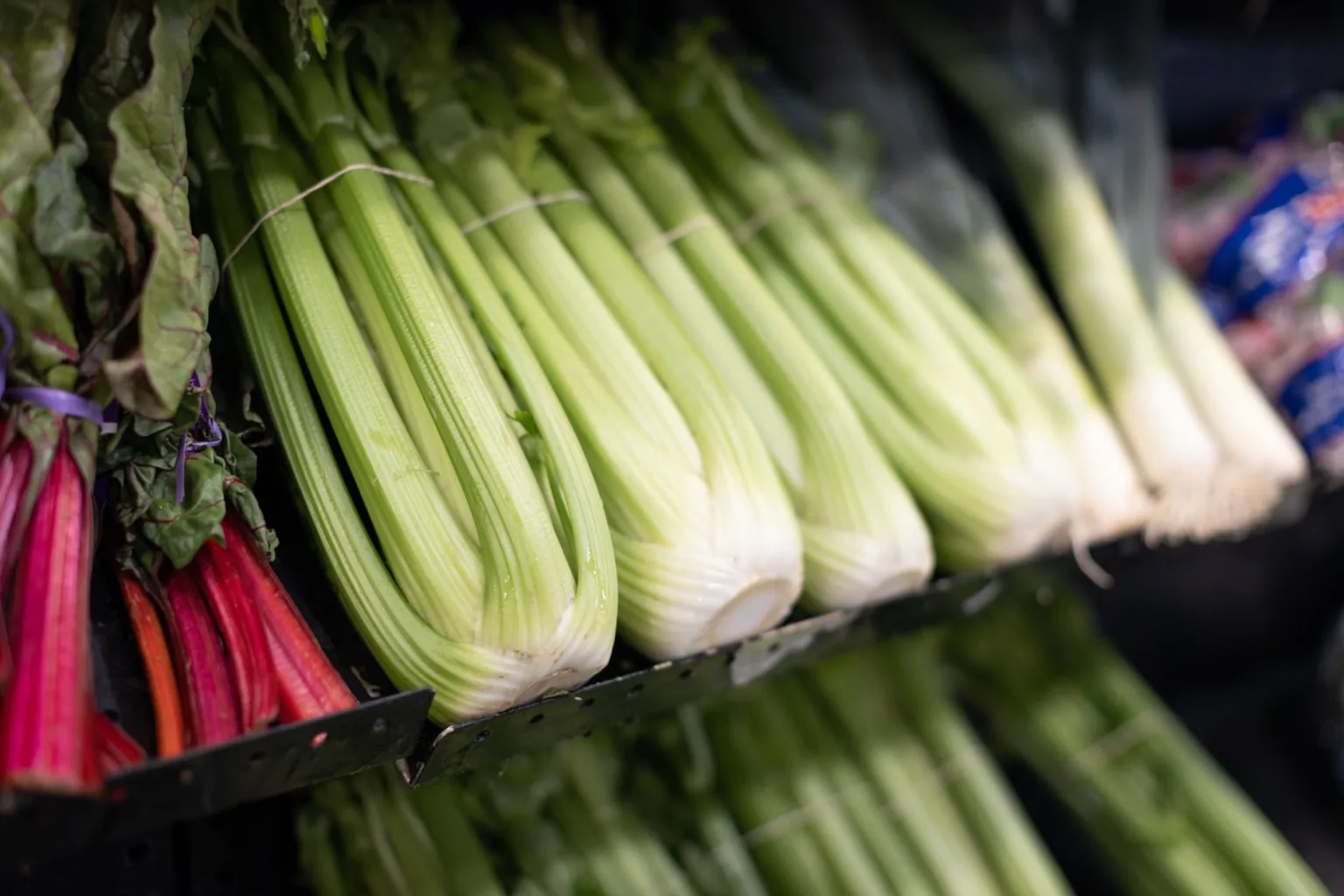
Stalk celery is the form of celery eaten mainly for its ridged stalks, which grow together in a bunch, and its leaves. It belongs to the Apiaceae family. Its flavor is distinctive, fresh and slightly bitter, and its stalks are typically juicy and crisp. Do not confuse it with celeriac, which is grown for its enlarged root. In this profile, “celery” means fresh stalk celery, not dried celery seed or celeriac.
When to use it
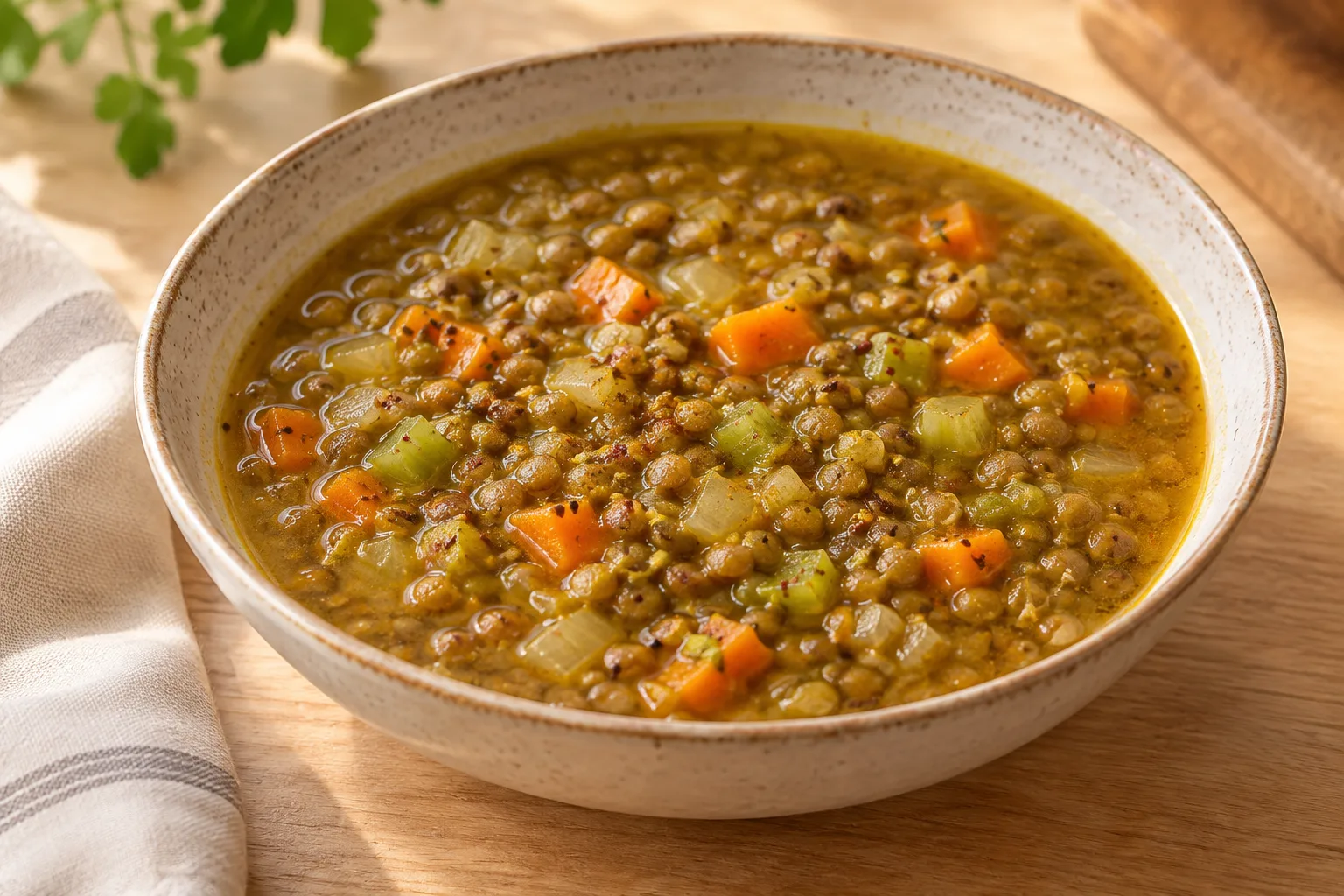
Use celery raw when you want a fresh crunch in salads, snacks or dishes served with a dip. Cooked, it works as an aromatic component in soups, stews, sauces and stocks, adding flavor without needing to take center stage. Harvest can be concentrated in the cooler months, although celery is available in markets year-round; local availability depends on the region and growing system.
How to use it
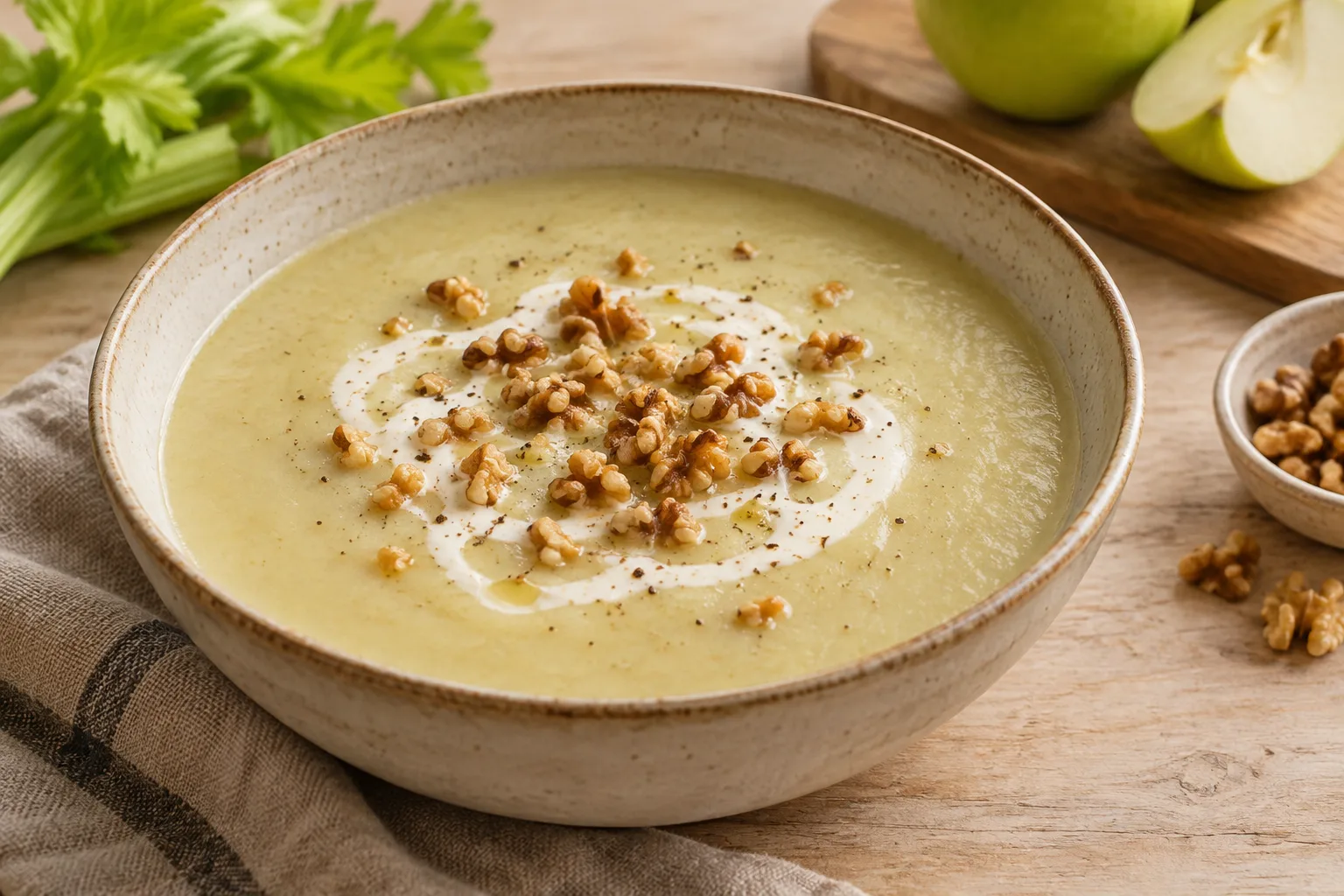
Separate the stalks you need and wash them before cutting. For raw dishes, cut them into sticks to serve with a dip or slice them thinly for salads; the leaves can also be chopped and added. For soups, sauces and stews, chop stalks and leaves and cook them with other aromatics. You can sauté or roast celery before adding it to a soup or purée to develop its presence in the dish. If you do not want its flavor to dominate, start with a modest amount and adjust to taste.
Flavour and texture
Celery has a pronounced aroma and a fresh, vegetal, slightly bitter flavor. Raw stalks are juicy, fibrous and crisp; cooking softens them and releases their flavor into the liquid or dish. Character can vary among types and cultivars: some stalks are milder and paler, while others taste more pronounced. The aromatic leaves can also lend a celery note to many preparations.
How to choose it
Choose bunches with firm stalks and leaves that look fresh rather than limp. Color varies by type, so judge overall freshness and firmness rather than expecting one exact shade. Check the bunch and avoid wilted or yellowing stalks. If buying stalk celery, make sure it is not celeriac, whose main edible part is a rounded root.
Storage
Keep fresh celery in the refrigerator wrapped in damp paper towel. One culinary source suggests it can keep this way for about three or four days; check its condition before using. It can also be frozen after chopping for soups or sautéed dishes, but it loses some crispness when thawed. Reserve frozen celery for cooked preparations rather than serving it raw as a crudité.
Substitutions
There is no exact substitute that reproduces both celery’s flavor and crunch. Fennel or bok choy can provide a similar crisp texture, but they change the flavor of the dish. If the main goal is a celery-like note in soup or stew, celery seed can be used as an aromatic alternative; add it sparingly because its flavor is concentrated.
Common mistakes
Do not treat celeriac as if it were a celery stalk: it is a different form with a different main use. Avoid adding a large amount if you want other flavors to remain prominent, since celery’s aroma can take over. If you freeze the stalks, do not expect them to retain their fresh crunch after thawing.
Safety and allergens
Celery can cause an allergic reaction in some people. If you have a celery allergy, avoid eating it and check product information or ask the food seller when details are unclear. Wash celery before cutting and using it.
Culinary uses
- Fresh crunchy vegetable for salads and snacks
- Aromatic vegetable base for soups, sauces, stocks and stews
Recommended techniques
- Serve raw in sticks, slices or finely chopped
- Sauté or roast before adding to soups and purées
- Simmer in soups, sauces and stews
Pairs well with
- Apple, cheese, walnuts and olives
- Onion and garlic
- Carrot and cucumber
Frequently asked questions
Can celery leaves be eaten?
Yes. The leaves are aromatic and can be chopped into soups, sauces, salads and similar dishes.
Are celery and celeriac the same thing?
They are different forms of the plant. This profile covers stalk celery, eaten mainly for its stalks; celeriac is grown for its enlarged root.
Can fresh celery be frozen?
Yes. It can be chopped and frozen for cooked dishes. It loses crispness as it thaws, so it is less suitable for serving raw.
Estimated nutrition
- Fat
- 0.16 g
- Saturates
- 0.04 g
- Carbohydrate
- 4 g
- Sugars
- 2.37 g
- Fibre
- 1.6 g
- Protein
- 0.83 g
- Salt
- 0.82 g
Sources and review
Automatically researched, cross-checked and validated content. Sources consulted:
- En el etiquetado alimentario hay algunas menciones que son obligatorias eletiquetadocuentamucho.aesan.gob.es
- Client Challenge doi.org
- Aesan - Agencia Española de Seguridad Alimentaria y Nutrición aesan.gob.es
- Apium graveolens - Wikipedia, la enciclopedia libre es.wikipedia.org
- Apio: qué es, beneficios y usos culinarios bonviveur.com
- Apio: beneficios, propiedades y cómo consumirlo frutamerca.com
- Propiedades y beneficios del apio | Naturarla | Arla arlafoods.es
- Propiedades y beneficios del apio | Naturarla | Arla naturarla.es
- Semillas de apio: descubre sus usos en la cocina y propiedades cocinaycome.com
- Sabores del apio: usos culinarios en diferentes culturas | Agroempresario.com agroempresario.com
- Apio: beneficios, propiedades y cómo cocinarlo abc.es
- Las mejores formas de comer apio: trucos, recetas y consejos cuerpomente.com
- Apio | www.cocinista.es cocinista.es
- Buscando un sustituto de apio_Recetas de verduras drinkfood.biz
- Las mejores recetas con apio: cocina fácil, rápida y propiedades de esta planta directoalpaladar.com
- 13 mejores sustitutos del apio - NewFoodHub nwfoodhub.com
- ¿Para qué sirve el apio? | Recetas Nestlé recetasnestle.com.co