- Category
- Vegetables
- State
- Fresh
- Usual unit
- unit
What it is
Fresh red bell pepper is a sweet pepper with edible flesh. It is not the same as paprika, the powdered spice made from dried, ground peppers. Sweet peppers come in different varieties and colors, and can vary in sweetness and shape. In cooking, red bell pepper is used as a vegetable: serve it raw, cut it into pieces for other dishes, or stuff and bake it. Color alone cannot tell you exactly how sweet an individual pepper will be, so taste it when that distinction matters to a recipe.
When to use it
Use it raw when you want a fresh element in a salad or strips to serve with a dip. It also works in soups, stews, stir-fries and casseroles, where it can be cut up and combined with other ingredients. To make it a centerpiece, stuff it with a meat-and-rice mixture and bake it. If you want to remove the skin, roast the pepper until the skin blisters and then peel it. Choose another sweet pepper variety when you want a different color or do not have a red one.
How to use it
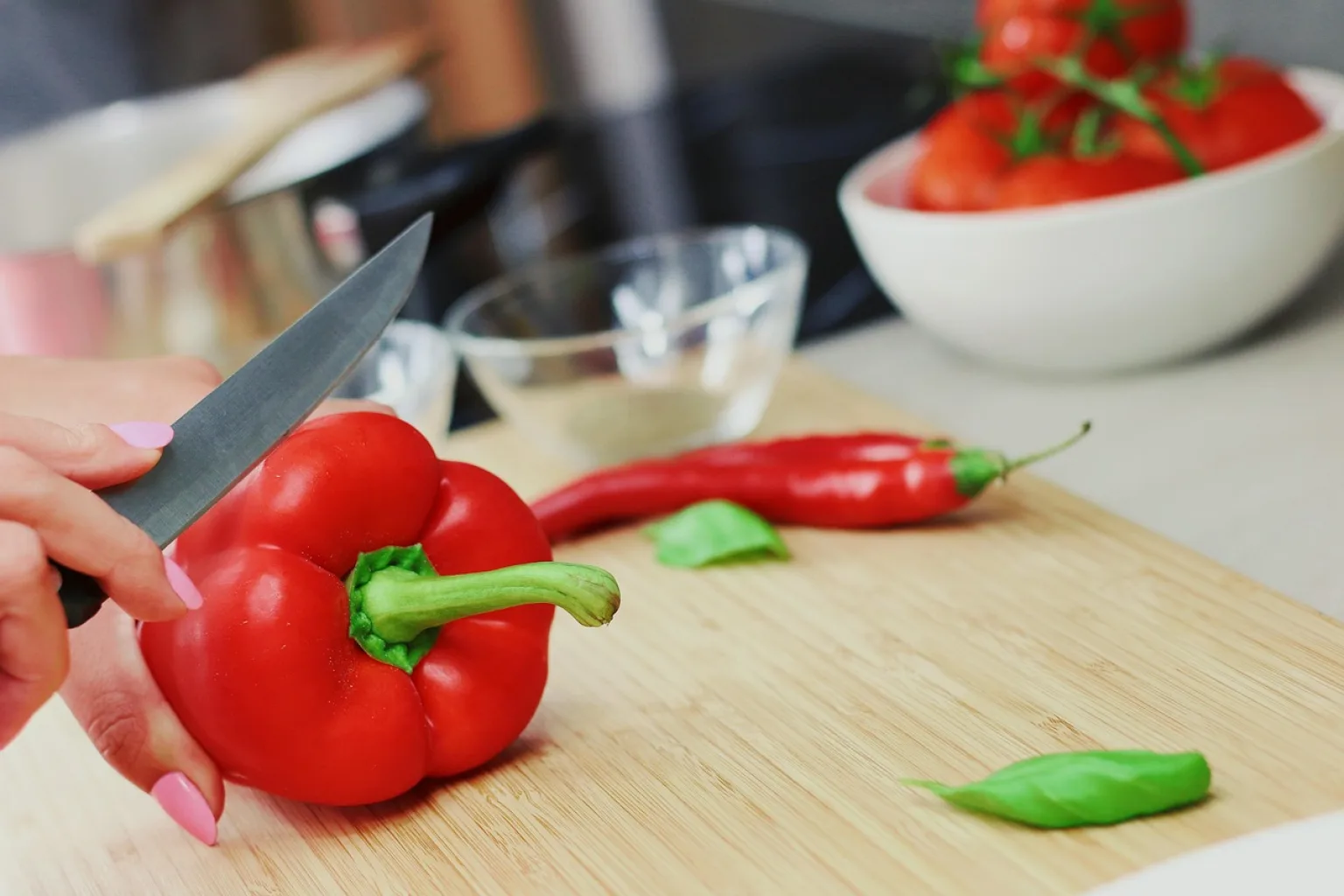
Before cutting, wash the pepper thoroughly in cold water to remove dirt; do not use soap, detergent or bleach. Lay it on its side and cut around the stem end; remove the stem, seeds and fibrous portion. Rinse if needed to remove loose seeds. Slice or dice it for salads, soups, stews, stir-fries, casseroles, sauces or pizza, or serve it raw with a dip. To make a stuffed pepper, keep it whole, remove the seeds and add a meat-and-rice mixture before baking. Another option is to roast it until the skin blisters, then remove the skin before chopping.
Flavour and texture
Sweet peppers vary in shape, color and degree of sweetness, so not every one tastes exactly alike. Red bell pepper can contribute a mild, sweet flavor, while a fresh one has a firm, crisp texture. Cooking makes it more tender. If a recipe depends on a particularly sweet or crisp result, check the individual pepper rather than assuming its color guarantees those qualities.
How to choose it
Choose peppers that are firm, crisp, fresh and brightly colored. Avoid peppers with bruises, blistered patches, cracks, wrinkled skin or soft areas, as these may be overripe or damaged. Sweet pepper varieties are not identical in shape, color or sweetness, so assess each pepper’s appearance and firmness rather than relying only on its color label.
Storage
Keep peppers cool; an extension guide says they store best at 45–50°F for two weeks or less and notes that refrigerator storage can make them susceptible to dampness or freezing. The same guide recommends keeping a refrigerator at 40°F or below for food safety. Because these recommendations are not identical, avoid accidentally freezing the peppers and use them while they remain in good condition; do not treat the suggested period as a guarantee.
Substitutions
Yellow or orange sweet bell pepper can stand in for red when a change in color and variety-specific flavor is acceptable. A pimiento can also work as a sweet-pepper alternative. Since pepper varieties differ in shape and sweetness, the result will not necessarily be identical; if the recipe relies on the pepper’s shape for stuffing, choose one that can hold the filling.
Common mistakes
Do not confuse fresh red bell pepper with paprika: paprika is a powdered seasoning made from dried, ground peppers, so it cannot replace the vegetable’s texture or volume. Do not wash peppers with soap, detergent or bleach, and do not assume that all sweet pepper varieties have the same shape or sweetness.
Safety and allergens
Wash the pepper in cold water before preparing it; do not use soap, detergent or bleach, which an extension guide says can be absorbed by the vegetable. Remove damaged portions and use care with the knife when cutting away the stem and seeds.
Culinary uses
- vegetable served raw or cooked
- ingredient for soups, stews, stir-fries and casseroles
- stuffed main-dish vegetable
Recommended techniques
- serve raw after washing, with dip or in salads
- slice and fry or sauté
- roast until the skin blisters, then peel
- stuff and bake
Pairs well with
- rice and meat for stuffing
- soups and stews
- salads and vegetable dips
- salsa, sauces and pizza
Frequently asked questions
Is fresh red bell pepper the same as paprika?
No. Red bell pepper is a fresh vegetable; paprika is a powdered spice made from dried, ground peppers.
Can I eat it raw?
Yes. Wash it thoroughly in cold water and serve it in salads or cut into strips with a dip.
How do I prepare it for stuffing?
Wash it, cut around the stem end, remove the seeds and fibrous portions, add a filling such as meat and rice, and bake.
Estimated nutrition
- Fat
- 14.3 g
- Saturates
- 0 g
- Carbohydrate
- 39.3 g
- Sugars
- 3.57 g
- Fibre
- 14.3 g
- Protein
- 10.7 g
- Salt
- 0.98 g
Sources and review
Automatically researched, cross-checked and validated content. Sources consulted:
- En el etiquetado alimentario hay algunas menciones que son obligatorias eletiquetadocuentamucho.aesan.gob.es
- Client Challenge doi.org
- Pimentón - Wikipedia, la enciclopedia libre es.wikipedia.org
- El pimiento rojo:¿ una verdura o un condimento? - Grupo Gastronómico El Almirez ggelalmirez.com
- Selecting, Storing, and Serving Ohio Peppers | Ohioline ohioline.osu.edu
- Freezing Pimientos - National Center for Home Food Preservation nchfp.uga.edu
- USDA FoodData Central libguides.marist.edu
- Trabajo electrónico aesan.gob.es
- sweet pepper - FoodLink - Purdue Extension extension.purdue.edu
- Kitchen Hacks: The Core 8 Spices Every College Student Should Own | Health Promotion & Wellness hpw.sl.ua.edu
- Types of Paprika | Institute of Culinary Education ice.edu
- What Is Paprika? A Guide to Its Types, Benefits, and Cooking Tips - Escoffier escoffier.edu
- Pimentón | CreatiVegan.net creativegan.net