- Category
- Drinks
- State
- Canned
- Usual unit
- ml
What it is
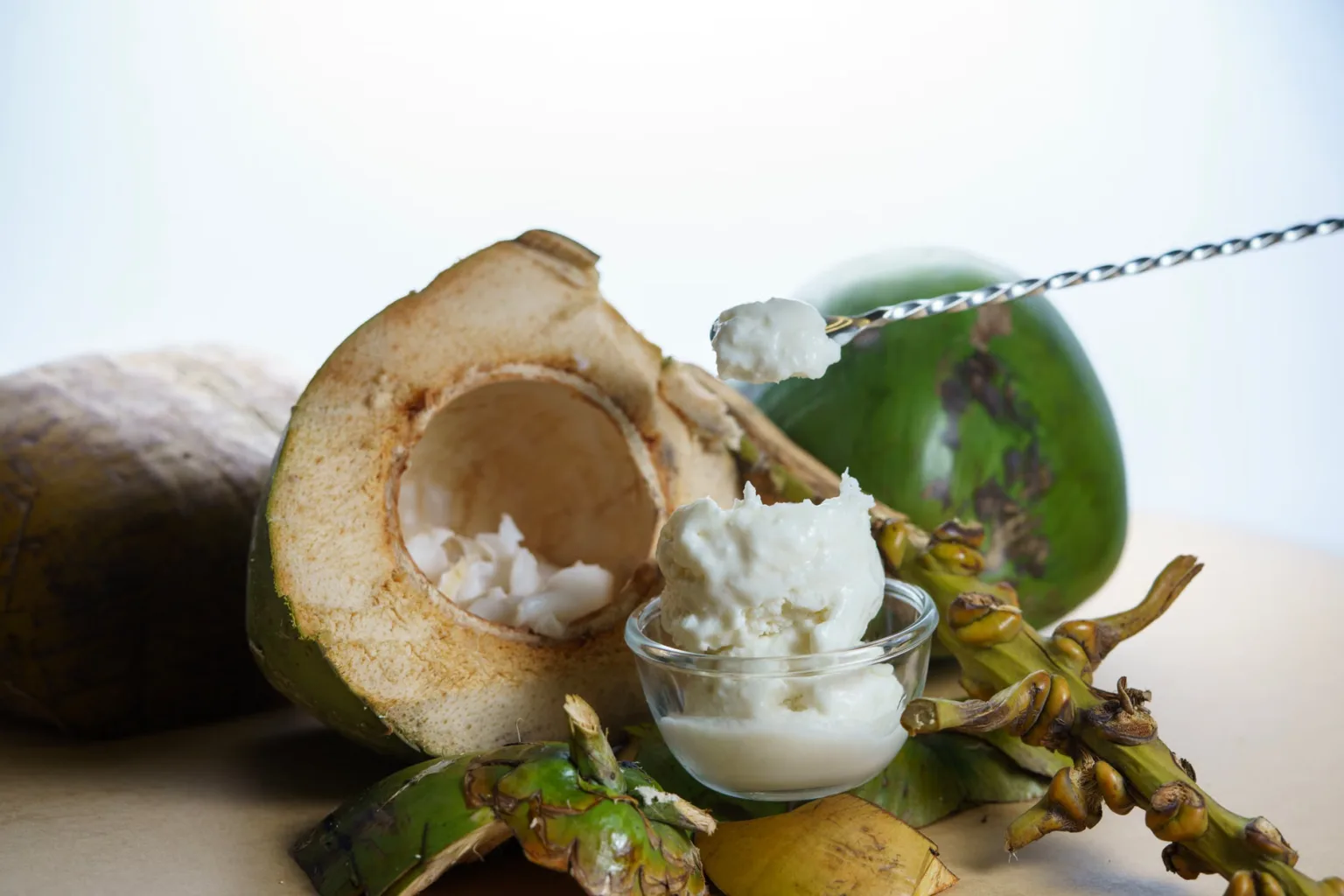
Coconut cream is made from coconut flesh and water and is generally thicker and more concentrated than coconut milk. Product names are not always used consistently, though: a product labelled coconut cream may be thick, unsweetened coconut milk, while another may be a sweetened preparation made for cocktails or desserts. It is not the same as coconut water or a light coconut drink sold for sipping. Check the product name and ingredients before buying, especially when a recipe calls for an unsweetened version. [9931, 17069]
When to use it
Use coconut cream when you want to add body and coconut flavour to a curry, soup or sauce, or need a creamy base for a dessert. An unsweetened thick product is generally the appropriate choice for savoury dishes; sweetened cream of coconut is intended for sweet recipes and some cocktails. Since manufacturers use these names differently, choose according to the recipe and check the label to see whether sugar has been added. [9931, 17069]
How to use it
First check whether the product is an unsweetened cream or a sweetened preparation; they are not interchangeable in every recipe. Stir thick, unsweetened coconut cream into curries, soups or sauces to add body and a mild coconut flavour. It can also be used in mousse and other desserts, or as a base for sweet drinks when the product is suited to that purpose. If you have thick, full-fat coconut milk, chilling it can separate the solid and liquid portions; skim off the solid layer for a thicker cream. Add it gradually and stir to combine. [9931, 17069]
Flavour and texture
Unsweetened coconut cream usually has a mild, slightly sweet coconut flavour. Its texture is thick and creamy, and it is generally more concentrated than coconut milk. Strength and consistency can vary with the manufacturer and the amount of water; a sweetened product will also taste sweeter. [9931, 17069]
How to choose it
Read the product name, ingredient list and suggested uses. The terms coconut cream and coconut milk are not always applied consistently: some products are thick and unsweetened, while others contain sugar and are intended for cocktails or desserts. Do not mistake canned coconut cream for a light coconut drink. Choose the product that matches your recipe. [9931]
Storage
Coconut cream is sold in different formats, and storage directions depend on the product. Follow the package instructions and check how it should be stored before and after opening. If you make cream by separating coconut milk, use a clean container and follow the directions for the starting product; the available evidence does not support a universal storage period. [9931, 17069]
Substitutions
Coconut milk can replace coconut cream in some preparations, but the result will be thinner and less concentrated. Dairy cream may work in recipes calling for a creamy ingredient, but it changes the flavour and is unsuitable for people avoiding dairy. Do not swap sweetened cream of coconut for an unsweetened product, or vice versa, without adjusting the recipe. [9931, 17069]
Common mistakes
Do not assume that every product called coconut cream is the same: it may be thick, unsweetened cream or a sweetened preparation. Using a light coconut drink can make a recipe too thin, while using a sweetened product in a savoury dish can change the result. Check the label and intended use. [9931]
Safety and allergens
Follow the package directions for storage and handling. If you make the product at home, use clean utensils and containers.
Culinary uses
- Adds richness and creaminess to curries, soups and sauces
- Provides a coconut-flavoured base for desserts and drinks
Recommended techniques
- Stir into a dish to enrich and thicken it
- Chill full-fat coconut milk so its solid and liquid parts separate, then skim the solid portion
Pairs well with
- Curries
- Soups and sauces
- Desserts and mousse
- Cocktails
Frequently asked questions
Is coconut cream the same as coconut milk?
Not always. Coconut cream is generally thicker and more concentrated, but manufacturers do not use the names consistently. Check the label and the product’s texture. [9931]
Does coconut cream always contain sugar?
No. It may be a thick, unsweetened product or a sweetened preparation for cocktails and desserts. Check the ingredients before using it. [9931]
Can I make a thicker cream from coconut milk?
Chilling thick, full-fat coconut milk can separate the solid and liquid portions. Skim off the solid layer that rises to the top. [17069]
Estimated nutrition
- Fat
- 20 g
- Saturates
- 18.8 g
- Carbohydrate
- 5 g
- Sugars
- 2.5 g
- Fibre
- 0 g
- Protein
- 2.5 g
- Salt
- 0.08 g
Sources and review
Automatically researched, cross-checked and validated content. Sources consulted:
- ¿Por qué la muerte es origen de miedos y tabúes? doi.org
- The Essential Glossary of Cooking Terms for the Culinary Arts - Escoffier escoffier.edu
- Comité Científico aesan.gob.es
- Study Abroad: Oaxaca: Cuisine and Culture - Colorado Mountain College coloradomtn.edu
- Qué es la leche de coco, cómo utilizarla en cocina y siete recetas en la que brilla directoalpaladar.com
- WHC News Archives - Page 2 of 4 - Walnut Hill College walnuthillcollege.edu
- Coconut Oil • The Nutrition Source nutritionsource.hsph.harvard.edu
- Recipe Pamphlets in the Chef Louis Szathmáry Collection of Culinary Arts A-D - Special Collections and Archives - University of Iowa Libraries lib.uiowa.edu
- ECC culinary arts students participate in annual Fisher Nuts scholarship recipe contest | ECC elgin.edu
- Heat and Hospitality | Rice Magazine | Office of Public Affairs | Rice University magazine.rice.edu
- Food and Cooking – It Grows in Alaska itgrowsinalaska.community.uaf.edu
- CAREER PROGRAMS 2021 ice.edu
- catering - Princeton Campus Dining dining.princeton.edu
- Crema de Coco en Polvo: Usos, Recetas y Dónde Comprar | Terra terrapremiummarket.com
- - YouTube youtube.com
- ¿Crema de coco cruda? ¿orgánico? | Fundación G+E diet-health.info
- Crema De Coco: Elaboración, Conservación Y Beneficios 2024 campograndeperu.com