- Category
- Herbs and spices
- State
- Fresh
- Usual unit
- cucharada
What it is
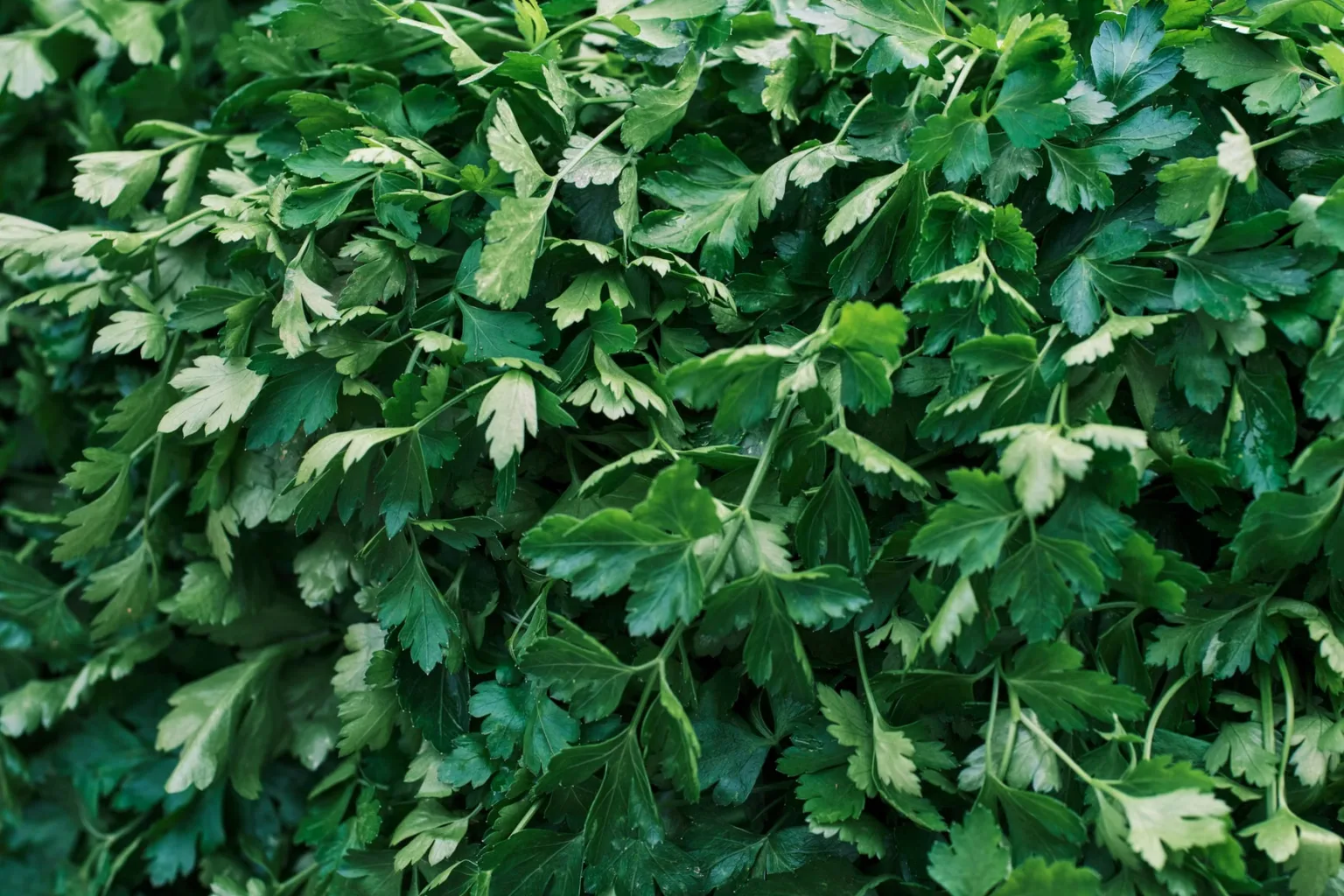
Fresh parsley is the tender green part of an aromatic herb commonly sold in bunches. Its leaves may be flat or curly: flat-leaf parsley is generally more pronounced in flavor, while curly parsley is often used as a garnish and may taste milder. In cooking, the leaves are most often used, whole or chopped, and the stems can also be used to flavor dishes. Parsley is a seasoning, not an automatic stand-in for other similar-looking herbs such as cilantro. Its fresh, herbal character makes it easy to add to dressings, sauces, salads, soups and cooked dishes. Choose the form and cut according to whether you want it to be visible, aromatic or simply part of the background flavor.
When to use it
Choose fresh parsley when you want a clean herbal note, green color or an aromatic finish, especially in cold preparations and dishes served soon after cooking. It works well in salads, vinaigrettes and sauces, and as a finishing touch for fish, seafood, meat, vegetables and potatoes. For a clear fresh aroma, add it chopped near the end or use it raw. It can also go into soups and stews earlier, although prolonged or intense cooking can soften its fresh notes. Flat-leaf parsley is useful when you want a more pronounced flavor; curly parsley can suit a milder or more decorative role.
How to use it
Pick the leaves you need, wash them before eating, and dry them carefully so excess water does not dilute the dish. Gather the leaves into a small bundle and chop with a knife; avoid reducing them to a paste if you want visible texture. For salads, vinaigrettes and cold sauces, mix parsley in raw. In hot dishes, add it chopped near the end to keep its color and aroma more noticeable, or add it earlier when you want it to flavor a broth or stew. You can also add a bunch to a dish for aroma and remove it before serving. Whole leaves work as a garnish. Parsley pairs well with garlic and is used with fish, seafood, meat, vegetables, soups and sauces.
Flavour and texture
Fresh parsley tastes herbal and bright, with a slight peppery note. Its leaves are tender and moist, bringing green color and a leafy bite when left whole or roughly chopped. Flat-leaf parsley is generally more pronounced, while curly parsley is often perceived as milder; the difference can vary between varieties and bunches. Strong heat or prolonged cooking can make its fresh notes less prominent, so it is often most noticeable raw or added near the end of cooking.
How to choose it
Look for a bunch with green, fresh-looking leaves and avoid one with many yellow or wilted leaves. Check for a clean, herbal aroma and an overall sound appearance. Flat-leaf parsley is often a good choice when you want a more pronounced flavor; curly parsley suits a milder or more decorative use. Parsley is commonly sold in bunches, so choose an amount you can use and read the label if it is packaged. Do not identify parsley by appearance alone when comparing it with cilantro: check the leaves and aroma before buying.
Storage
Treat fresh parsley as a perishable herb and keep it in a cool place or refrigerated. One described storage option is to stand the stems in a container of water, cover the bunch with a bag, and keep it refrigerated or in a cool place; change the water frequently. Check the leaves and remove any that turn yellow or wilt. No single storage life is specified here because it depends on the bunch's condition and storage conditions. If the package gives storage directions, follow them.
Substitutions
Curly and flat-leaf parsley can replace one another when a recipe simply calls for parsley, but the flavor intensity and texture may differ; adjust the amount to taste. Dried parsley can stand in for fresh in soups and stews, but it will not reproduce the fresh herb's green color, tender texture or lively aroma. If parsley is a main flavor in a cold preparation, dried parsley will give a different result. Do not assume cilantro is a direct substitute: it may look similar, but its aroma and flavor are different.
Common mistakes
Do not add parsley too early if you want its fresh aroma and green color to remain noticeable: intense or prolonged cooking can diminish them. Avoid chopping it long before use when its appearance and fragrance matter. Do not use it wet if you want it to mix cleanly into a salad or sauce. Also, do not confuse parsley with cilantro just because the bunches may look alike; check the leaves and aroma. Finally, do not expect dried parsley to provide the same texture or freshness as the fresh herb.
Safety and allergens
Wash parsley before eating, following usual fruit and vegetable washing recommendations. If it is packaged, follow the storage and use directions on the label. This profile does not set a fixed storage period; check the bunch's condition before using it.
Culinary uses
- Hierba aromática y condimento
- Toque final y guarnición
Recommended techniques
- Picar las hojas justo antes de usarlas
- Añadir picado al final de la cocción o usar crudo
- Incorporar en un ramillete aromático para retirarlo antes de servir
Pairs well with
- Ajo
- Pescados y mariscos
- Carnes y verduras
- Sopas, salsas y vinagretas
Frequently asked questions
When should I add parsley to a hot dish?
Add it chopped near the end if you want its fresh aroma and color to stand out. It can also go into soups and stews earlier when you want it to flavor the dish.
What is the difference between flat-leaf and curly parsley?
Flat-leaf parsley is generally more pronounced in flavor; curly parsley is often used as a garnish and may taste milder. Choose according to the appearance and intensity you want.
Can I replace fresh parsley with dried parsley?
Dried parsley can work in soups and stews, but it does not provide the same texture, color or fresh aroma. The result will be different in a salad or cold sauce.
Estimated nutrition
- Fat
- 0.79 g
- Saturates
- 0.13 g
- Carbohydrate
- 6.33 g
- Sugars
- 0.85 g
- Fibre
- 3.3 g
- Protein
- 2.97 g
- Salt
- 0.14 g
Sources and review
Automatically researched, cross-checked and validated content. Sources consulted:
- En el etiquetado alimentario hay algunas menciones que son obligatorias eletiquetadocuentamucho.aesan.gob.es
- Aesan - Agencia Española de Seguridad Alimentaria y Nutrición aesan.gob.es
- Client Challenge doi.org
- Perejil: beneficios, usos y recetas - CocinoPedia.com cocinopedia.com
- Todo sobre el perejil: beneficios, recetas y usos en la cocina hola.com
- ¿Para qué se usa el perejil en la cocina? | Recetas Nestlé recetasnestle.cl
- Qué es el perejil, la más popular de las hierbas mediterráneas: sus propiedades y las mejores recetas en las que usarlo directoalpaladar.com
- Qué es el perejil y para qué sirve | JUST SPICES ® justspices.es
- Petroselinum crispum - Wikipedia, la enciclopedia libre es.wikipedia.org
- Perejil: el toque mágico para tus platillos | Recetas Nestlé recetasnestle.com.mx
- Perejil- Gastronomía - Región de Murcia Digital regmurcia.com
- Cómo potenciar el sabor de los platos con el perejil | Recetas Nestlé recetasnestlecam.com
- Qué es el perejil: definición botánica – Fresas.com.es fresas.com.es
- Recetas de róbalo chileno: consejos de cocina fáciles, deliciosas y gourmet globalseafoods.com
- ¿Perejil fresco o seco? Estas son las diferencias en sabor y propiedades aurana.es