- Category
- Pulses
- State
- Fresh
- Usual unit
- g
What it is
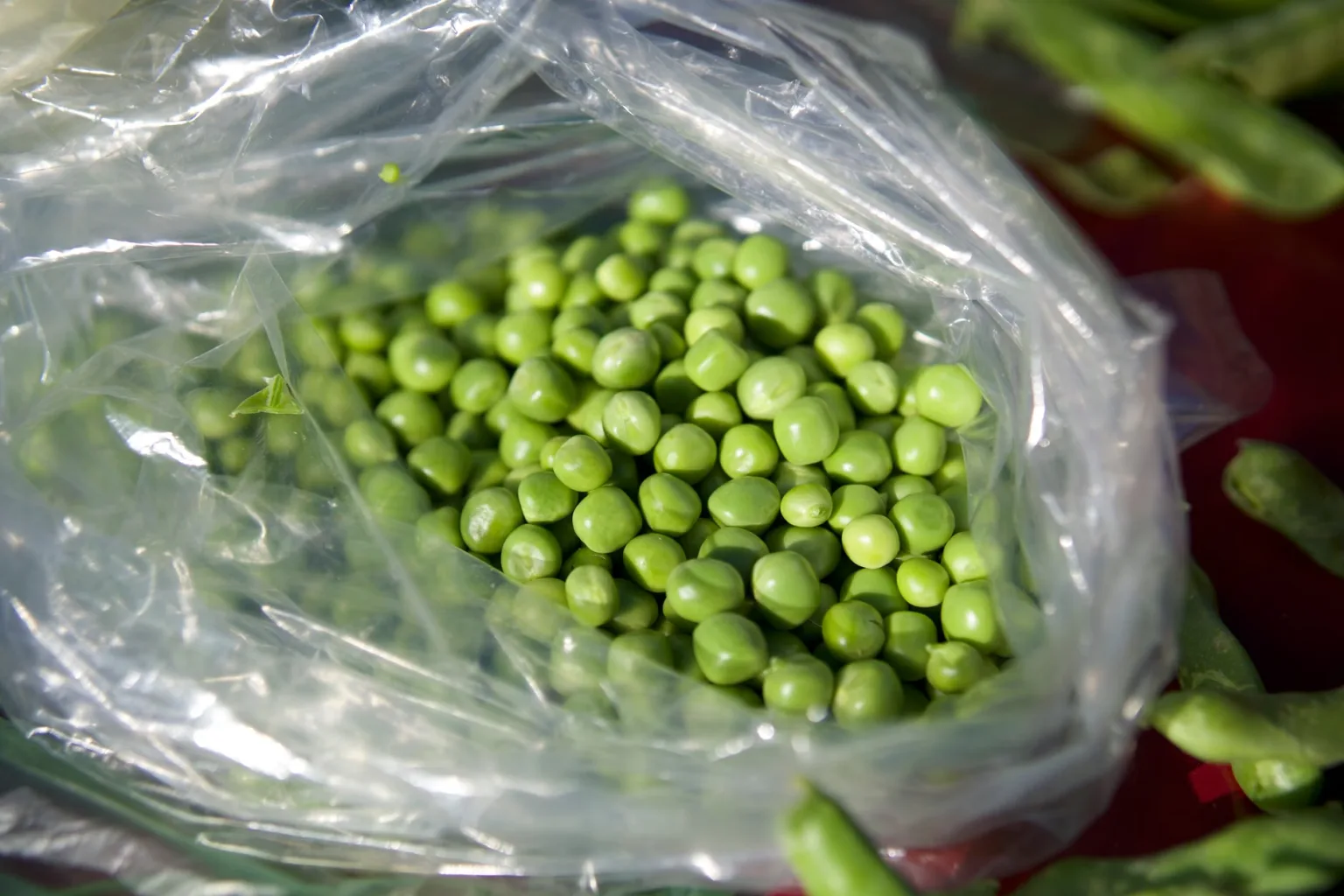
Peas are the edible seeds of Pisum sativum, a plant in the legume family Fabaceae. Fresh peas are eaten while tender and are usually removed from their pods; some varieties, such as snow peas, are also eaten pod and all, but that does not apply to every pea. Their mild, slightly sweet flavor makes them useful both as a main ingredient and as a small addition for color and texture. Peas are also sold frozen and canned, and those forms call for different handling from fresh peas.
When to use it
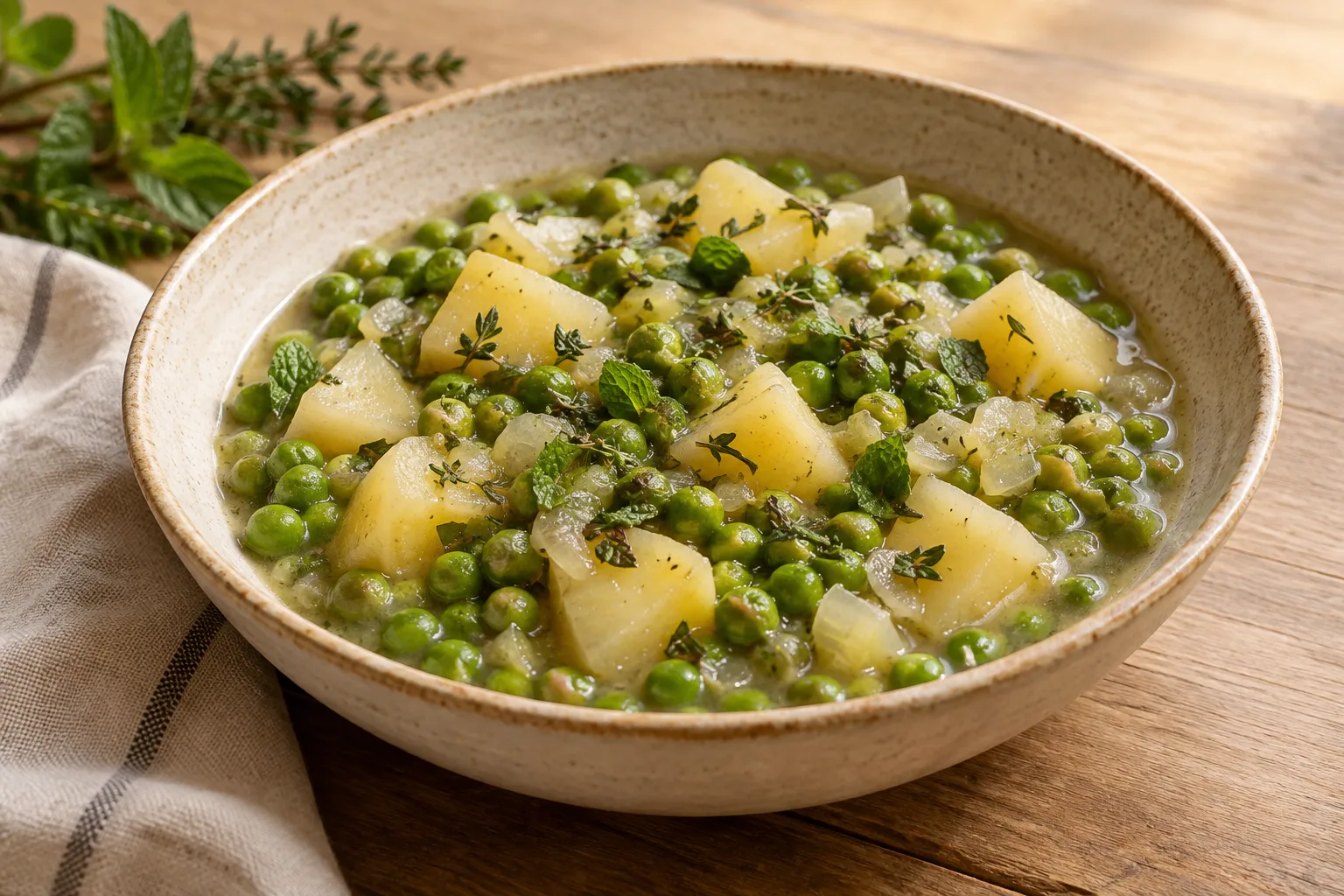
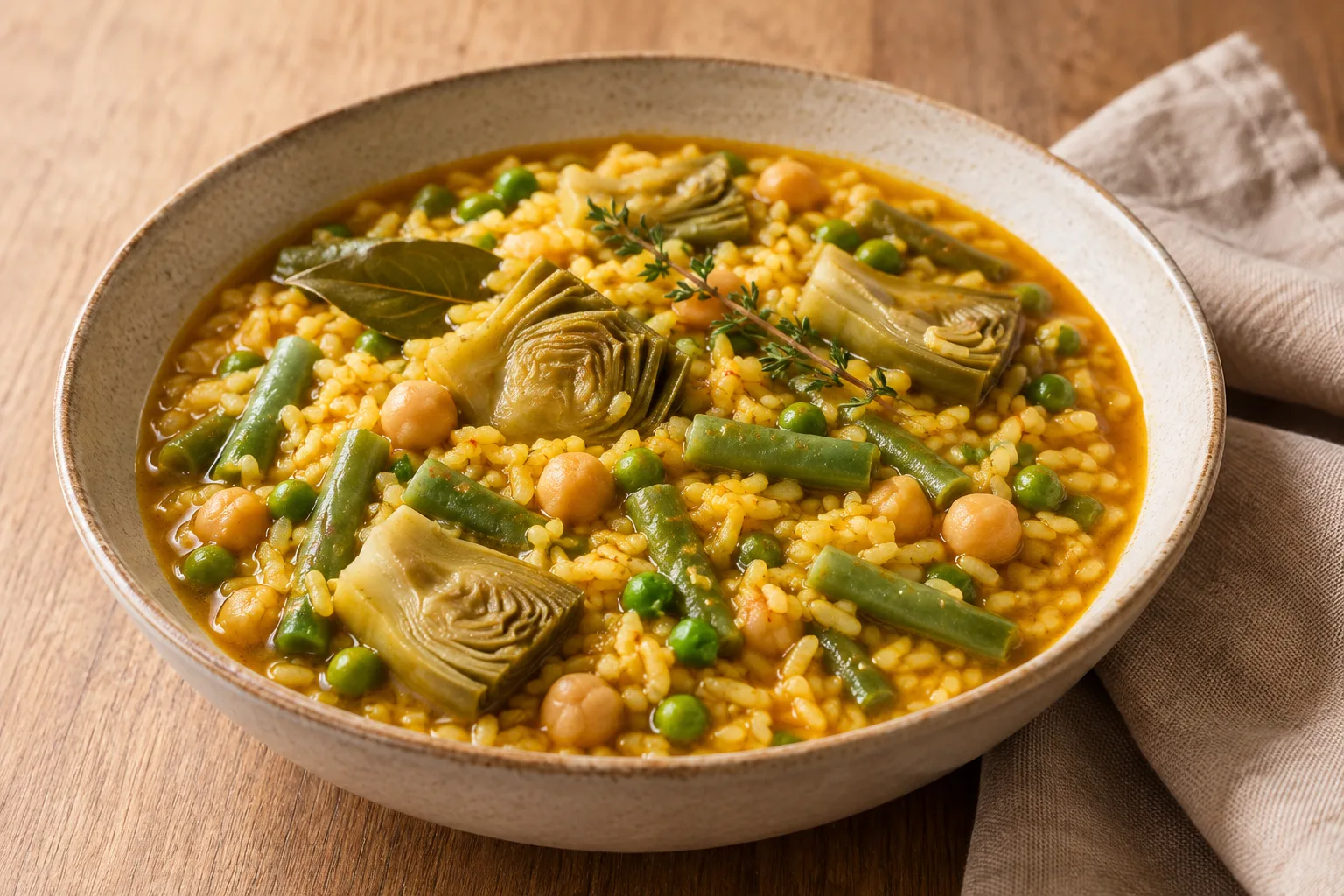
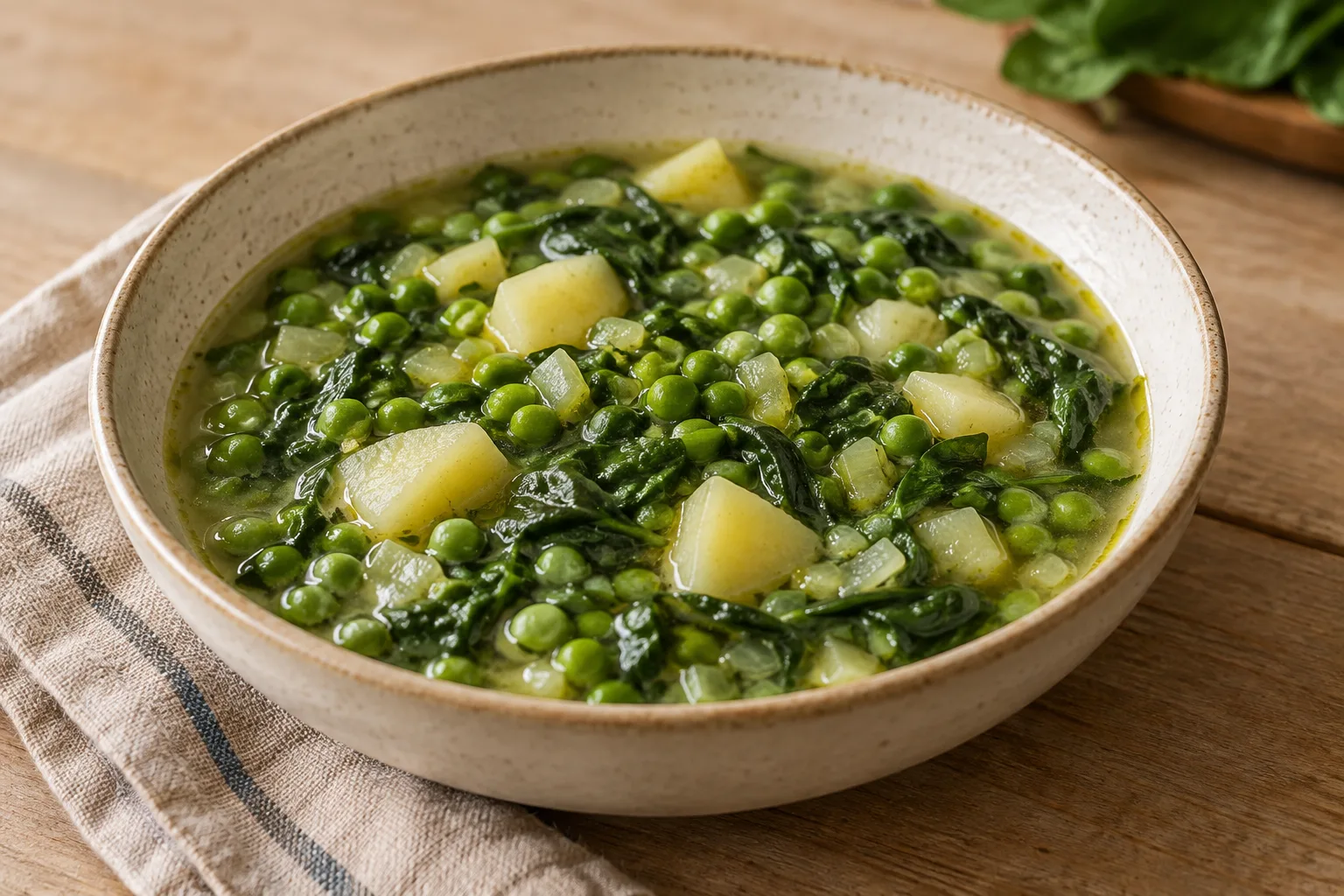
Choose fresh peas when you want a tender legume with a delicate flavor, especially for a spring-inspired meal or a dish that benefits from a bright green accent. They work in lighter preparations such as salads as well as hot dishes such as soups, purées, stews and rice dishes. Serve them on their own as a side or pair them with more strongly flavored ingredients. Fresh availability depends on location and market; frozen and canned forms make peas usable beyond the local fresh season.
How to use it
If you buy peas in pods, shell them before cooking unless you have a variety whose tender pod is eaten too. Rinse the seeds, then boil or steam them until they reach the texture you like. Cooking time varies with size, variety and maturity, so check for doneness rather than relying on one universal time. You can also add peas to soups, stews or rice dishes, or blend them into a smooth purée or spread. Frozen or canned peas can stand in for fresh peas in many recipes; canned peas are already cooked, so warm them gently to help keep them intact.
Flavour and texture
Fresh peas generally taste mild and slightly sweet, with a green, vegetal character. When tender, they are juicy and firm; excessive cooking can make them too soft. Variety, maturity and format affect the result: canned peas tend to be softer than fresh ones, while frozen peas offer another convenient option.
How to choose it
For fresh peas in pods, look for firm pods without soft or discolored areas, with seeds visible inside. Appearance varies by variety, so do not expect every pod to have exactly the same size or shape. If buying shelled peas, choose a product that looks fresh and check its packaging information where applicable. For frozen or canned forms, make sure the package or can is in good condition.
Storage
Fresh peas lose quality quickly, so buy them when you plan to use them and follow the seller’s or package’s directions. If keeping them in their pods, check them and remove any that become soft or spoiled. Keep frozen peas in the freezer and reseal the package securely after serving. Store unopened cans according to their label; after opening, transfer leftovers to a covered container and refrigerate them.
Substitutions
Frozen peas are a practical alternative when fresh ones are unavailable and can be used in soups, rice dishes, stews and sides. Canned peas suit quick recipes, although they are usually softer and already cooked, so add them near the end and warm them gently. Do not assume that ordinary pea pods are edible: eating the tender pod is characteristic of specific types such as snow peas.
Common mistakes
Cooking peas for too long can make them excessively soft and diminish their texture. Adjust the treatment to the format and check as you cook. Another common mistake is treating fresh, frozen and canned peas as interchangeable in handling: canned peas are already cooked and need less heating. Do not assume the pod is edible; that applies to particular varieties such as snow peas.
Safety and allergens
Peas should not be treated as inherently containing wheat, but Spain’s food safety agency reported an alert involving undeclared wheat grains in packages of peas. Check product labels and official alerts, particularly if you need to avoid wheat. Follow package directions and discard products in damaged containers.
Culinary uses
- Fresh vegetable-like legume for sides and main dishes
- Ingredient for soups, purées, salads, rice dishes and stews
Recommended techniques
- Boiling or steaming
- Briefly sautéing or gently reheating
- Blending into a smooth cream or spread
Pairs well with
- Mint
- Ham
- Onion and lettuce
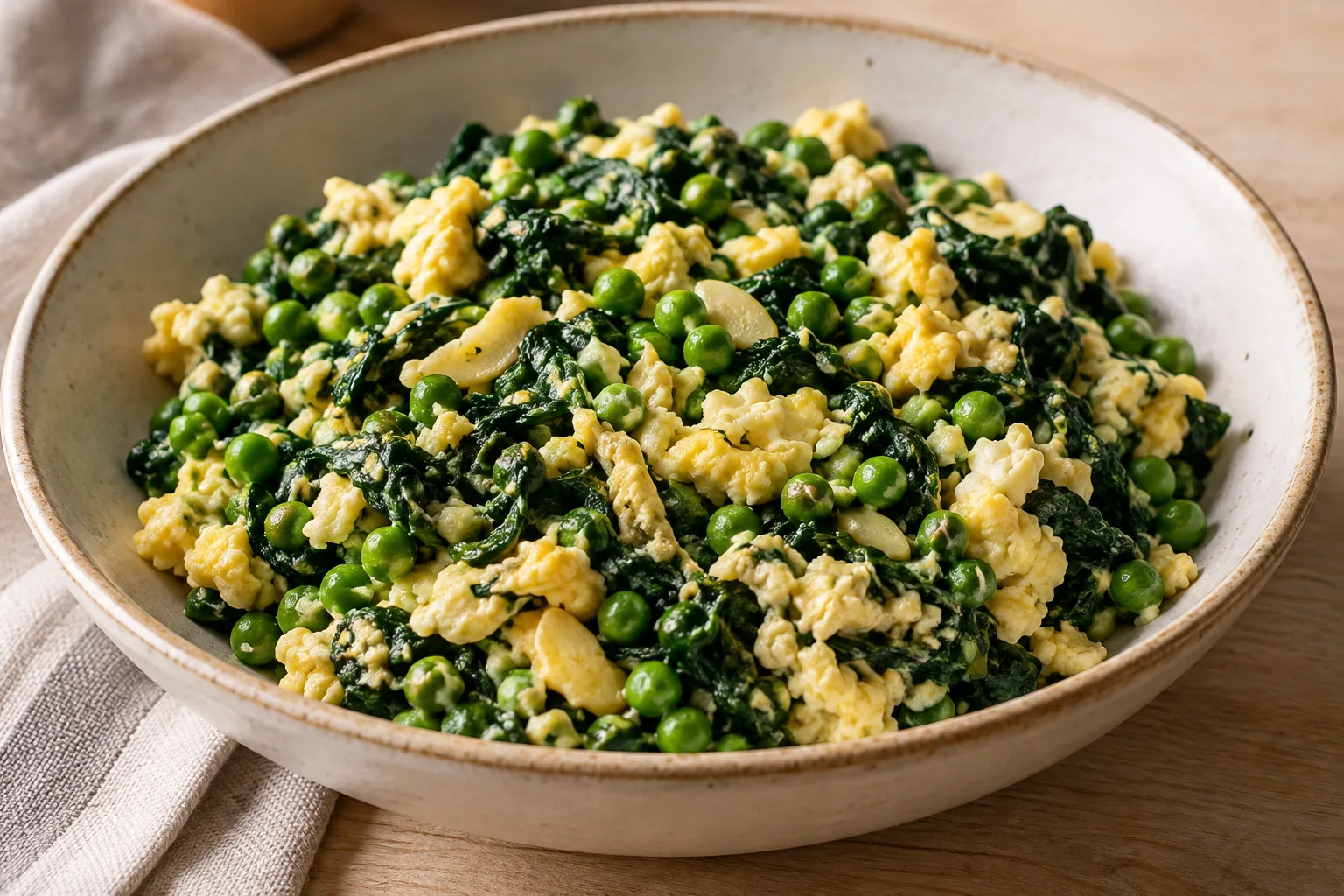
- Rice, pasta or eggs
Frequently asked questions
Are peas legumes or vegetables?
They are legumes botanically and in the culinary classification used here, although they are often cooked like a tender vegetable.
Can you eat the pod?
Only with varieties that have tender edible pods, such as snow peas. With ordinary garden peas, the seeds are usually shelled and eaten.
Can canned peas replace fresh peas?
Yes, in many dishes. Canned peas are already cooked and tend to be softer, so add them near the end and heat them gently.
Estimated nutrition
- Fat
- 0.56 g
- Saturates
- 0 g
- Carbohydrate
- 13.5 g
- Sugars
- 6.74 g
- Fibre
- 4.5 g
- Protein
- 5.62 g
- Salt
- 0.3 g
Sources and review
Automatically researched, cross-checked and validated content. Sources consulted:
- Guisantes: propiedades, beneficios y usos en la cocina cuerpomente.com
- Los guisantes en conserva pueden convertirse en un plato sorprendente con ingredientes sencillos que transforman por completo su sabor y textura elconfidencialdigital.com
- Client Challenge doi.org
- Gastronomía sefardí - Wikipedia, la enciclopedia libre es.wikipedia.org
- Aesan - Agencia Española de Seguridad Alimentaria y Nutrición aesan.gob.es
- 1 31 de enero de 2013 Preguntas y respuestas relativas a la aplicación del eletiquetadocuentamucho.aesan.gob.es
- Guisantes: propiedades y usos en la cocina - Cocina y Come cocinaycome.com
- El guisante en nuestra gastronomía afuegolento.com
- Guisantes: propiedades, valor nutricional, beneficios y usos en la cocina lavanguardia.com
- Todo sobre los guisantes de campo: tipos, nutrición y usos culinarios | Garvillo garvillo.com
- Artes culinarias/Ingredientes/Guisante - Wikilibros es.wikibooks.org
- ¿Qué son los guisantes? Descubre todos los detalles - concadelatordera.com concadelatordera.com
- Curiosidades sobre los guisantes: El pequeño gigante de la agricultura - Cereales Angora cerealesangora.es
- Descubre qué son los guisantes en México - promagal.es - Blog Informativo promagal.es
- Guisante - Infoalimenta infoalimenta.com
- 8 recetas con guisantes fáciles y sorprendentes para cocinar distinto en primavera petitchef.es
- 8 recetas con guisantes fáciles y muy apetitosas para sacarle todo el partido a esta legumbre bonviveur.com