- Category
- Dairy and eggs
- State
- Fresh
- Usual unit
- piece
What it is
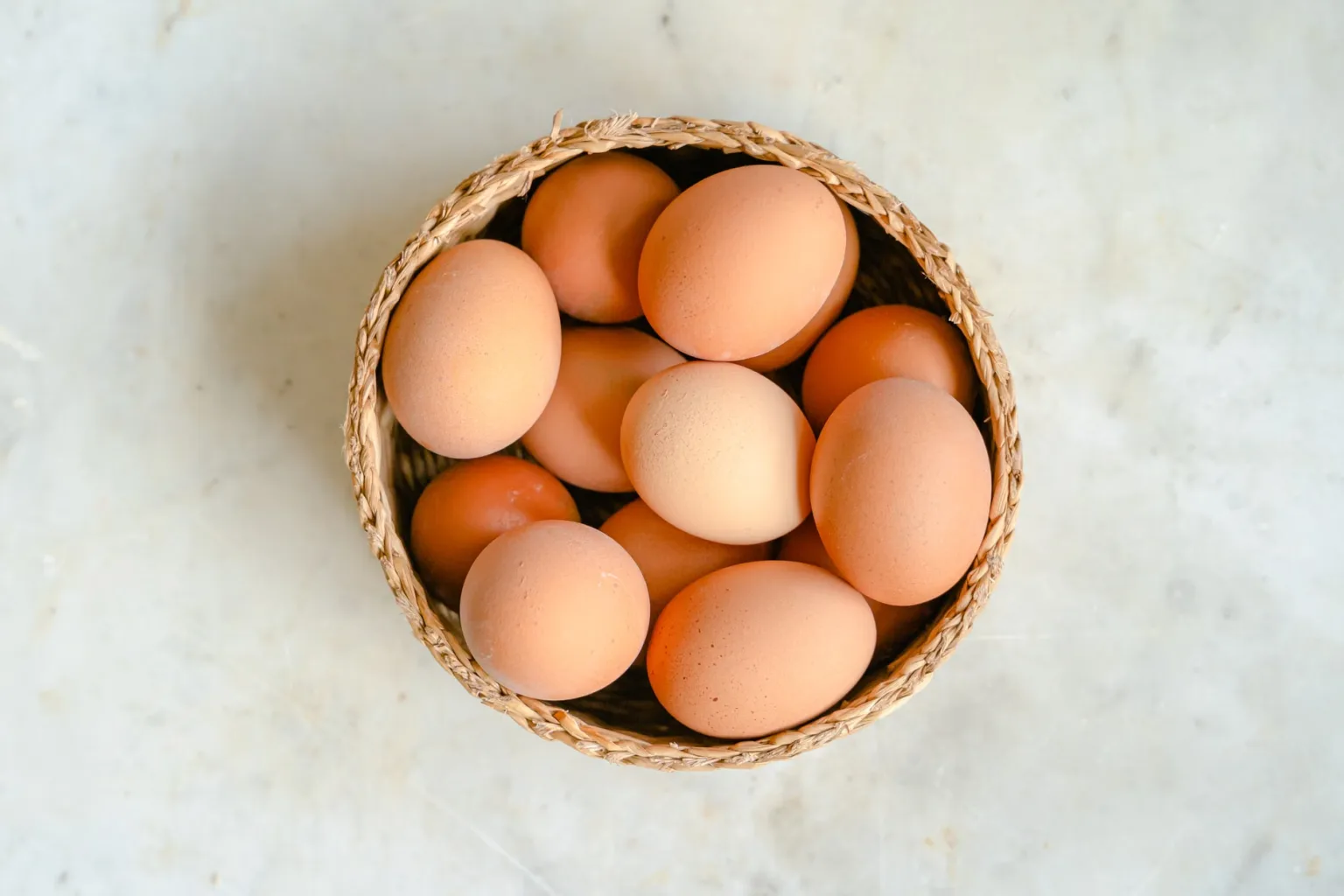
In cooking, “egg” commonly means a hen’s egg unless another bird is specified. It consists of a shell, white and yolk, and these parts have different culinary functions. The white can form a foam and provide structure; the yolk helps emulsify and adds creaminess; a whole egg combines several of these properties. That versatility makes eggs useful in simple dishes as well as sauces, desserts and baked goods. Processed egg products are also available, including separated whites or yolks and liquid egg. These are not the same as fresh eggs in their shells, so use them according to the directions on their packaging.
When to use it
Use egg when a preparation needs to set, bind or gain structure, or when you want to aerate a mixture or emulsify a sauce. Whites are useful for foams such as meringues and soufflés; yolks for emulsified sauces and creams; whole eggs for omelettes, custards and many batters. Choose a substitute only after identifying the egg’s role in the recipe: an ingredient that binds may not make a foam or create the same texture.
How to use it
First decide whether the recipe calls for whole egg, white or yolk. To make a foam, beat the whites to the texture specified in the recipe and fold them in carefully if you want to retain the air. For an emulsion, combine the yolk with the other ingredients using the recipe’s method. Heat sets egg, giving structure to omelettes, custards and creams; eggs can also bind ingredients in batters and fillings. If substituting, choose an option for the specific task: aquafaba for some foams; fruit purée or hydrated chia or flax for binding certain batters; chickpea flour mixed with water for tortilla-style dishes. The flavour and texture may differ.
Flavour and texture
Whole egg has a mild flavour and a texture that changes when beaten or heated. The white is more neutral and can change from liquid to foamy and then firm; the yolk is richer and creamier and helps emulsify. Both parts set with heat. The final texture depends on cooking and on the balance of white and yolk, ranging from tender and creamy to firm, airy or compact.
How to choose it
Check that the shell is intact and read the package information, including the food’s name and any dates shown. The label can give details about the product form and any storage or use instructions. If you want something other than fresh eggs in their shells, such as liquid whites, yolks or pasteurised egg, check that it is the form your recipe calls for and follow the manufacturer’s directions.
Storage
Follow the storage and use directions on the package, since they can differ by product and presentation. Keep the product identity and date readable so you can check the information before use. Egg products such as liquid egg or separated whites and yolks may have different requirements from fresh eggs in their shells; after opening, follow the manufacturer’s specific instructions.
Substitutions
No single substitute reproduces every function of egg. Aquafaba can work in some recipes that need foam; mashed banana or applesauce and hydrated chia or flax can bind certain batters; chickpea flour mixed with water can work in egg-free tortilla-style dishes. These options can change flavour, moisture and structure, so choose for the recipe rather than treating any one as a universal replacement.
Common mistakes
Do not assume whites, yolks and whole eggs are interchangeable: each part has different functions. Nor should you swap egg for an arbitrary ingredient without considering whether the recipe needs binding, emulsifying, setting or foam. A substitute may add moisture or hold ingredients together yet still fail to provide egg’s volume or structure.
Safety and allergens
Egg is an allergen. Check ingredient and allergen information, especially when cooking for someone with an allergy, and follow the package’s storage and use directions.
Culinary uses
- Main ingredient
- Binder and thickener
- Emulsifier
- Foaming and aerating agent
- Setting and gelling agent
Recommended techniques
- Scrambling
- Frying
- Boiling
- Poaching
- Whisking egg whites into foam
- Emulsifying sauces with yolk
Pairs well with
- Potatoes
- Tomato and spices
- Bread and baked goods
- Vegetables and sauces
Frequently asked questions
Can I use only the white or yolk instead of a whole egg?
Only if the recipe is designed for that part or you adjust the preparation. Whites and yolks have different functions, so the result may change.
Which substitute works best for a whipped foam?
Aquafaba can work in some foamed preparations. It is not a universal replacement, and the recipe may need adjustments.
Is egg an allergen?
Yes. Check the product’s ingredient and allergen information and do not serve it to someone with an egg allergy.
Estimated nutrition
- Fat
- 6 g
- Saturates
- 1.59 g
- Carbohydrate
- 47.8 g
- Sugars
- 1.78 g
- Fibre
- 2.3 g
- Protein
- 9.5 g
- Salt
- 0.95 g
Sources and review
Automatically researched, cross-checked and validated content. Sources consulted:
- En el etiquetado alimentario hay algunas menciones que son obligatorias eletiquetadocuentamucho.aesan.gob.es
- Client Challenge doi.org
- Guía de Buenas Prácticas de Higiene para la Elaboración de Ovoproductos aesan.gob.es
- Huevo (alimento) - Wikipedia, la enciclopedia libre es.wikipedia.org
- El huevo: origen, tipos, tamaños, propiedades y elaboraciones faborit.com
- Usos del Huevo – Instituto de Estudios del Huevo institutohuevo.com
- Huevo: tipos, usos, técnicas y recetas - CocinoPedia.com cocinopedia.com
- Artes culinarias/Ingredientes/Huevo - Wikilibros es.wikibooks.org
- Huevo | Mi Gastronomia Wiki | Fandom migastronomia.fandom.com
- Tipos de huevos, categorías y derivados - Scoolinary Blog blog.scoolinary.com
- Sustitutos de huevo para hornear y cocinar - Fat Daddio's fatdaddios.com
- 21 sustitutos del huevo para hornear y cocinar y cómo utilizarlos - GenV genv.org
- Cómo preparar huevos de siete formas distintas con técnicas de chefs reconocidos - Infobae infobae.com
- Ovoproductos derivados del huevo – PULEVA lechepuleva.es
- Huevos y derivados edualimentaria.com
- Estos son los usos del huevo más allá de la gastronomía- Grupo Milenio milenio.com
- Cómo cocinar sin huevo hosteleriayturismodavante.es