- Category
- Herbs and spices
- State
- Powdered
- Usual unit
- Variable
What it is
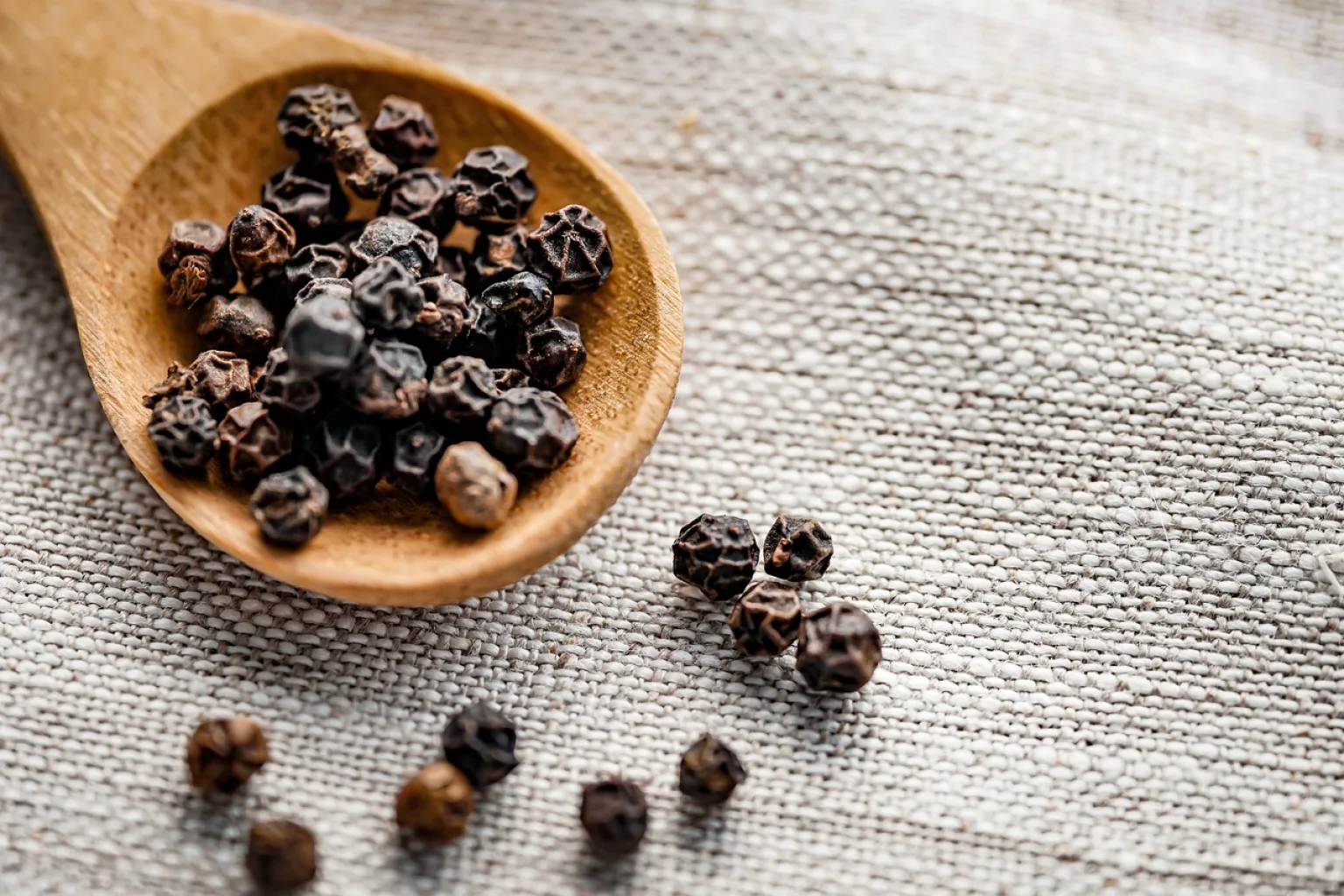
Ground black pepper is the dried, crushed fruit of Piper nigrum, a spice also commonly sold as whole peppercorns. Grinding makes it easy to sprinkle and mix into dishes, although its aroma fades sooner over time than that of whole peppercorns. Its profile is aromatic, warm and pungent, and the intensity can vary between products. It is not the same as white or green pepper, which have distinct sensory profiles. Because it is ground, it disperses readily through liquids, pastes and finished dishes, making it convenient for everyday seasoning.
When to use it
Use it when you want to add warm, aromatic pungency without visible whole peppercorns. It works in dressings, sauces, marinades, soups and creamy dishes, as well as with meat, fish, seafood, vegetables and pasta. For cold preparations, mix it directly with the other ingredients. In cooked dishes, adding it near the end can help retain more of its aroma; you can also adjust the seasoning just before serving. Start with a small amount and taste before adding more, since the pungency builds.
How to use it
Sprinkle a little over a dish or mix it with the other ingredients so it is distributed evenly. For a dressing or vinaigrette, stir it into the oil and acidic ingredient; for a marinade, combine it with the recipe’s liquid and aromatics. It can also be added to sauces, soups and creamy dishes. If the preparation is heated, try adding it in the final part of cooking or at the table, as prolonged heat can reduce its aroma. Adjust gradually: adding another pinch is easier than correcting a dish that has become too pungent. Close the container after use.
Flavour and texture
Ground black pepper has a penetrating, spicy aroma and warm pungency that is noticeable on the tongue and may also be felt in the nose. Its fine powder blends easily and avoids the texture of whole peppercorns, though it can be noticeable if used generously. Aromatic intensity tends to decline over time after grinding, so a recently opened product may smell more fragrant than one that has been stored for a long time.
How to choose it
Choose a well-sealed package and check the product information, including its ingredients and relevant allergen statements. Ground pepper is convenient and easy to incorporate, but it loses aroma faster than whole peppercorns. If fragrance is your priority, buy whole peppercorns and grind only what you need; if convenience matters more, ground pepper can be used straight from the package. Flavor and intensity can vary by product, so begin with a small amount.
Storage
Keep it in a tightly closed container in a cool, dry place away from direct light. Avoid leaving the package open beside steam, heat or moisture from the cooking area. Close the lid after each use and use a dry spoon if you do not sprinkle it directly. These steps help limit aroma loss; ground pepper does not retain its fragrance indefinitely. Follow any storage instructions on the package.
Substitutions
The closest alternative is to grind whole black peppercorns and use the result gradually, adjusting to taste. Ground white pepper can work when you prefer the seasoning to be less visible, but its flavor is not identical. Green pepper also has a different character, described as fresher. Do not assume that a substitute should be used in exactly the same amount; start with less and taste the dish.
Common mistakes
Adding too much pepper at once can make its pungency dominate the dish; add a pinch, taste and adjust. Leaving the package open or storing it beside steam and light are other common mistakes that speed aroma loss. In cooked dishes, adding it too early and exposing it to heat for a long time can diminish some of its fragrance. Do not expect white or green pepper to taste exactly like black pepper.
Safety and allergens
Check the product label and allergen information, especially if you have a food allergy or intolerance. Information can vary by product and how it is sold; for bulk products, ask the seller if you need clarification about possible allergens. Keep the container closed and use a clean, dry utensil.
Culinary uses
- Seasoning that adds warmth and pungency to savory dishes
- A finishing spice for sauces, soups, vegetables and other prepared foods
Recommended techniques
- Stir into dressings, marinades, sauces or other mixtures
- Add near the end of cooking or at the table to retain more aroma
Pairs well with
- Meat, fish and seafood
- Vegetables, soups, creams and sauces
- Pasta and cheese
Frequently asked questions
Can I use ground black pepper instead of whole peppercorns?
Yes. Ground pepper can be added directly and is convenient for mixtures and finished dishes. Freshly ground peppercorns often provide more aroma, so adjust the amount to taste.
When should I add it to a hot dish?
Add it near the end of cooking or at the table if you want to retain more aroma. Add it gradually and taste before making further adjustments.
How should I store it after opening?
Keep it tightly closed in a cool, dry place away from direct light. Avoid steam and moisture, and follow the package instructions.
Estimated nutrition
- Fat
- 3.26 g
- Saturates
- 1.39 g
- Carbohydrate
- 63.95 g
- Sugars
- 0.64 g
- Fibre
- 25.3 g
- Protein
- 10.39 g
- Salt
- 0.05 g
Sources and review
Automatically researched, cross-checked and validated content. Sources consulted:
- En el etiquetado alimentario hay algunas menciones que son obligatorias eletiquetadocuentamucho.aesan.gob.es
- Aesan - Agencia Española de Seguridad Alimentaria y Nutrición aesan.gob.es
- Pimienta Negra Molida - Slow Shop granel slowshopgranel.es
- Pimienta negra molida especiaspedroza.es
- Pimienta Negra Molida sucesoresdeignaciolopez.com
- Pimienta Negra: Beneficios y Usos en la Cocina |... cocinista.es
- Piper nigrum - Wikipedia, la enciclopedia libre es.wikipedia.org
- Pimienta Negra, molida - Envíos GRATIS desde 0€ todoespecias.com
- La pimienta. Curiosidades y usos en la cocina de la reina de las especias abc.es
- Pimienta Negra Molida graneleselmontanes.es
- Pimienta: origen, tipos, propiedades y usos en la cocina bonviveur.com
- Pimienta negra: historia y usos en la cocina - Ingredientes Culinarios cocinaycome.com
- CÓDIGO: FTE FECHA: ENE 2018 REVISIÓN: 4 1.- PRODUCTO Nombre del producto: dani.es
- PIMIENTA NEGRA MOLIDA FICHA TÉCNICA Código: FT-PTC-005 Nº Rev.: 00 Fecha : alimentosmida.com
- Pimienta Negra Molida | Pimentón y Especias La Dalia pimenton-ladalia.com
- Fichas Técnicas de Productos | PDF | Carne | Pimienta negra scribd.com