- Category
- Sugar and sweeteners
- State
- Liquid
- Usual unit
- taza
What it is
Honey is a sweet, viscous food made by bees from nectar collected from flowers. The bees transform the nectar and store it in honeycombs, where it becomes concentrated and develops its characteristic consistency. Honey does not have one fixed flavor profile: color, aroma, taste and texture can differ with floral sources and product variety. One honey may be mild and light, while another has a more pronounced character. In the kitchen, it works as a sweetener and as an ingredient that contributes flavor to both sweet and savory preparations. Treat any stated origin or variety as information about the particular product, rather than assuming that every honey tastes the same.
When to use it
Use honey when you want sweetness accompanied by its own aroma, rather than a neutral sweet taste. It can sweeten drinks and desserts, accompany bread or toast, and contribute to dressings, sauces and glazes. A mild variety can work when you want other ingredients to remain prominent; a more assertive honey can stand out in savory combinations or alongside cheese. Choose according to the variety available and the result you want. In a recipe, remember that honey brings its own flavor and is not always interchangeable with another sweetener without changing the outcome.
How to use it
Start with a moderate amount of honey, then adjust to taste and to the recipe. Stir it into drinks, add it to batters and desserts, or combine it with oil and an acidic ingredient to make a dressing. It can also add sweetness to sauces and glazes, or accompany bread, fruit or cheese. If the honey is very thick or crystallized, stir it and assess its consistency before measuring; consistency can vary between products, and crystallization alone does not define its flavor. When replacing another sweetener in baking, remember that the change may affect sweetness, moisture or the finished recipe. Use a formula developed for the substitute and make cautious adjustments.
Flavour and texture
Sweetness is honey’s most familiar feature, but its aroma and taste are not uniform: they vary with the variety and floral sources. Honey may have mild or more pronounced notes and different colors. Its texture is usually dense and viscous; some products crystallize or become partly solid. These changes in appearance do not, by themselves, mean that one honey has the same profile as another. Read the product description and taste it to see how it works in your preparation.
How to choose it
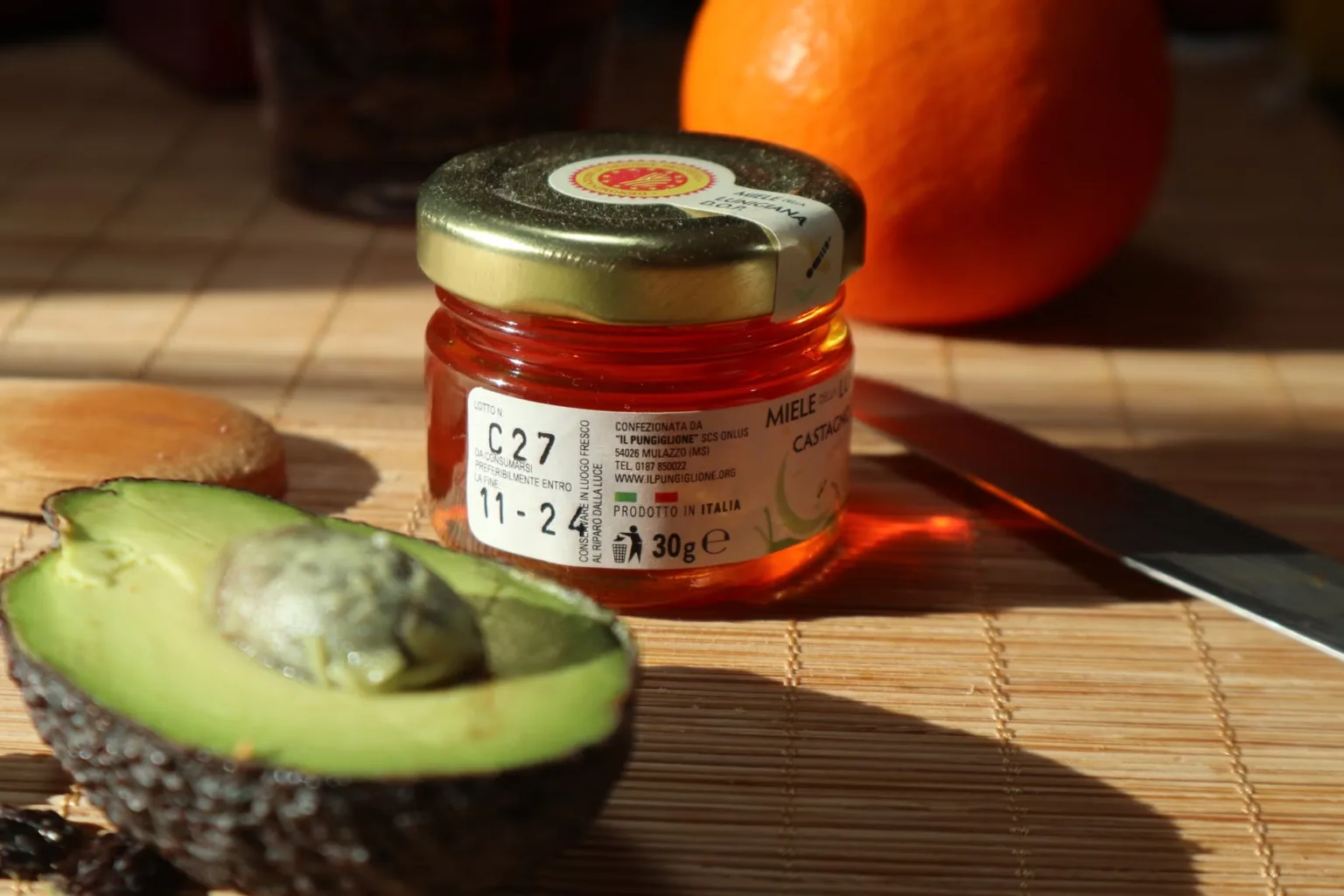
Check the food name and the information on the package. If a variety or origin is declared, treat it as guidance about that particular product, not as a promise that every brand will taste identical. Check the net quantity, the stated date, and any storage or use directions on the label. Color and texture can vary, so do not rely on them alone to judge a honey. If you need ingredient or allergen information for a packaged product, consult its label.
Storage
Follow the storage directions printed on the package, since special storage or use conditions should be stated when they apply. Do not assume that every honey needs the same treatment, or that a change in texture such as crystallization is enough to establish that a product has spoiled. Follow any specific date or instruction provided for the product. For honey sold without packaging, ask the seller for the applicable product information.
Substitutions
Sugar can provide sweetness as an alternative when a recipe allows a change of sweetener, but it does not contribute exactly the same flavor or necessarily the same texture. Maple syrup is another culinary possibility, although a recipe may need adjustment. There is no universal conversion supported here for every preparation: consult a formula designed for the substitution and test a small amount before changing an important recipe.
Common mistakes
Do not assume that all honey has the same color, aroma, taste or consistency; variety affects the result. Another common mistake is replacing it with a different sweetener as if the recipe cannot change: flavor and texture may differ. Nor should appearance, including crystallization, be used as the sole test of quality or safety; check the label and product information.
Safety and allergens
Check the label and follow the product’s use and storage directions. Intoxication episodes have been linked to a particular honey containing grayanotoxin, most of it originating from Nepal; this specific warning does not mean that all honey carries the same risk. If a product is covered by a specific origin notice or alert, follow the relevant official information.
Culinary uses
- Endulzante para bebidas, postres y preparaciones saladas
- Ingrediente para vinagretas, salsas y glaseados
Recommended techniques
- Mezclar con líquidos o ingredientes de una salsa
- Incorporar en masas y mezclas de repostería
Pairs well with
- Pan y tostadas
- Quesos
- Frutas
- Mostaza y vinagre en aderezos
Frequently asked questions
Why are some honeys lighter or darker?
Honey color, aroma and taste vary between products and depend on variety and floral sources. Color alone does not show that one honey is better than another.
Can crystallized honey still be used?
Honey can change consistency and crystallize. Stir it to assess its texture and check the package; crystallization alone does not establish that the product has spoiled.
Can I replace sugar with honey?
Honey can sweeten recipes, but replacing sugar does not always leave flavor or texture unchanged. Use an adapted recipe and adjust cautiously.
Estimated nutrition
- Fat
- 26.61 g
- Saturates
- 12.65 g
- Carbohydrate
- 48.6 g
- Sugars
- 25.7 g
- Fibre
- 1.2 g
- Protein
- 4.45 g
- Salt
- 0.76 g
Sources and review
Automatically researched, cross-checked and validated content. Sources consulted:
- En el etiquetado alimentario hay algunas menciones que son obligatorias eletiquetadocuentamucho.aesan.gob.es
- Client Challenge doi.org
- Aesan - Agencia Española de Seguridad Alimentaria y Nutrición aesan.gob.es
- Miel - Wikipedia, la enciclopedia libre es.wikipedia.org
- Tipos de Miel. Descubre los diferentes tipos - Blog iO.GENIX tienda.iogenixnutrition.com
- Miel | Guía completa: propiedades, tipos, usos y cómo elegirla bien mielabejarana.com
- La miel, el dulce natural para tus comidas | Recetas Nestlé recetasnestle.com.ar
- Endulzante con miel y sus usos culinarios | Recetas Nestlé recetasnestlecam.com
- La miel, el dulce natural que debes conocer | Recetas Nestlé recetasnestle.com.mx
- Productos de miel y sus derivados, variedades, beneficios y usos - Pórtico Zamora porticozamora.es
- Tipos de miel - Miel Sierraflor mielsierraflor.es
- Los diferentes usos culinarios de la miel de brezo: recetas y consejos - Reina Kilama reinakilama.com
- Cuáles son los ingredientes de la miel | Recetas Nestlé recetasnestle.cl
- Maridajes pan y miel - Cata Mieladictos. Cultura miel mieladictos.com
- Sustitutos para Miel en Repostería: Guía Profesional con Proporciones spice.alibaba.com
- 11 recetas con miel: platos salados y postres tradicionales con todo su sabor bonviveur.com
- Maridajes con miel de abeja - Abeja Reyna abejareyna.mx