- Category
- Oils and fats
- State
- Liquid
- Usual unit
- Variable
What it is
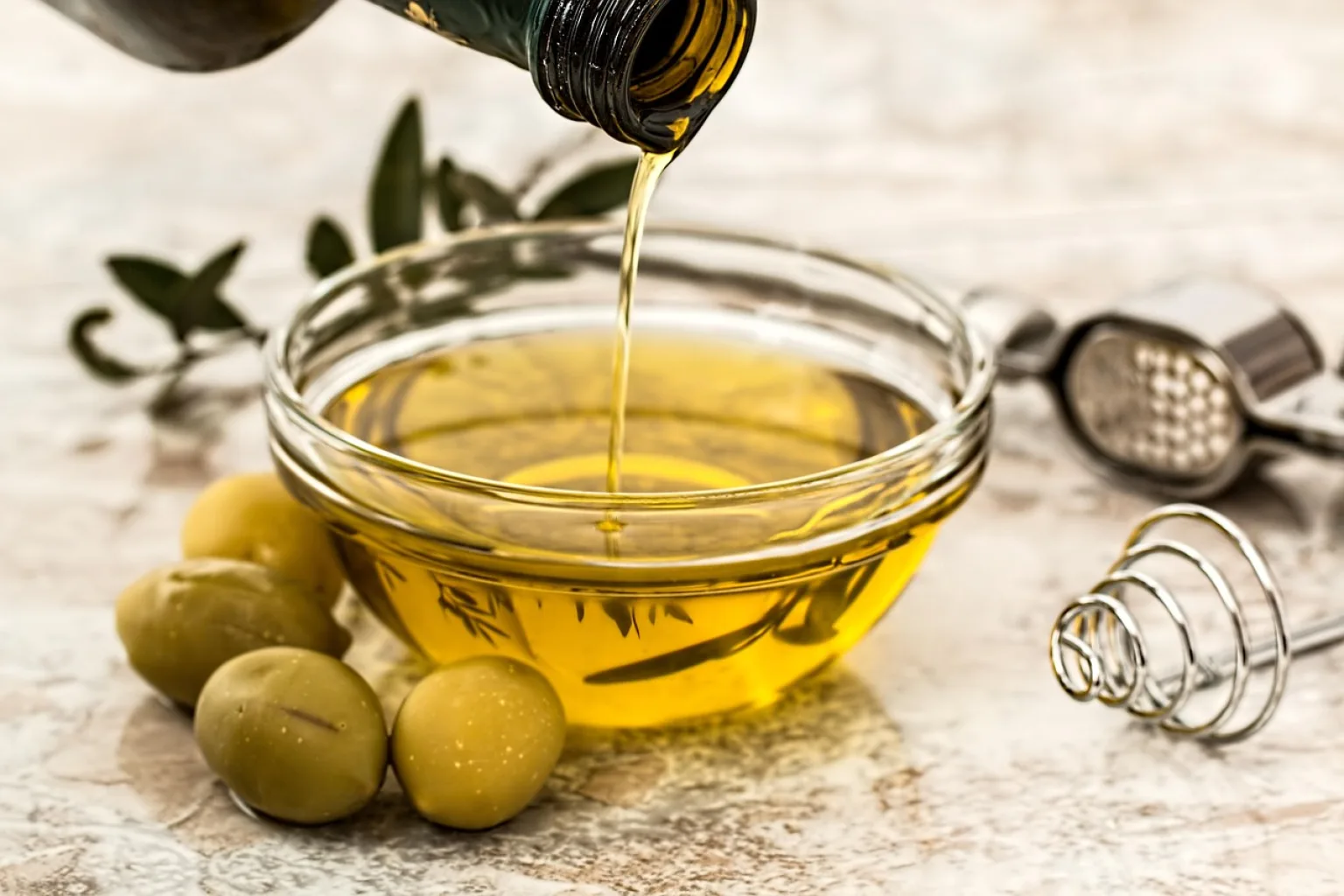
Oil is a broad name for liquid culinary fats that may come from different plants, seeds, fruits, grains, or blends. The word alone therefore does not establish one source, flavor, or cooking behavior: the raw material and processing affect the product's characteristics. In cooking, oil can lubricate ingredients and cookware, help keep food from sticking, and contribute to texture and flavor. Some oils are used cold, while others are also used with heat; choose according to the intended use and the information on the package.
When to use it
Use oil when a recipe needs a pan or baking tin lubricated, ingredients dressed, a vinaigrette or sauce made, or extra softness and flavor. For cooking with heat, do not assume every oil behaves alike: check the oil type, the use described on the package, and the needs of the recipe. If you want the oil to stand out, choose one whose profile complements the dish; if you prefer a less prominent flavor, choose a milder option when available.
How to use it
Read the full product name and ingredient list to find out which oil the container holds, whether it is a blend, and whether other ingredients are included. Use an amount suited to the recipe: a thin coating may be enough to lubricate a surface, while a dressing or sauce may need oil combined with other ingredients. For a vinaigrette or emulsified sauce, add it according to the recipe's method. For sautéing, frying, or baking, use only an oil appropriate for that purpose according to the product and recipe; oils are not automatically interchangeable. Follow the package directions, and do not reuse oil if the product or applicable instructions do not allow it.
Flavour and texture
Oil does not have one universal flavor profile: its taste can be mild or pronounced and can vary with its source and processing. In a dish, oil can also add a smooth quality, help a sauce feel creamier, or affect the texture of cooked food. Color alone cannot reliably identify flavor or intended use, so check the product name and package information.
How to choose it
Check the label for the plant source, whether the product is a single oil or a blend, and any use description from the manufacturer. Choose according to the recipe and the flavor you want rather than assuming all oils suit every technique equally. If you need to avoid an ingredient because of an allergy or intolerance, check the specific product's ingredient list and allergen information; the generic word “oil” does not establish its composition.
Storage
Follow the storage directions on the package, since guidance can depend on the product and how it is presented. Close the container properly after use and check the label for any particular conditions or directions for use. Do not infer a shelf life, storage temperature, or special condition from the word “oil” alone: the specific product and its instructions are the reference.
Substitutions
You can substitute one oil for another when the recipe allows it, but the result may differ in flavor, texture, or cooking behavior. To keep the flavor subtle, look for another option described as mild or neutral; to add a noticeable flavor, choose an oil that supplies it. Before swapping, check that the alternative suits the stated technique and review its ingredients if you need to avoid something.
Common mistakes
A common mistake is treating all oils as equivalent and swapping them without considering flavor or intended use. Buying by color or by the generic word “oil” alone can also be misleading if you have not checked the source, blend, and directions. Do not assume a product suits every cooking method or dietary need: check the label and the recipe.
Safety and allergens
Check the ingredient list and allergen information, especially if you have an allergy or intolerance. When cooking for someone with an allergy, do not share cooking oil, utensils, or surfaces unless they have been cleaned; follow official safe-handling guidance and the product directions.
Culinary uses
- Aportar lubricación y ayudar a que los alimentos no se peguen
- Transmitir calor y contribuir a la textura y al sabor
Recommended techniques
- Aliñar o emulsionar, cuando el aceite sea adecuado para la preparación
- Saltear, freír u hornear, según el tipo de aceite y las indicaciones del producto
Pairs well with
- Ensaladas, verduras y vinagretas
- Pan, salsas y platos terminados
Frequently asked questions
Can every oil be used for every cooking method?
Not necessarily. Oils differ by source and processing; check the use described on the package and choose according to the recipe's technique.
Can I replace one oil with another?
Sometimes, but the flavor and result may change. Check that the alternative suits the preparation and meets your ingredient needs.
How should I store oil?
Follow the directions on the specific product's package. There is no single storage rule established here for every oil.
Estimated nutrition
- Fat
- 99.1 g
- Saturates
- 82.5 g
- Carbohydrate
- 0 g
- Sugars
- 0 g
- Fibre
- 0 g
- Protein
- 0 g
- Salt
- 0 g
Sources and review
Automatically researched, cross-checked and validated content. Sources consulted:
- En el etiquetado alimentario hay algunas menciones que son obligatorias eletiquetadocuentamucho.aesan.gob.es
- Client Challenge doi.org
- Explora Sabores de Oliva Virgen: Aceites, Encurtidos y Gourmet grenadeoliveoil.com
- Técnicas de cocina con aceite de oliva aceitesdeolivadeespana.com
- Aceite de Oliva | www.cocinista.es cocinista.es
- 4 maridajes con aceite de oliva - Coosur coosur.com
- Aceite vegetal - Wikipedia, la enciclopedia libre es.wikipedia.org
- Aceite de cocina: cuál usar para cocinar, freír o aliñar - Bio Eco Actual bioecoactual.com
- Qué es el aceite de oliva y cómo usarlo | Recetas Nestlé recetasnestle.com.mx
- Conoce los tipos de aceite para cocinar | Recetas Nestlé recetasnestle.cl
- 5 Maridajes con AOVE - Benizar benizar.es
- Maridaje con Aceite de Oliva | Olea Andaluza oleandaluza.com
- Guía rápida de maridajes con AOVE: combinaciones perfectas blog.esao.es
- Confitar con aceite de oliva en cocina española – Aceites Abril tienda.aceitesabril.com