- Category
- Vegetables
- State
- Fresh
- Usual unit
- Variable
What it is
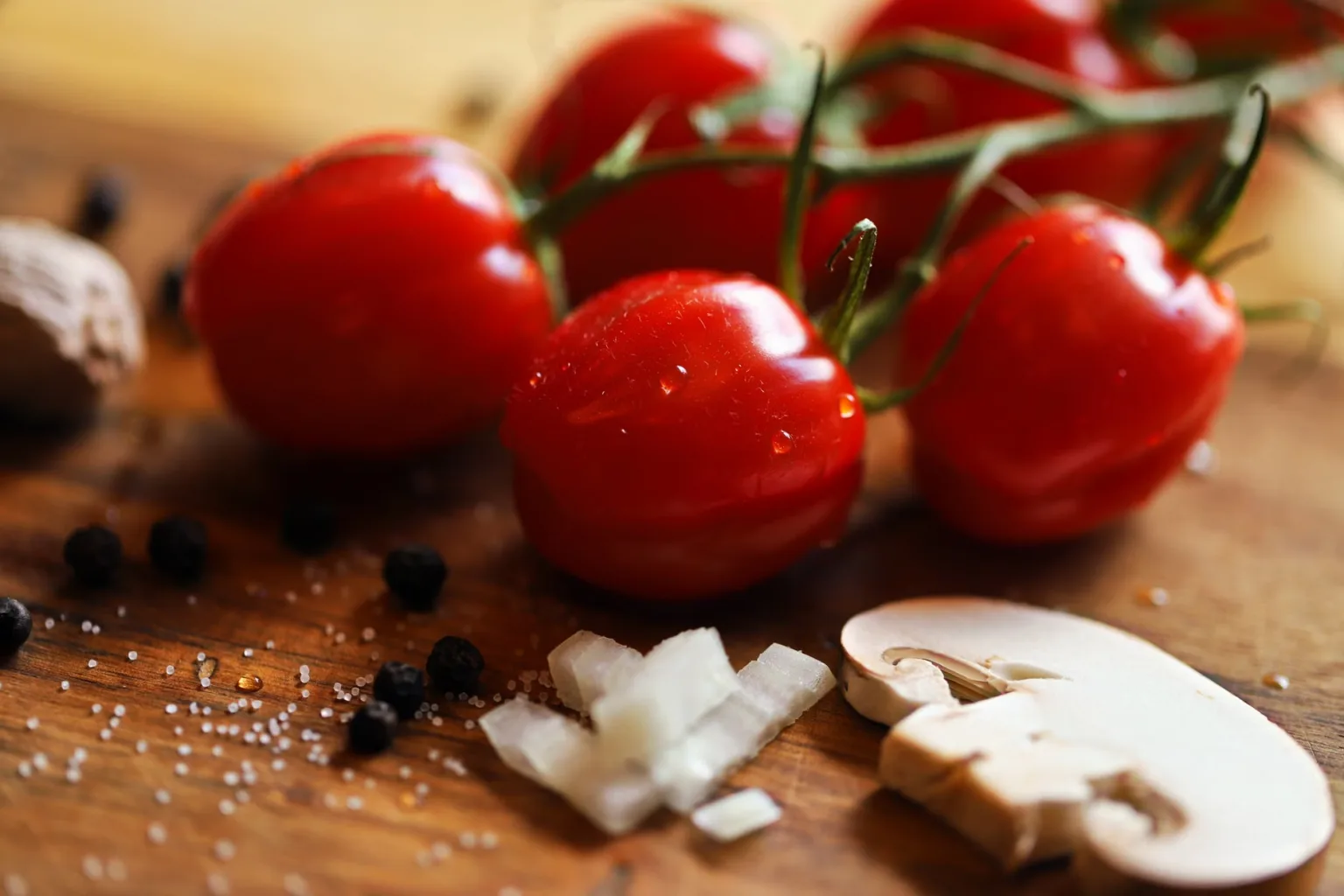
A tomato is the edible fruit of a plant in the nightshade family. Botanically it is a fruit, but in cooking it is commonly treated as a vegetable and used mainly in savoury dishes. Tomatoes come in different shapes, sizes and colours; examples described in the sources include small cherry tomatoes and elongated pear-shaped types. The flesh may be meatier or juicier depending on the tomato, so varieties do not all behave alike when sliced or cooked. This profile covers fresh tomatoes, not processed products such as canned tomatoes, purée or tomato paste. Choosing a tomato to suit its intended use helps determine whether to serve it raw, blend it or cook it.
When to use it
Choose fresh tomatoes when you want to add flavour and juiciness to a salad, sandwich or chilled dish. Meaty tomatoes can work well as the main ingredient when sliced, while cherry tomatoes are convenient for appetisers and salads. For sauces and cooked preparations, a pear-shaped tomato or another type with a texture suited to cooking may be a practical choice. Tomatoes can also be blended for chilled soups such as gazpacho or salmorejo, or added to stews. The choice depends on the recipe and the texture you want, rather than on one variety being required in every case.
How to use it
Match the cut and method to the result you want. For a salad or sandwich, slice or dice the tomato and serve it fresh; cherry tomatoes may be served whole or halved. For a blended chilled preparation, combine the tomato with the other recipe ingredients and blend until you reach the desired texture; some recipes then strain the mixture to remove skins and seeds. For a sauce or stew, chop the tomato and cook it with the stated ingredients, adjusting the finished dish to suit the recipe. Tomatoes can also be served with bread, olive oil, basil or mozzarella. If a tomato is bruised or somewhat wilted but still fit to eat, the sources describe using it in blended drinks, sauces or stews, where keeping its whole-piece texture matters less; discard it if it appears unfit to eat.
Flavour and texture
Flavour can range from sweeter notes to a more pronounced acidity, and it is not identical across varieties. Texture varies too: some tomatoes are meaty, while others are juicier; pear-shaped types are described as suitable for sauces because of their flesh. Shape, size and colour also vary, so assess the individual tomato rather than assuming that all tomatoes have the same firmness or juiciness. Once cooked or blended, the tomato no longer has the texture of a whole ingredient and instead becomes part of a sauce or soup.
How to choose it
Start with the intended use: choose a tomato that seems suitable for slicing if you want it for salad, or one with flesh suited to cooking if you are making sauce. Varieties differ in shape, size, colour and texture; cherry tomatoes are small, while pear-shaped types are elongated. Check that the fruit is not visibly bruised or spoiled, and choose according to the condition and firmness that suit your recipe. Do not treat colour alone as a guarantee of flavour: the sources describe differences between types but do not establish a universal rule that applies to every tomato.
Storage
The available sources do not establish a universal storage time or temperature for fresh tomatoes. If the product is packaged or comes with seller guidance, follow the relevant storage and use directions; food labels may include instructions when special conditions apply. Handle tomatoes gently to avoid bruising, since damaged fruit may lose its appearance and may be better suited to preparations where whole-piece texture is unimportant. Do not apply storage advice for one particular tomato type to all varieties.
Substitutions
There is no exact substitute for fresh tomato across all recipes, because its flavour and texture depend on both variety and use. In a sauce or stew, canned tomato may serve a similar purpose, although it is a different product and may change the consistency. Pepper is used alongside tomato in recipes, but it has a different flavour and does not reproduce tomato's characteristics; use it only if that change is acceptable. Adapt the recipe to the alternative rather than expecting an exact match.
Common mistakes
Treating every variety as if it had the same amount of flesh, juice or firmness can lead to a different result than expected. A tomato chosen for sauce may not be the best fit when you want firm slices, and the reverse can also be true. Another mistake is automatically discarding a slightly bruised tomato even when it is still fit to eat: it may be used in a sauce or stew, where shape matters less. Do not confuse fresh tomatoes with canned tomatoes or purée; these are different forms and may require recipe adjustments.
Safety and allergens
No specific official warning about fresh tomatoes is provided here. For packaged or prepared products, check the label and follow the applicable storage and use directions; allergen information can depend on added ingredients and product presentation. If a tomato shows spoilage that makes you doubt it is fit to eat, do not use it.
Culinary uses
- Ingrediente fresco para ensaladas y platos fríos
- Base para salsas, sopas frías y guisos
Recommended techniques
- Cortar en rodajas o dados para servir crudo
- Triturar para sopas frías o salsas
- Cocinar en salsas y guisos
Pairs well with
- Albahaca y mozzarella
- Ajo y aceite de oliva
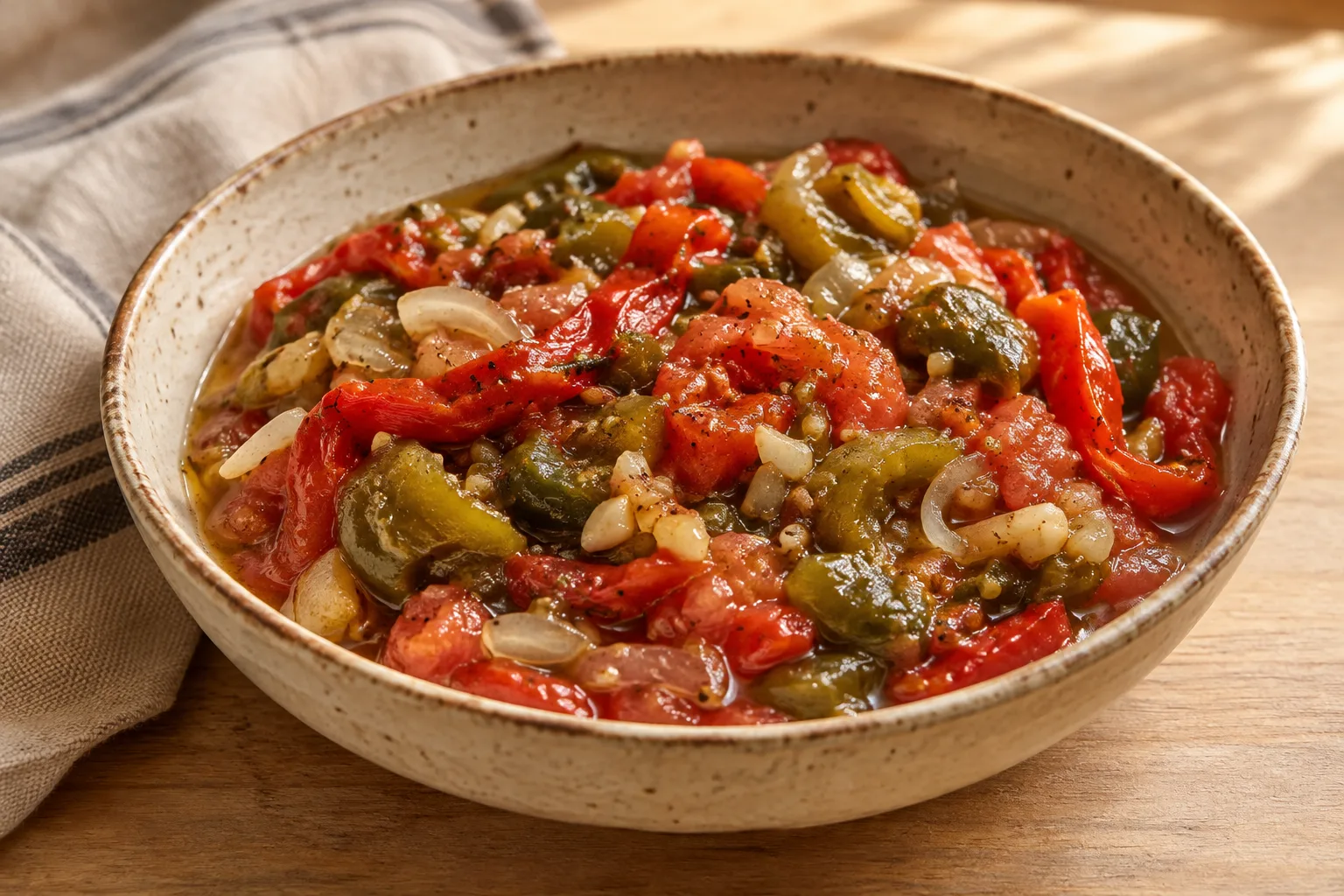
- Cebolla y pimiento
Frequently asked questions
Is a tomato a fruit or a vegetable?
Botanically it is a fruit, but in cooking it is generally treated as a vegetable and used in savoury dishes.
Which tomatoes are suitable for sauce?
Pear-shaped tomatoes are described as suitable for sauces because of their flesh. The best choice depends on the variety available and the texture you want.
Can I use a slightly bruised tomato?
If it is still fit to eat, it can be used in a blended preparation, sauce or stew, where whole-piece texture matters less. Do not use fruit that appears spoiled.
Estimated nutrition
- Fat
- 35 g
- Saturates
- 5.44 g
- Carbohydrate
- 2 g
- Sugars
- 2 g
- Fibre
- 0.2 g
- Protein
- 1.8 g
- Salt
- 2.26 g
Sources and review
Automatically researched, cross-checked and validated content. Sources consulted:
- En el etiquetado alimentario hay algunas menciones que son obligatorias eletiquetadocuentamucho.aesan.gob.es
- 17 recetas para aprovechar tomates de temporada cuando no están tan guapos directoalpaladar.com
- Client Challenge doi.org
- Tomate - Wikipedia, la enciclopedia libre es.wikipedia.org
- Variedades de tomates: guía completa con tipos, características y usos jardineriaon.com
- La historia del tomate en la cocina | Hida hida.es
- El tomate: orígenes, variedades y propiedades de este alimento | Excelencias Gourmet excelenciasgourmet.com
- ¿Qué otros usos le dan al tomate? restauranteelpilonrascafria.es
- Tomates: usos en la cocina y propiedades - Cocina y Come cocinaycome.com
- Tipos De Tomates: Variedades Y Usos Culinarios | La Fallera lafallera.es
- Tomate: Variedades Españolas, Tipos, Propiedades y Cultivo frutamerca.com
- Tomate Italiano: Historia, Variedades y Usos en la Cocina | Casa Longini 🇮🇹 Productos Italianos casalongini.com
- Maridajes – Agrogust agrogust.com
- Los 6 mejores tipos de tomate y cómo usarlos en cocina mercadosantamariadelacabeza.es
- Maridajes para tomate en Latinoamérica ✓ basmatic.com