- Category
- Dairy and eggs
- State
- Fresh
- Usual unit
- g
What it is
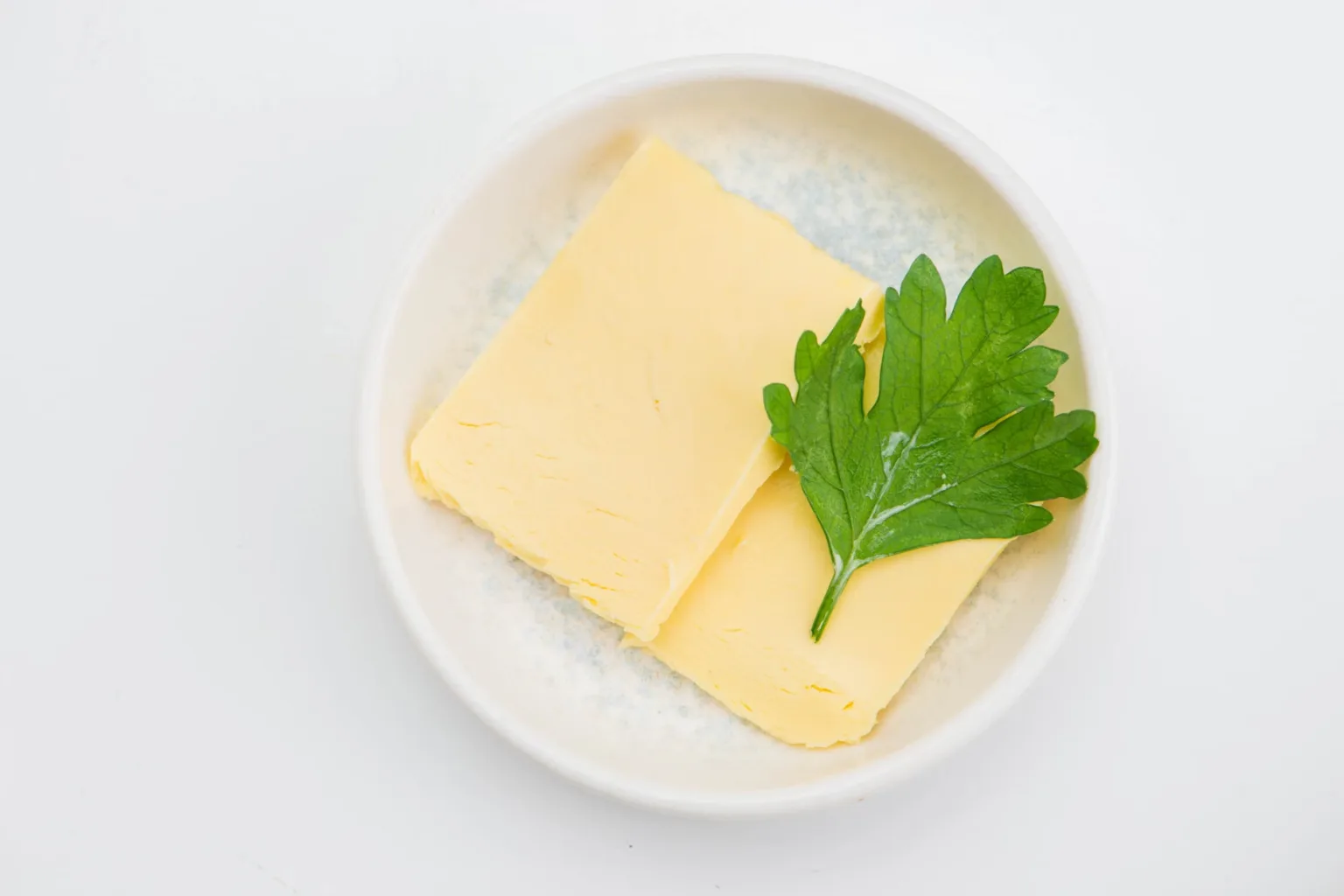
Butter is a dairy product made by churning cream so that milk fat gathers together and separates from the liquid portion. The fat is then worked into a more uniform mass. Depending on the product, butter can be firmer or softer, and its flavor may be mild or slightly tangy if the cream has been cultured. Varieties are sold salted and unsalted, and butter can also be made from the milk of different animals. For these reasons, check the product name and ingredient list rather than assuming every butter is identical. Butter is distinct from margarine and from liquid cooking oils, even when those products are used for similar culinary purposes.
When to use it
Use butter when you want to add dairy flavor and richness to a dish. It can be spread on bread, blended with herbs or spices as an accompaniment, or incorporated into sauces and cooked foods. In baking, it is a suitable choice when a recipe specifically calls for butter, because the water and fat in an alternative can produce a different texture and flavor. When cooking with it, remember that butter melts as it heats; choose the product and amount according to the result you want. Salted and unsalted varieties may also affect how much additional salt a recipe needs.
How to use it
For spreading, soften butter enough to make it easy to spread and serve it with bread. To make a flavored butter, mix softened butter with herbs, spices, or other suitable ingredients, then use it as an accompaniment or finishing touch. Butter can also be melted into a sauce or used during cooking, with attention to the heat. For doughs and baked goods, follow the recipe: replacing butter with oil or margarine can change flavor and texture. Salted and unsalted butter do not contribute the same amount of salt, so check which kind the recipe specifies. If using a substitute, make the change with the expected difference in the finished food in mind.
Flavour and texture
Butter usually tastes mild, creamy, and dairy-rich, although some varieties can have a tangier note. It is firm when cold and softens with warmth, making it suitable for spreading, mixing, or melting. Texture varies among products: some butters are firmer, while others are easier to spread. Salt content and the treatment of the cream also affect the experience, so check the label if you are looking for a particular characteristic.
How to choose it
Read the product name and ingredient list, and check whether the butter is salted or unsalted. Package information helps distinguish products and identify allergen declarations; do not assume that other spreadable fats are butter. One culinary source describes good butter as not easily breaking, lumpy, or sticky at room temperature, and as having a delicate aroma. Also compare the product's storage directions and date marking. If you need to avoid milk, check the specific product information rather than relying on a general description.
Storage
Follow the package storage directions, since labels must provide information when a food needs special storage conditions. A culinary recommendation is to keep butter refrigerated, covered, protected from light, and, if possible, in its original wrapping. Keeping it covered can help prevent it from absorbing other odors. Do not use general guidance in place of the instructions for the specific product, and check its date marking.
Substitutions
Vegetable oil can replace butter in some preparations, but the result will not necessarily be the same: flavor and texture change, and the appropriate proportion depends on the recipe. Margarine is another possible alternative, but it is a different product and its composition can vary. In baking, a substitution may change the crumb or perceived moisture. If reproducing the intended result matters, use the fat specified by the recipe.
Common mistakes
Do not treat butter, margarine, and oil as interchangeable: they are different products and can change the result. Do not overlook whether a recipe calls for salted or unsalted butter. Also avoid assuming that every butter has the same firmness, flavor, or composition. Finally, do not store it uncovered or ignore the storage directions on the package.
Safety and allergens
Butter is a dairy product and may contain milk, an allergen that must be identified in food information. If an allergy or intolerance is involved, check the specific product label and ask for allergen information when food is served unpackaged. Follow the manufacturer's date marking and storage directions.
Culinary uses
- Grasa para cocinar y hornear
- Ingrediente para untar, enriquecer y dar sabor a salsas
Recommended techniques
- Batir o cremar con otros ingredientes
- Derretir para cocinar o incorporar a una salsa
- Mezclar ablandada con hierbas o especias
Pairs well with
- Pan y tostadas
- Verduras, carnes y pescados
- Hierbas aromáticas y especias
- Masas y preparaciones de repostería
Frequently asked questions
Are butter and margarine the same?
No. Butter is made from the milk fat in cream; margarine is a different alternative whose composition can vary. Their flavor and performance in a recipe may differ.
Can I replace butter with oil?
In some recipes, yes, but the change can affect flavor and texture. There is no universal conversion for every preparation, so consider the intended result and the recipe instructions.
How should butter be stored?
Follow the label. As culinary guidance, butter can be kept refrigerated, covered, and protected from light and other odors, preferably in its original wrapping.
Estimated nutrition
- Fat
- 0.3 g
- Saturates
- 0.05 g
- Carbohydrate
- 42.47 g
- Sugars
- 35.3 g
- Fibre
- 1.5 g
- Protein
- 0.39 g
- Salt
- 0.04 g
Sources and review
Automatically researched, cross-checked and validated content. Sources consulted:
- En el etiquetado alimentario hay algunas menciones que son obligatorias eletiquetadocuentamucho.aesan.gob.es
- Client Challenge doi.org
- Aesan - Agencia Española de Seguridad Alimentaria y Nutrición aesan.gob.es
- Mantequilla - Wikipedia, la enciclopedia libre es.wikipedia.org
- Mantequilla: Qué es, origen e información nutricional - Mundo Lácteo mundolacteo.es
- La importancia de la mantequilla en la cocina friolisa.es
- Mantequilla. De qué está hecha y cómo se elabora; ¿es saludable?- Grupo Milenio milenio.com
- ¿Qué es la mantequilla y cómo se produce este producto lácteo versátil? Xevib xevib.com
- Origen y uso de la mantequilla es más fácil en Canal Cocina - Canal Cocina canalcocina.es
- ¿Cómo clarificar mantequilla? | Excelencias Gourmet excelenciasgourmet.com
- 8 tipos de mantequilla y cómo usarlos - Consumer Reports consumerreports.org
- Mantequilla: un ingrediente con historia productoslacteospacos.com
- Diez recetas para entrar en el lujurioso mundo de las mantequillas de sabores | El Comidista | Gastronomía | EL PAÍS elpais.com
- Sustituir la mantequilla en tus recetas sin problemas abc.es
- Cómo hacer mantequilla de sabores | Gastronosfera gastronosfera.com
- Diferencias entre cocinar con mantequilla, manteca, margarina o aceite: ¿qué es mejor? excelsior.com.mx