- Category
- Grains, flour and pasta
- State
- Dry
- Usual unit
- g
What it is
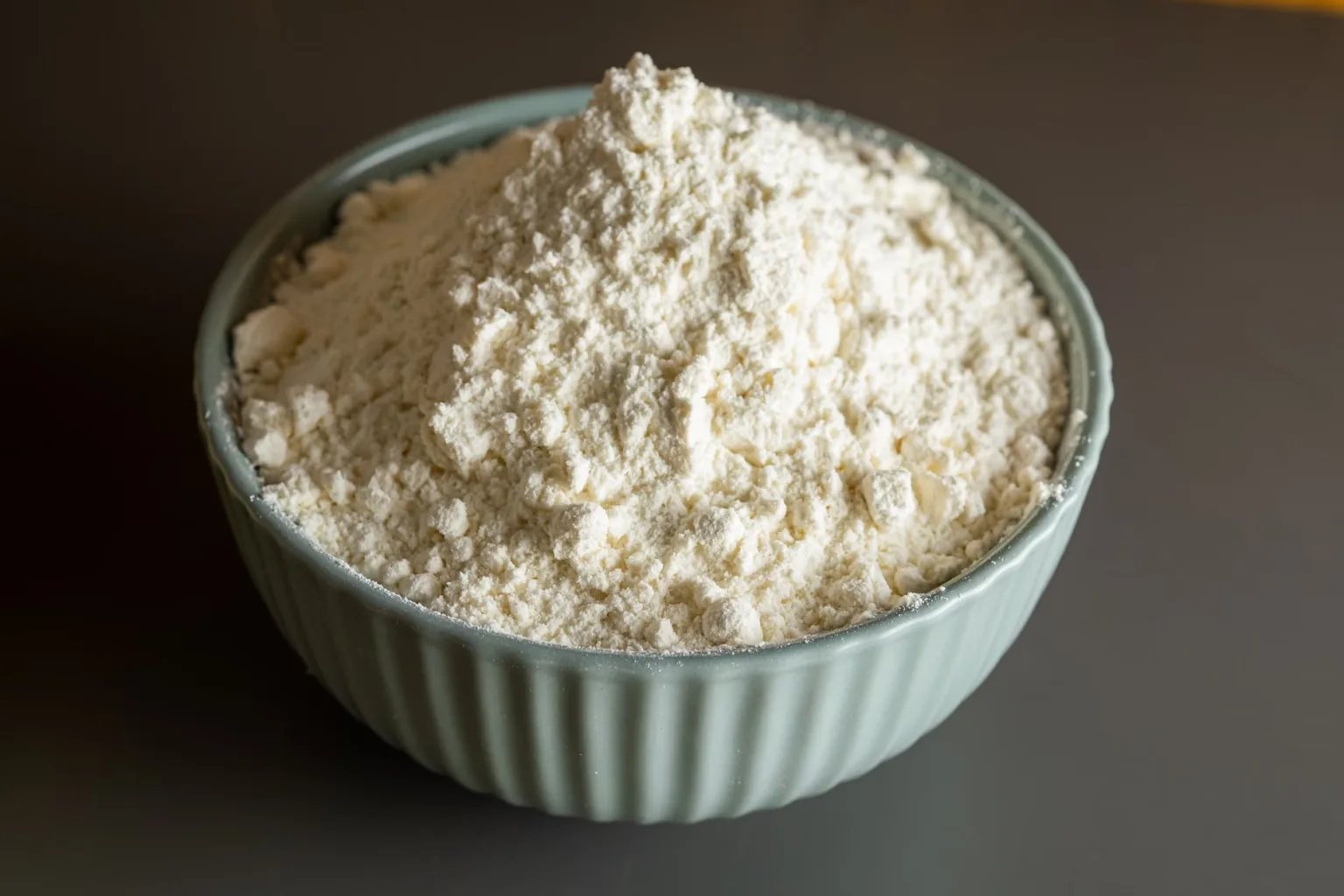
Wheat flour is the finely milled product of wheat grain. Depending on how much bran and germ is separated during milling, it may be more refined or whole-grain, which affects its color, texture and behavior in recipes. The wheat used and the properties of its proteins also vary. When mixed with water, wheat proteins can form gluten, which gives dough elasticity and helps retain fermentation gases. This is why wheat flour can provide structure in bread and other doughs, although different varieties do not produce identical results. A package may identify the flour as all-purpose, bread, pastry or whole-wheat; follow the recipe’s specification when a particular texture matters.
When to use it
Use wheat flour when a recipe is written for it: it is commonly used in bread, pizza, focaccia, cakes, cookies and other sweet or savory doughs. A stronger flour is often suited to doughs that need elasticity and structure, such as some yeasted breads; a lower-strength flour is often preferable for delicate baking where less elasticity is wanted. Whole-wheat flour can give a stronger flavor and denser crumb than refined flour. Labels and flour classifications differ between countries and manufacturers, so check the flour type and recipe before swapping one variety for another.
How to use it
Read the recipe and package to choose a suitable flour: all-purpose, bread, pastry and whole-wheat flours are not interchangeable in every application. Weigh the amount specified and combine it with the wet or dry ingredients as directed. In bread, pizza and other fermented doughs, gluten can develop elasticity as the flour hydrates and is worked; flour strength affects how much liquid it can absorb and how well the dough holds its shape. For cakes and cookies, excessive elasticity is often undesirable, so use the specified type and mix as instructed. Wheat flour can also be used for coatings or as a thickener, depending on the recipe. If using whole-wheat flour, expect its texture and absorption to differ from refined flour.
Flavour and texture
Refined wheat flour is usually finely milled and fairly neutral in flavor; whole-wheat flour tends to taste more pronounced and may feel coarser. Protein strength and refinement affect performance: stronger flour favors elastic, structured doughs, while lower-strength flour tends to produce more tender, less elastic results. The finished texture also depends on the recipe and other ingredients.
How to choose it
Choose flour for its intended use rather than relying only on a label such as “regular”: check whether the package says all-purpose, bread, pastry or whole-wheat. That distinction can affect the result when a recipe depends on an elastic dough or a tender texture. Also check that the package is wheat flour and review its labeling if you need to identify wheat or gluten. Flour classifications and available information vary by country and brand.
Storage
Keep flour dry, tightly closed and protected from moisture, following any directions on the package. Avoid exposure to strong odors or dirt, and use a clean container if transferring it from its original bag. The available sources do not establish a universal shelf life or specific storage conditions for every flour, so follow the manufacturer’s label for those details.
Substitutions
Wheat flour cannot always be replaced with another flour in the same amount with the same texture. Whole-wheat flour changes flavor and structure; spelt flour also behaves differently. Gluten-free alternatives do not form the same elastic network, and many recipes require blends or liquid adjustments. For a more predictable result, use a recipe developed for the substitute flour.
Common mistakes
Treating all wheat flours as identical can produce dough that is too elastic, weak or dense. Another common mistake is replacing wheat flour directly with any gluten-free flour: structure and absorption change, so the result may not resemble the original. Do not disregard a recipe’s instructions for bread, pastry or whole-wheat flour.
Safety and allergens
Wheat flour contains gluten. If you need to avoid wheat or gluten, check the label and follow official guidance that applies to your situation. Spain’s AESAN issued a specific alert for gluten detected in buckwheat flour labeled gluten-free; that alert concerned a particular product and does not mean all flours are affected.
Culinary uses
- Base para masas de panadería y repostería
- Agente espesante en salsas y preparaciones
Recommended techniques
- Mezclar con líquidos para formar masas; amasar cuando se busca desarrollar elasticidad
- Tamizar o mezclar con otros ingredientes secos para repartirla de manera uniforme
- Incorporar como espesante en preparaciones que lo requieran
Pairs well with
- Agua y levadura en masas fermentadas
- Huevos, leche y mantequilla en masas dulces
- Pasas, cacao y nueces en panes y productos horneados
Frequently asked questions
What is the difference between all-purpose flour and bread flour?
Bread flour is generally stronger and better able to form elastic, structured dough; it is often chosen for some fermented doughs. All-purpose flour suits broader uses, but the package and recipe are the best guide.
Can I replace refined flour with whole-wheat flour?
You can in some recipes, but flavor, texture and absorption may change. The result is often more rustic and dense, so do not assume a direct swap will give the same crumb.
Is wheat flour gluten-free?
No. Wheat flour contains gluten, so it is not gluten-free. Check the labeling if you need to avoid gluten and choose products suitable for your needs.
Estimated nutrition
- Fat
- 1.66 g
- Saturates
- 0.24 g
- Carbohydrate
- 72.5 g
- Sugars
- 0.31 g
- Fibre
- 2.4 g
- Protein
- 12 g
- Salt
- 0 g
Sources and review
Automatically researched, cross-checked and validated content. Sources consulted:
- Harina - Wikipedia, la enciclopedia libre es.wikipedia.org
- Guía: tipos de harina, usos y características | Aprende Institute aprende.com
- Tipos de harina de trigo, un alimento básico en la cocina: guía para usarlas directoalpaladar.com
- Qué tipos de harina hay y cuáles usar - Pastas Gallo : Pastas Gallo pastasgallo.es
- presencia de gluten en harina de trigo sarreceno ... aesan.gob.es
- Tipos de harina de trigo y sus usos culinarios explicados thecookinglab.es
- Harina de trigo: Qué necesitas saber: qué es, tipos, características y cómo usarla - Di Marco dimarco.it
- cocina para principiantes: tipos de harina de trigo | CreatiVegan.net creativegan.net
- Harina de trigo - Infoalimenta infoalimenta.com
- Tipos de harina, propiedades y usos | Consumer consumer.es
- Evaluación de harina de amaranto como ingrediente antioxidante para la preparación de matrices alimentarias funcionales doi.org
- Equivalencias para sustituir la harina de trigo abc.es
- Ingredientes que maridan con harina integral de trigo ✓ basmatic.com
- CÓMO SUSTITUIR LA HARINA DE TRIGO en recetas sin gluten – GLUTENDENCE glutendence.com
- Cómo sustituir la harina de trigo: alternativas sin gluten laboratoriograziosi.com
- Cómo sustituir la harina de trigo: alternativas, usos y trucos ... lecturas.com