- Category
- Sauces and condiments
- State
- Dry
- Usual unit
- g
What it is
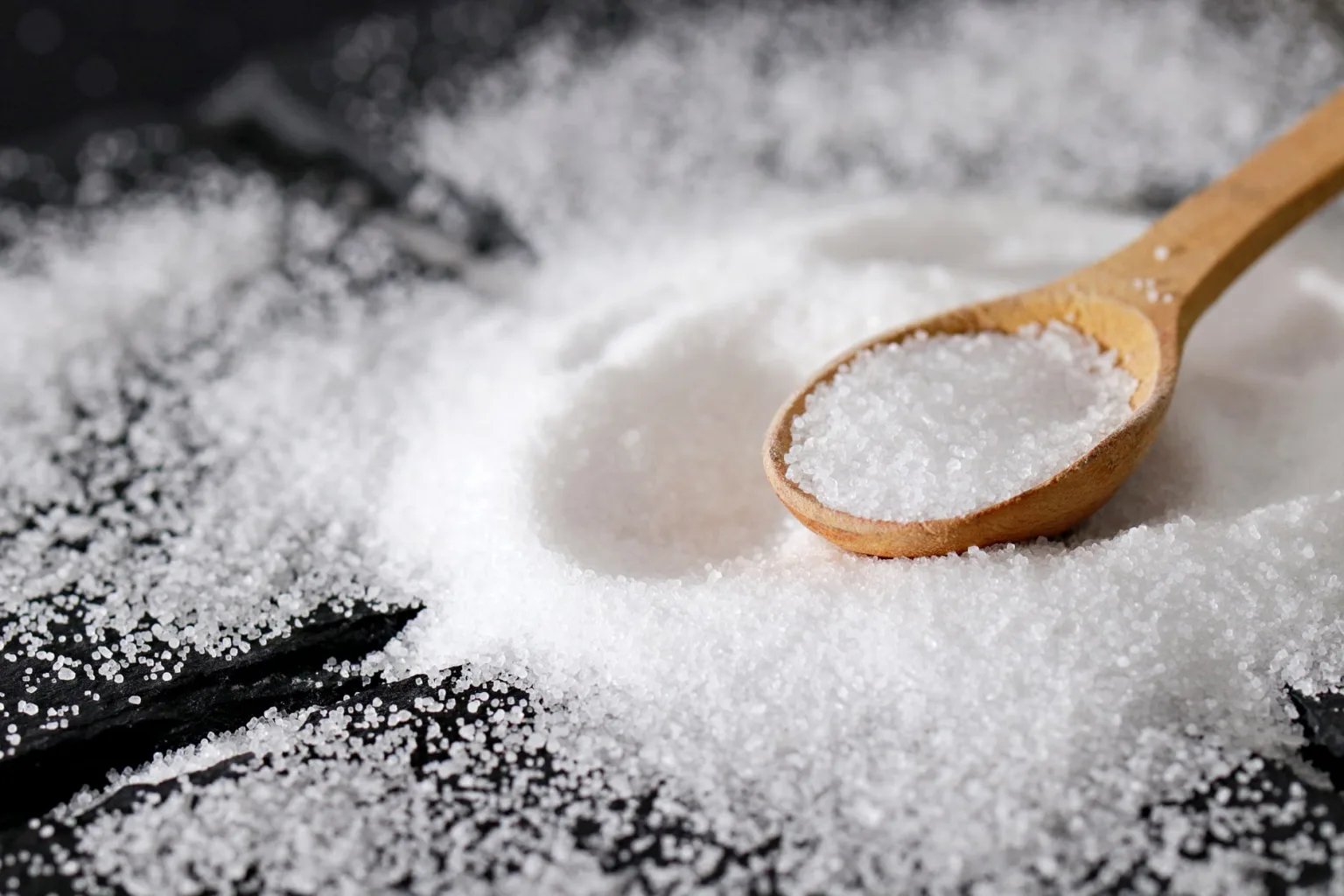
Culinary salt is a mineral ingredient composed mainly of sodium chloride. It is sold in different forms and varieties, including fine grains, coarse grains and flakes; its appearance depends on the product and how it has been processed. Common table salt usually has fine, uniform crystals, while some sea salts and finishing salts have irregular grains, flakes or a distinctive texture. There are also flavored salts and blends with added ingredients, so it is useful to distinguish them from plain salt by checking the label. In cooking, salt is used as a seasoning and also features in salting preparations. A product's name or color alone does not show that it can be substituted for another type in every recipe.
When to use it
Use fine salt when you want it to distribute evenly through a mixture or dissolve readily in liquids and everyday dishes. Coarse salt may suit grilling or salt-baking preparations, while flakes are commonly added at the end for texture and a visible finish. Salt is also used in curing and pickling, but these preparations call for an appropriate recipe; do not improvise proportions or make substitutions without checking the format required. If a recipe names a particular type of salt, follow it when texture matters.
How to use it
Add salt gradually and taste as you cook, especially when the dish already contains salty ingredients. In a soup, sauce or stew, fine salt disperses and dissolves readily; on a salad or finished dish, choose a form that gives the finish you want. Flakes and coarse crystals are often used as a final touch when their texture is intended to be noticeable. For curing or pickling, follow an appropriate recipe and use the type of salt it specifies. To season without adding salt, try aromatic herbs, spices, flavored oils, or a little lemon or vinegar, then adjust the overall flavor to taste.
Flavour and texture
Salt's most recognizable taste is salty. Its effect in a dish also depends on crystal size and shape: fine grains mix readily, while coarse grains and flakes can add a crunchy sensation when used at the end. Varieties may differ in moisture, color and texture; flavored salts can contain other ingredients and aromas. A visual difference between products therefore does not necessarily mean that they will behave the same way in a recipe.
How to choose it
Choose a form for the intended use: fine grains for mixing and even seasoning, coarse grains for preparations that call for them, and flakes for finishing dishes. Check the product name and ingredient list, especially for flavored salts or blends, which may contain additional ingredients. If a recipe calls for a particular variety, check that the product matches it; color or a marketing name alone is not enough to establish how it should be used.
Storage
The available evidence does not establish one storage rule that applies to every variety. Check the package directions, especially for flavored blends or salts with a particular texture or moisture level. Since products differ in form, do not assume that instructions for one apply to all others.
Substitutions
To add flavor without salt, try aromatic herbs, spices, flavored oils, or acidic ingredients such as lemon and vinegar. These are not exact substitutes: they change a dish's flavor profile and do not reproduce salty taste or the texture of salt crystals. Grain size matters when substituting one salt for another; fine salt will not always give the same finish as flakes.
Common mistakes
Do not assume that every salt behaves the same way: grain size affects how it distributes and the final texture. Avoid adding a large amount all at once without tasting, particularly if the recipe already contains salty ingredients. Do not replace a salt specified for curing or finishing without first checking which form the recipe requires.
Safety and allergens
Check the label for ingredients and directions for use, especially on flavored products or blends. The available evidence does not identify a specific safety warning for plain salt.
Culinary uses
- Condimento para sazonar y realzar el sabor
- Ingrediente para salazones y otras preparaciones de conservación
Recommended techniques
- Sazonar durante la cocción o disolver en preparaciones líquidas
- Añadir cristales o escamas al final para aportar un acabado crujiente
- Usar en salazones siguiendo una receta adecuada
Pairs well with
- Verduras, ensaladas y patatas
- Pescados y mariscos
- Carnes y preparaciones a la parrilla
- Sopas, guisos y masas saladas
Frequently asked questions
Which salt is useful for everyday seasoning?
Fine salt is practical when you want even distribution or easy dissolving. Follow the recipe if it specifies another form.
When should I use salt flakes?
They are commonly added at the end so their texture remains noticeable. They do not always replace fine salt directly in a mixture.
Can I season food without adding salt?
Herbs, spices, flavored oils, lemon or vinegar can add other flavor notes. They change the dish but do not exactly reproduce salty taste.
Can every salt be used for curing?
Do not assume so. Use the type specified by an appropriate recipe and follow its instructions.
Estimated nutrition
- Fat
- 0 g
- Saturates
- 0 g
- Carbohydrate
- 0 g
- Sugars
- 0 g
- Protein
- 0 g
- Salt
- 97.5 g
Sources and review
Automatically researched, cross-checked and validated content. Sources consulted:
- En el etiquetado alimentario hay algunas menciones que son obligatorias eletiquetadocuentamucho.aesan.gob.es
- Client Challenge doi.org
- Técnicas culinarias: Cómo potenciar el sabor con reducción de salsa en maridajes con cervezas, vinos y licores cumul.es
- Sal común - Wikipedia, la enciclopedia libre es.wikipedia.org
- Informe del Comité Científico de la Agencia Española de ... aesan.gob.es
- 15 tipos de sal para dar variedad a nuestros platos: cómo elegirlas y usarlas en la cocina directoalpaladar.com
- Tipos de sal para cocinar: descubre cómo usarlas en tu cocina laespanolaaceites.com
- La sal en la cocina | Tipos de sal | El Paladar elpaladar.es
- Qué Es La Sal: Descubre Sus Tipos Y Usos | Brillante brillante.es
- Tipos de sal: éstas son las variedades y para esto sirven excelsior.com.mx
- Tipos de sal, ¿conocías todos estos? | Excelencias Gourmet excelenciasgourmet.com
- Tipos de sal para transformar tus platos chovi.com
- Sal común: qué es, tipos y propiedades bonviveur.com
- Tipos de sal y sus usos en la cocina divinacocina.es
- Cómo DAR SABOR a las comidas SIN SAL - Trucos, recomendaciones y recetas recetas.elperiodico.com
- Guía Maestra para Potenciar el Sabor de tus Platos sin Abusar de la Sal lasrecetascocina.com
- Sabor a sal: 10 variedades que debes conocer y usar cooking.elmundo.es